---
title: "Sunlit Sustainability: Nature-Powered"
description: Explore how Nayara Resorts harnesses solar power for sustainable luxury, from the Atacama Desert to Easter Island, Costa Rica, and Bocas del Toro, redefining responsible travel.
image: https://blog.nayararesorts.com/hubfs/4-Aug-15-2025-06-36-01-1516-PM.png
---
[Blog](https://blog.nayararesorts.com/)
[](https://nayararesorts.com/)
SUBSCRIBE
# Sunlit Sustainability: Nature-Powered
[Albert Ghitis](https://blog.nayararesorts.com/author/albert-ghitis-1)
Sep 3, 2025
Key Findings
98.6%
Of Costa Rica's electricity from renewables in 2025. The three Arenal resorts run clean without on-site panels.
20,000
Native trees planted at Nayara Tented Camp, turning former cattle pasture back into living rainforest.
45 kW
Solar system at Nayara Hangaroa offsets the annual energy of 28 homes on Rapa Nui.
In This Article
7 min read
[01Solar Panels Rooted in Place: Rapa Nui](https://blog.nayararesorts.com/sunlit-sustainability-powered-by-nature-clone#rapanui) [02A Forest Fueled by Clean Energy: Costa Rica](https://blog.nayararesorts.com/sunlit-sustainability-powered-by-nature-clone#costarica) [03The Desert That Sparked Our Solar Journey](https://blog.nayararesorts.com/sunlit-sustainability-powered-by-nature-clone#atacama) [04Quiet Power in the Caribbean](https://blog.nayararesorts.com/sunlit-sustainability-powered-by-nature-clone#bocas) [05Powering a Different Kind of Luxury](https://blog.nayararesorts.com/sunlit-sustainability-powered-by-nature-clone#conviction) [06Frequently Asked Questions](https://blog.nayararesorts.com/sunlit-sustainability-powered-by-nature-clone#faq)
**In short:** Nayara powers its resorts through a site-specific approach to renewable energy. In Costa Rica, the national grid is already 98.6% clean. In the Atacama, Rapa Nui, and Bocas del Toro, dedicated solar systems reduce dependence on diesel and support off-grid resilience.
Rapa Nui
## Solar Panels Rooted in Place
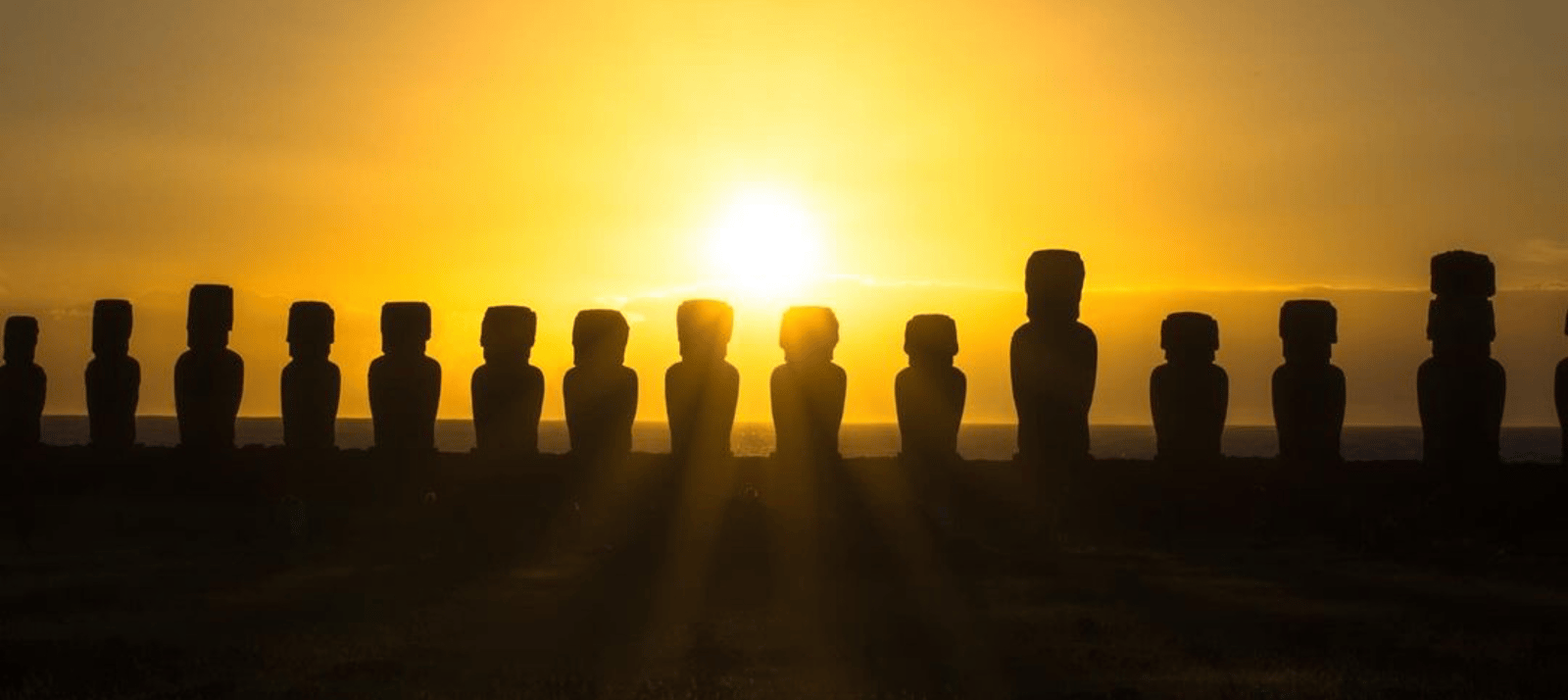
Rapa Nui runs on diesel. A single utility, [SASIPA](https://www.sasipa.cl/), burns imported fuel to power an island 3,700 kilometers from the Chilean mainland. Every kilowatt-hour carries a carbon cost that compounds in one of the most ecologically sensitive places on earth.
As of May 2025, Nayara Hangaroa operates a 45-kilowatt photovoltaic system that offsets the annual energy consumption equivalent of 28 family homes on the island. The panels reduce demand on the diesel grid without disrupting the landscape; they sit behind the hotel's curved, canoe-shaped rooflines and lava-stone foundations that draw from traditional Rapa Nui architecture.
The design predates the panels. Hangaroa was built with passive solar principles from the start: green roofs for natural insulation, curved walls that channel prevailing winds, and orientation that captures morning light while deflecting afternoon heat. The photovoltaic system is an addition to a building that was already thinking about energy before the first wire was run.
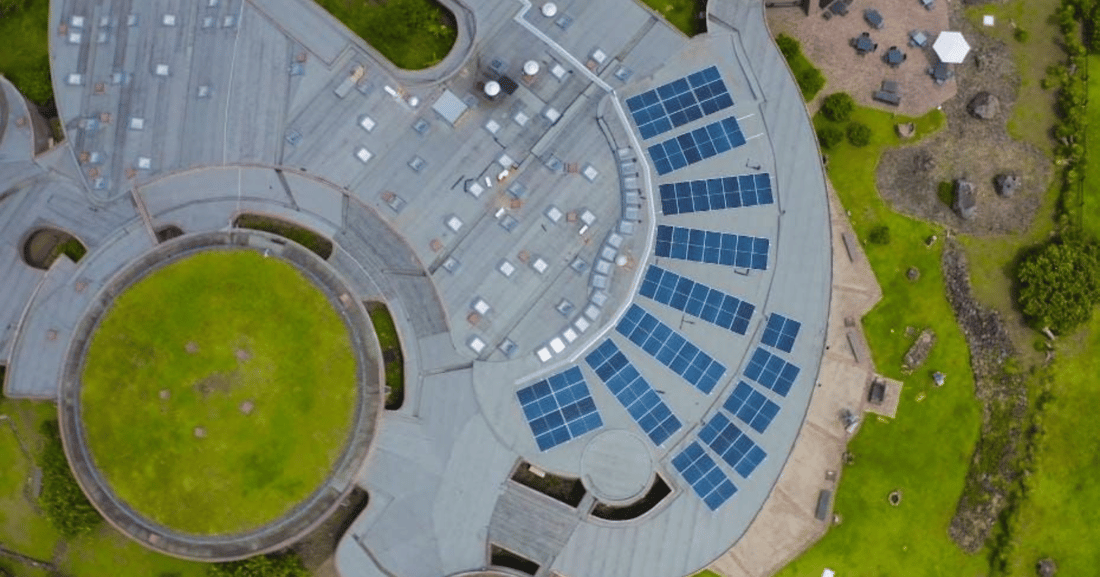
The 45 kW photovoltaic system at Nayara Hangaroa offsets 28 homes' worth of diesel-generated electricity annually.
Costa Rica
## A Forest Fueled by Clean Energy
Costa Rica generated [98.6 percent of its electricity from renewable sources](https://www.grupoice.com/) in 2025. Geothermal, hydro, wind, and solar feed a national grid that makes on-site panels redundant for our three Arenal properties. The infrastructure already delivers what most resorts spend millions trying to achieve.
So the energy question in Costa Rica is not about generation. It is about what you do with the land you are not covering in panels.
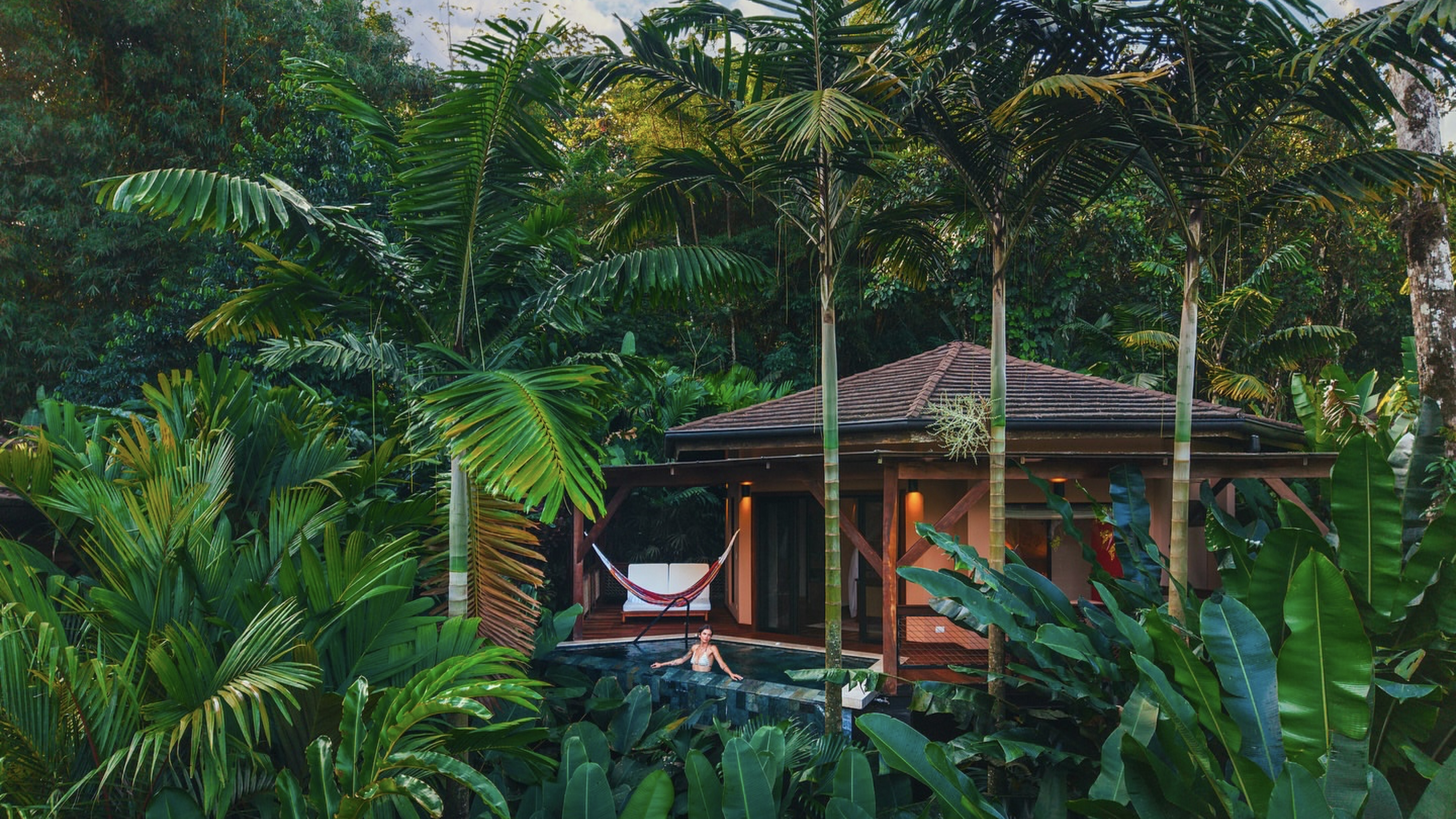
At Nayara Tented Camp, the answer was reforestation. What was once barren cattle pasture is now dense rainforest: over 20,000 native trees planted, wildlife corridors restored, carbon captured, and new habitat created for howler monkeys, two-toed sloths, and hundreds of bird species. It is one of the most ambitious private reforestation efforts in Central America.
All three Costa Rica properties hold [Green Globe Certification](https://www.greenglobe.com/criteria-indicators), maintained through annual audits that assess environmental management, cultural heritage, and social impact. The certification is not a badge. It is an annual reckoning.

Over 20,000 native trees planted at Nayara Tented Camp, restoring what was once cattle pasture to living rainforest.
Atacama
## The Desert That Sparked Our Solar Journey
The Atacama receives some of the most intense solar radiation on the planet. Nayara Alto Atacama was the first property in the collection to install a dedicated photovoltaic and battery system, achieving near-complete independence from the national grid. Fewer emissions, reduced truck traffic for fuel delivery, and energy that flows directly from desert sun to guest experience.
The panels are coplanar and non-reflective, integrated with the adobe architecture and natural pigments that make the lodge nearly invisible against the desert floor. Alto Atacama is the only luxury property in San Pedro de Atacama with S Certification from the [Chilean government](https://www.energia.gob.cl/), the country's official sustainability standard for tourism.
Water is used sparingly, native plants dominate the gardens, and lighting is kept intentionally minimal to preserve the night skies. In the world's premier stargazing corridor, even the architecture defers to the dark.
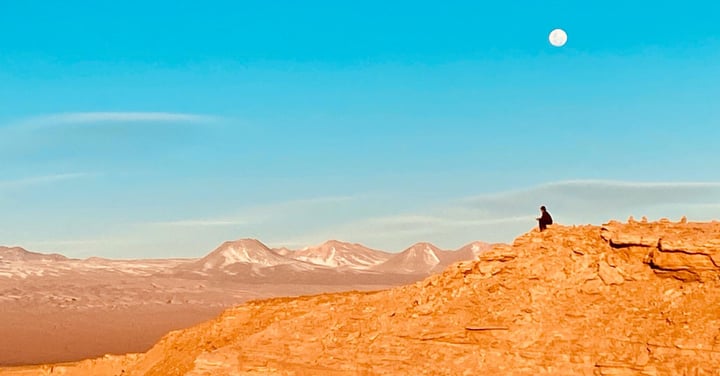
Nayara Alto Atacama's coplanar solar array, integrated with the lodge's adobe architecture.
Bocas del Toro
## Quiet Power in the Caribbean
Building a resort on a private island in Panama's Bocas del Toro archipelago meant starting from nothing. No grid connection. No municipal water. No infrastructure at all. Five separate environmental impact studies were completed before the first piling was driven.
The solution combined two elemental forces: sun and water. Solar panels provide nearly 100 percent of the resort's energy needs. Rainwater, collected and purified on-site through ultraviolet filtration, serves as the sole freshwater source for drinking, bathing, kitchens, and irrigation.
In a location where even small changes can have outsized ecological consequences, the off-grid model is not a marketing decision. It is the only responsible way to operate above a living reef system.
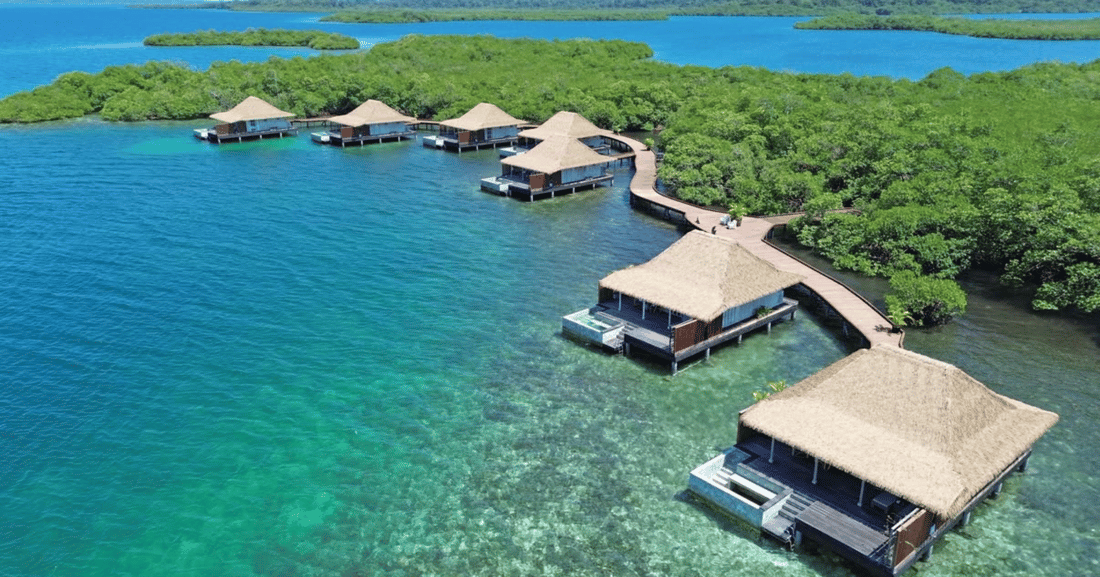
Nayara Bocas del Toro operates nearly 100% on solar, with rainwater as its sole freshwater source.
The Conviction
## Powering a Different Kind of Luxury
Four ecosystems. Four different energy strategies. The common thread is not a single technology but a single principle: the approach must fit the place.
Where the grid is already clean, invest in the forest. Where diesel dominates, install panels. Where no infrastructure exists, build from sun and rain. The most meaningful experiences on earth should not come at its expense.
Sustainability is not an add-on. It is the foundation of how these places are designed, built, and operated.
## Frequently Asked Questions
Do all Nayara properties use solar energy?+
Not all, and deliberately so. In Costa Rica, where 98.6% of electricity is already generated from renewable sources, on-site solar panels are unnecessary. The Arenal properties operate entirely on the national clean energy grid. In Chile, Easter Island, and Panama, where grid infrastructure is limited or diesel-dependent, dedicated solar systems reduce emissions and support off-grid resilience.
How much energy does the Hangaroa solar system produce?+
The 45-kilowatt photovoltaic system offsets the annual energy consumption equivalent of 28 family homes on Rapa Nui. It reduces demand on SASIPA, the island's diesel-based energy grid, cutting carbon emissions in one of the world's most ecologically sensitive environments.
Is Nayara Bocas del Toro fully off-grid?+
Nearly. Solar panels provide close to 100% of the resort's energy needs. Freshwater comes exclusively from collected rainwater, purified on-site through ultraviolet filtration. Five separate environmental studies were conducted before the property opened to ensure operations would not harm the surrounding mangroves or coral reefs.
What certifications do Nayara properties hold?+
The three Costa Rica properties hold Green Globe Certification, maintained through annual audits assessing environmental management, cultural heritage, and social impact. Nayara Alto Atacama holds S Certification from the Chilean government, the country's official sustainability standard for tourism.
What was the reforestation effort at Nayara Tented Camp?+
What is now dense rainforest was once barren cattle pasture. Over 20,000 native trees were planted, restoring wildlife corridors, capturing carbon, and creating new habitat for monkeys, sloths, and hundreds of bird species. It is one of the most ambitious private reforestation efforts in Central America.
Sources
- [International Renewable Energy Agency (IRENA), Global solar capacity data](https://www.irena.org/)
- [SASIPA, Rapa Nui energy grid operator](https://www.sasipa.cl/)
- [Green Globe Certification, criteria and indicators](https://www.greenglobe.com/criteria-indicators)
- [Costa Rica Institute of Electricity (ICE), renewable energy statistics](https://www.grupoice.com/)
- [Chile Ministry of Energy, S Certification](https://www.energia.gob.cl/)
- [UNESCO Rapa Nui World Heritage Site](https://whc.unesco.org/en/list/715/)
The Series
## Explore the Full Sustainability Series
Regeneration, community, and accountability across four countries.
[01 Beyond Sustainability: What Regenerative Tourism Means →](https://blog.nayararesorts.com/beyond-sustainability-what-regenerative-tourism-really-means-at-nayara) [02 Rooted in Community: The Human Side of Hospitality →](https://blog.nayararesorts.com/rooted-in-community-the-human-side-of-hospitality) [03 Amigos de Hogarcito: A Different Kind of Excursion →](https://blog.nayararesorts.com/amigos-de-hogarcito) [04 Women's Empowerment Through Housing in La Fortuna →](https://blog.nayararesorts.com/womens-empowerment-through-housing-in-costa-ricas-la-fortuna)
05 Sunlit: How Nayara Powers Its Resorts with Solar You're Here
[06 Sustainability Certifications: Green Globe and Sello S →](https://blog.nayararesorts.com/beyond-the-ballot-green-globe-s-certification)
Begin
## Luxury Powered by Nature
From solar in the Atacama to off-grid Bocas del Toro. Responsible travel, redefined.
[Check availability](https://nayararesorts.com)[Explore Nayara Resorts](https://nayararesorts.com)
[](https://blog.nayararesorts.com/the-future-of-sustainable-luxury-eco-lodging-and-regenerative-tourism)
## [Beyond Sustainability: Regenerative Tourism at Nayara Resorts](https://blog.nayararesorts.com/the-future-of-sustainable-luxury-eco-lodging-and-regenerative-tourism)
Mar 17, 2024
[](https://blog.nayararesorts.com/walking-giants-the-hito-family-the-future-of-easter-island)
## [How Nayara Hangaroa Leads Regeneration on Rapa Nui](https://blog.nayararesorts.com/walking-giants-the-hito-family-the-future-of-easter-island)
Nov 5, 2025
[](https://blog.nayararesorts.com/rom-deadly-sin-to-rainforest-royalty-the-soul-of-nayara)
## [Luxury Resorts Rooted in Nature: The Nayara Story](https://blog.nayararesorts.com/rom-deadly-sin-to-rainforest-royalty-the-soul-of-nayara)
Sep 3, 2025
- [Nayara Gardens](https://nayaragardens.com/)
- [Nayara Springs](https://nayarasprings.com/)
- [Nayara Tented Camp](https://nayaratentedcamp.com/)
- [Nayara Alto Atacama](https://www.altoatacama.com/)
- [Nayara Hangaroa](https://www.hangaroa.cl/)
- [Nayara Bocas Del Toro](https://bocasbali.com/)
-
-
-
-
-
-
- [Costa Rica +506 2479-1600](tel:+50624791600)
- [US +1 844-865-2002](tel:+18883322961)
- [UK +44 1617918120](tel:+441617918120)
```json
{
"@context" : "https://schema.org",
"@type" : "BlogPosting",
"author" : {
"@type" : "Person",
"name" : "Albert Ghitis",
"url" : "https://blog.nayararesorts.com/author/albert-ghitis-1"
},
"dateModified" : "2026-07-26T03:15:33.634Z",
"datePublished" : "2025-09-03T04:16:37.000Z",
"headline" : "Sunlit Sustainability: Nature-Powered",
"image" : [ "https://blog.nayararesorts.com/hubfs/4-Aug-15-2025-06-36-01-1516-PM.png" ],
"mainEntityOfPage" : {
"@id" : "https://blog.nayararesorts.com/sunlit-sustainability-powered-by-nature-clone",
"@type" : "WebPage"
},
"publisher" : {
"@type" : "Organization",
"logo" : {
"@type" : "ImageObject",
"url" : "https://blog.nayararesorts.com/hubfs/Captura%20de%20pantalla%202023-04-13%20a%20la(s)%2010.55.13.png"
},
"name" : "Nayara Resorts"
}
}
```
```json
{
"@context" : "https://schema.org",
"@type" : "BlogPosting",
"articleSection" : "Sustainability",
"author" : {
"@type" : "Person",
"jobTitle" : "Head of Digital Marketing",
"name" : "Albert Ghitis"
},
"dateModified" : "2025-09-03",
"datePublished" : "2025-09-03",
"description" : "Explore how Nayara Resorts harnesses solar power for sustainable luxury, from the Atacama Desert to Easter Island, Costa Rica, and Bocas del Toro. Solar panels, Green Globe certification, and off-grid resilience.",
"headline" : "Sunlit Sustainability: Nature-Powered",
"image" : "https://23160175.fs1.hubspotusercontent-na1.net/hubfs/23160175/3-Jul-25-2025-02-30-18-4208-PM.png",
"keywords" : "solar energy, sustainability, renewable energy, Nayara Alto Atacama, Nayara Hangaroa, Nayara Bocas del Toro, Green Globe, reforestation, off-grid, regenerative travel",
"mainEntityOfPage" : {
"@id" : "https://blog.nayararesorts.com/sunlit-sustainability",
"@type" : "WebPage"
},
"publisher" : {
"@type" : "Organization",
"logo" : {
"@type" : "ImageObject",
"url" : "https://nayararesorts.com/logo.png"
},
"name" : "Nayara Resorts",
"url" : "https://nayararesorts.com"
}
}
```
```json
{
"@context" : "https://schema.org",
"@type" : "FAQPage",
"mainEntity" : [ {
"@type" : "Question",
"acceptedAnswer" : {
"@type" : "Answer",
"text" : "Not all, and deliberately so. In Costa Rica, where 98.6% of electricity is already generated from renewable sources, on-site solar panels are unnecessary. Our Arenal properties operate entirely on the national clean energy grid. In Chile, Easter Island, and Panama, where grid infrastructure is limited or diesel-dependent, we have installed solar systems to reduce emissions and support off-grid resilience."
},
"name" : "Do all Nayara properties use solar energy?"
}, {
"@type" : "Question",
"acceptedAnswer" : {
"@type" : "Answer",
"text" : "The 45-kilowatt photovoltaic system at Nayara Hangaroa offsets the annual energy consumption equivalent of 28 family homes on Rapa Nui. It reduces demand on SASIPA, the island's diesel-based energy grid, cutting carbon emissions in one of the world's most ecologically sensitive environments."
},
"name" : "How much energy does the Nayara Hangaroa solar system produce?"
}, {
"@type" : "Question",
"acceptedAnswer" : {
"@type" : "Answer",
"text" : "Nearly. Solar panels provide close to 100% of the resort's energy needs. Freshwater comes exclusively from collected rainwater, purified on-site through an ultraviolet filtration system. Five separate environmental studies were conducted before the property opened to ensure operations would not harm the surrounding mangroves or coral reefs."
},
"name" : "Is Nayara Bocas del Toro fully off-grid?"
}, {
"@type" : "Question",
"acceptedAnswer" : {
"@type" : "Answer",
"text" : "Our three Costa Rica properties hold Green Globe Certification, one of the most respected international seals in the hospitality industry, maintained through annual audits that assess environmental management, cultural heritage, and social impact. Nayara Alto Atacama holds S Certification from the Chilean government, the country's official sustainability standard for tourism."
},
"name" : "What certifications do Nayara properties hold for sustainability?"
}, {
"@type" : "Question",
"acceptedAnswer" : {
"@type" : "Answer",
"text" : "Lighting across the property is kept intentionally minimal to preserve the night sky, which is among the clearest on earth. Pathways use warm, carefully directed fixtures. Buildings are constructed from adobe with natural pigments so they blend into the landscape rather than reflecting light. The telescope platform opens some of the best stargazing conditions available anywhere."
},
"name" : "How does Nayara Alto Atacama protect the Atacama's dark skies?"
}, {
"@type" : "Question",
"acceptedAnswer" : {
"@type" : "Answer",
"text" : "What is now a dense rainforest surrounding Nayara Tented Camp was once barren cattle pasture. We planted over 20,000 native trees, restoring wildlife corridors, capturing carbon, and creating new habitat for monkeys, sloths, and hundreds of bird species. It is one of the most ambitious private reforestation efforts in Central America."
},
"name" : "What was the reforestation effort at Nayara Tented Camp?"
}, {
"@type" : "Question",
"acceptedAnswer" : {
"@type" : "Answer",
"text" : "Our approach to renewable energy is shaped by each property's ecosystem and infrastructure. Where solar makes the most impact, as in the Atacama, Rapa Nui, and Bocas del Toro, we invest in it directly. Where the national grid already runs clean, as in Costa Rica, we focus on other forms of environmental stewardship including reforestation, water management, and wildlife corridor restoration."
},
"name" : "Does Nayara plan to expand its solar capacity?"
} ]
}
```