The Costa Rica Rainforest After Dark
At sunset, Costa Rica's rainforest changes shifts. Frogs emerge, insects begin calling, glass frogs move toward streams, and sounds replace many of the visual cues of daylight. Around Nayara's Arenal resorts, guided frog walks, natural hot springs, wine, cocktails, and open-air dining make night another way to experience the forest, not the end of the day.
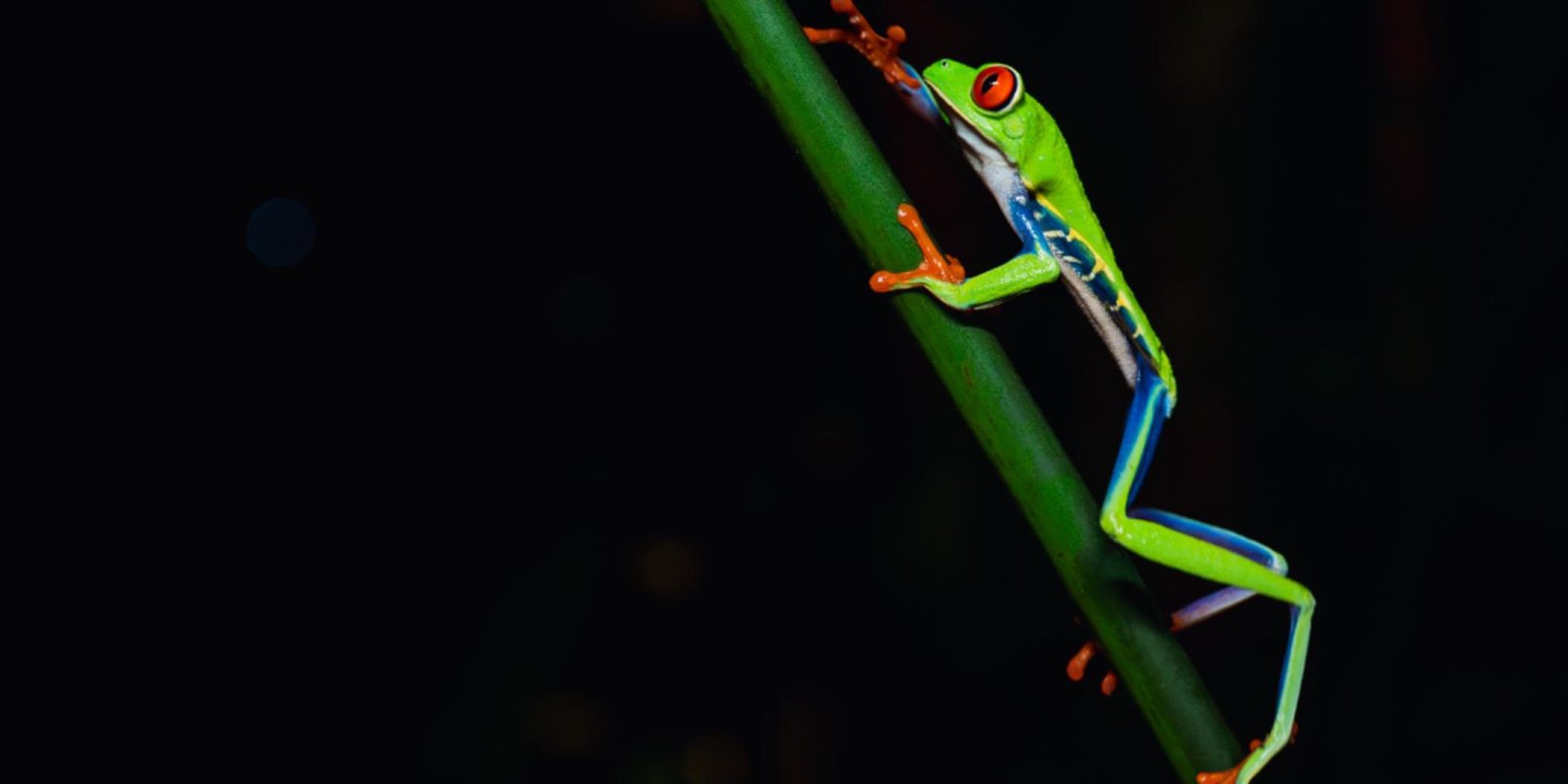
Red-eyed tree frogs spend much of the day resting on leaves and become active after dark to feed and reproduce.
Nayara's on-property frog walks focus on wildlife that's easier to locate after daylight fades.
The forest you experience during the day and the one you hear after sunset follow different rhythms.
The Second Rainforest
In short: Costa Rica's rainforest does not simply become darker after sunset. Its activity shifts. Nocturnal frogs begin calling, insects become more audible, glass frogs move toward streams, and species hidden through the heat of the day emerge into cooler, wetter conditions.
At sunset, half the rainforest seems to disappear. The other half wakes up.
Daylight makes the forest visible. Green dominates everything. Birds move through the canopy. Butterflies cross open paths. Sloths appear as shapes high in the trees.
Then the light fades.
The forest becomes less about distance and more about proximity. You hear what you cannot immediately see. A frog calls from the edge of a pond. Leaves move without revealing what moved them. Insects create a continuous layer of sound. Moisture settles over broad leaves and branches.
The rainforest has not gone quiet. It has changed shifts.
Why Frogs Wait for Night
For an amphibian, darkness solves several problems at once.
Frogs lose moisture through permeable skin. Cooler evening temperatures and higher humidity reduce that pressure. Darkness also brings out insects, creating feeding opportunities for species that spend much of the day hiding among leaves, branches, and vegetation.
Then there is reproduction.
Many rainforest frogs use sound to find one another after sunset. Males call from ponds, leaves, branches, and streams. To a human ear, the overlapping whistles, knocks, chirps, clicks, and trills can sound chaotic. To the frogs, they are species-specific messages.
The rainforest night is full of voices because much of its amphibian life becomes social in the dark.
The Red-Eyed Tree Frog Wakes Up
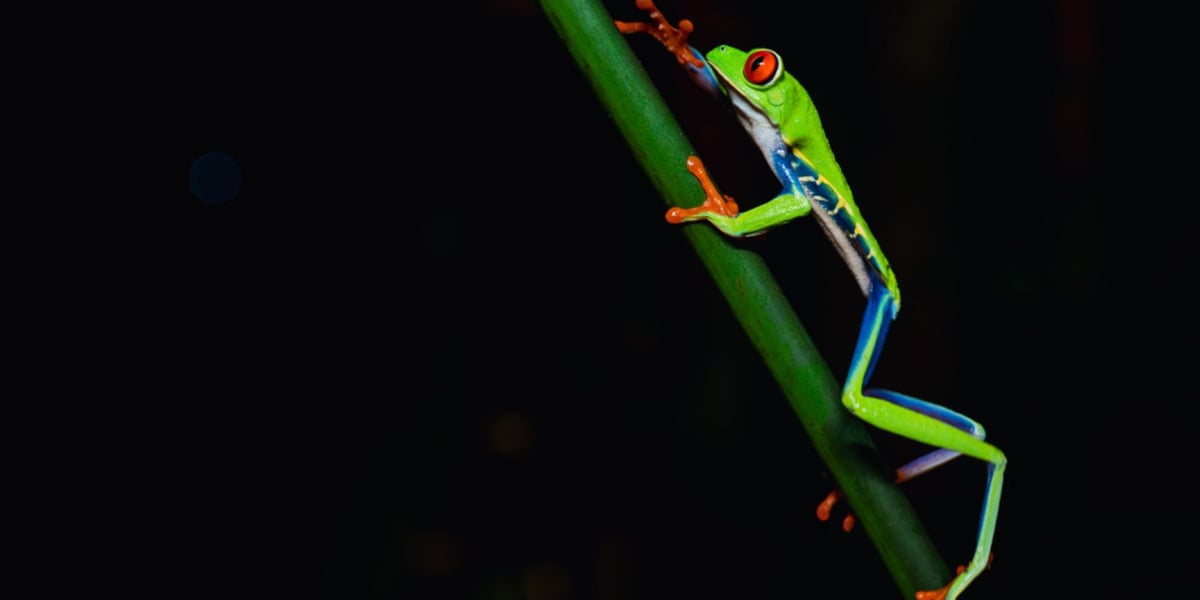
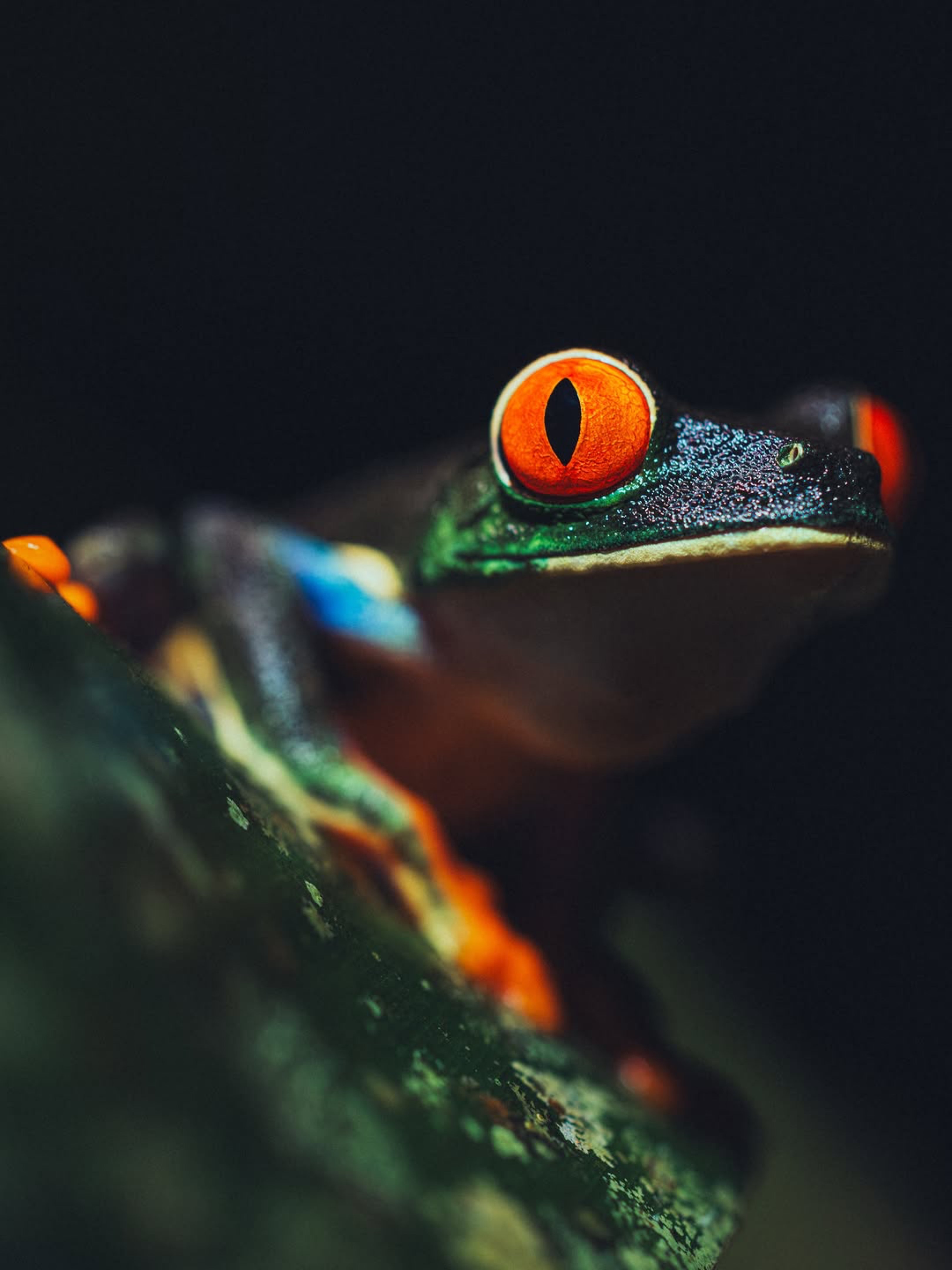
Few animals have become more closely associated with Costa Rica than the red-eyed tree frog.
During the day, it can be surprisingly difficult to find. The frog folds its bright limbs beneath its body, closes its eyes, and rests against vegetation. Its green back becomes camouflage.
At night, the strategy changes.
Red-eyed tree frogs become active, moving through vegetation and feeding on insects. Males call around breeding sites, and females lay egg clutches on vegetation overhanging water so newly hatched tadpoles can fall into the pond below.
The animal people travel to Costa Rica to photograph is, biologically, designed for the hours when most visitors have already gone inside.
Glass Frogs Over the Water
Glass frogs take camouflage further.
Their translucent or partially transparent bodies make their outlines harder to distinguish against wet leaves. Some species are so delicate that organs can be visible through the underside of the body.
Their reproductive lives are closely tied to night and water. Smithsonian researchers studying glass frogs have documented species mating after dark and laying eggs on vegetation hanging over streams. When tadpoles hatch, gravity completes the journey.
At Nayara Tented Camp, the reticulated glass frog is among the species highlighted on nighttime frog walks. Its pale green body is marked with yellow spots and dark patterning, but even with a guide, you have to slow down to see one.
The forest rewards those who stop scanning and start looking.
Daylight shows you the rainforest.
Darkness teaches you how to listen to it.
When Sound Replaces Sight
The most immediate change after sunset may not be what appears. It is what becomes audible.
Frogs call from ponds. Insects form a nearly continuous background. Leaves move. Water runs somewhere beyond the path. A distant animal can sound close, while something only a few feet away remains invisible.
Naturalists learn to treat those sounds as information. A call narrows the search to a species. A particular plant suggests where a frog may be hiding. Movement on one leaf rather than another changes where the flashlight goes next.
At night, seeing wildlife becomes less about covering ground and more about reading clues.
Walking the Forest at Night
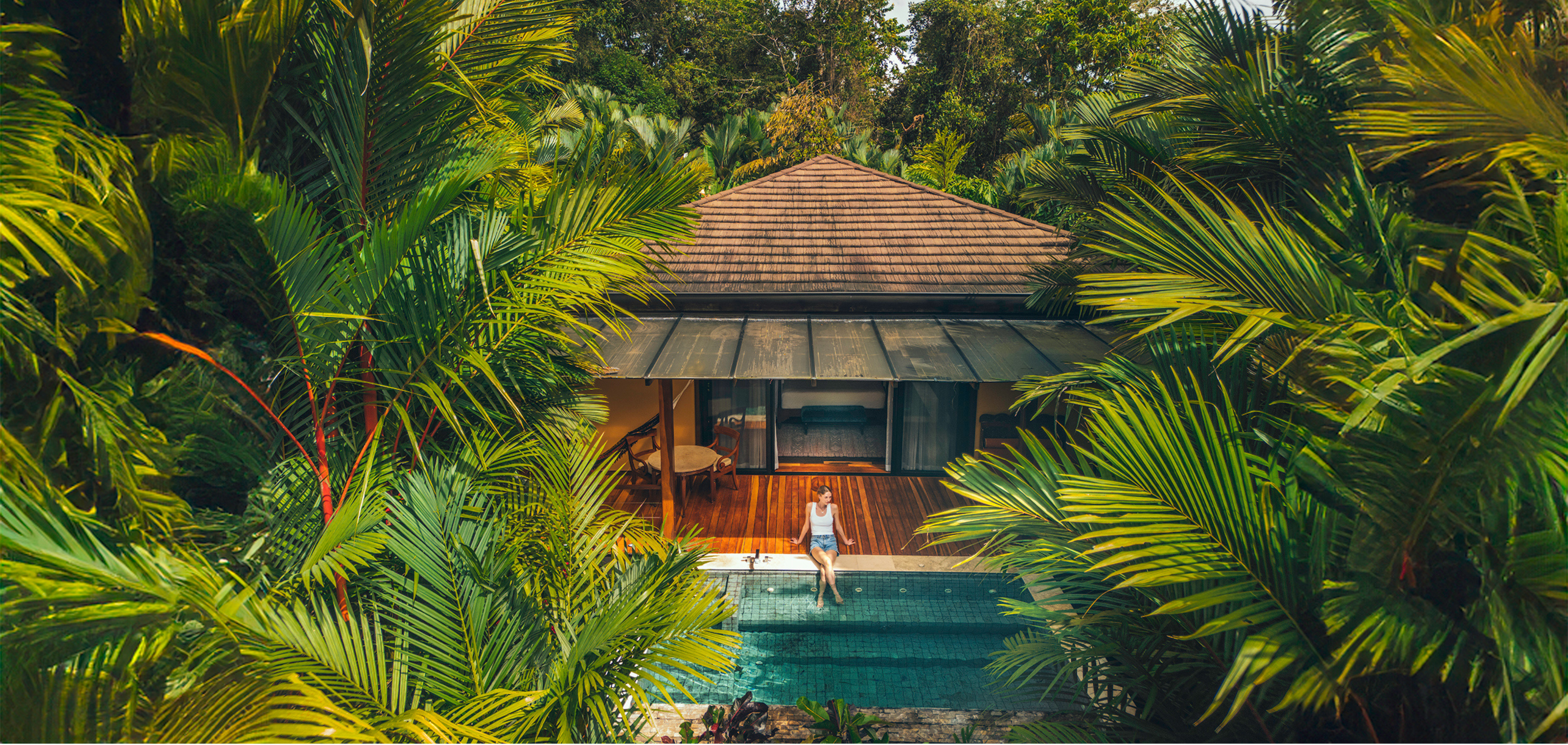
Nayara's Costa Rica resorts sit within the rainforest rather than beside it, so night doesn't require a long excursion to get interesting.
Nayara Gardens organizes nightly frog watching around the resort ponds with in-house naturalists. Nayara Springs offers an on-property night walk focused on frogs living within the same forested grounds. Nayara Tented Camp similarly highlights red-eyed tree frogs, reticulated glass frogs, and other nocturnal life after dark.
The advantage of a naturalist is not simply spotting more animals. It is understanding why they are where they are.
Why this pond? Why this leaf? Why this call? Why now?
A frog walk becomes a lesson in how the rainforest organizes itself after sunset.
Hot Springs After Sunset
Another reason night works so well in Arenal.
Heat feels different once the air cools.
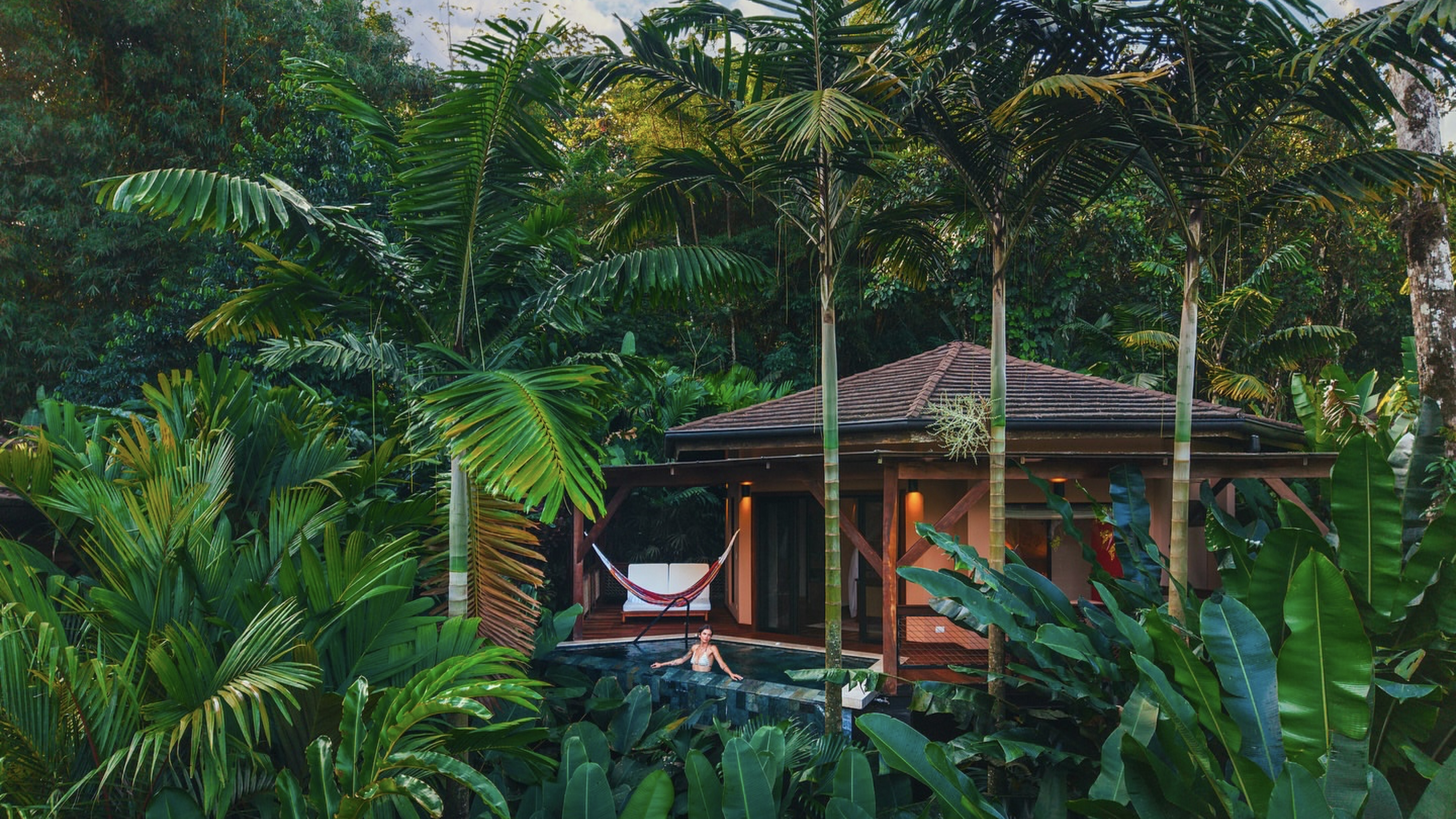
At Nayara Springs and Nayara Tented Camp, private mineral-rich hot-spring pools sit directly beside the rainforest. At Nayara Gardens, the Termas hot-springs circuit is secluded among vegetation.
After dark, much of the visual landscape disappears. Steam becomes more visible. The sound of insects and frogs moves closer. Water that felt restorative during daylight can feel almost private once the forest beyond it turns black.
The volcano created the heat. Night changes how you experience it.
Wine, Cocktails, and the Forest at Night
Not everything after dark needs a flashlight.
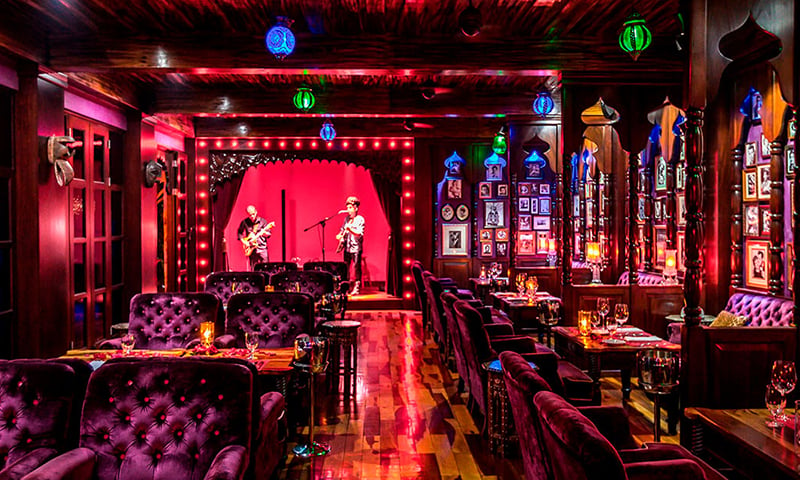
At Nayara Springs, Nostalgia Wine Bar turns the evening inward with wine flights and South American bottles after dinner. Amor Loco offers a more theatrical fine-dining setting. Cielito Lindo extends the evening outdoors with cocktails and rainforest views.
At Nayara Gardens, Nostalgia, La Terraza, and the resort's bars create their own version of the night, while the Termas hot springs remain tucked into the forest nearby.
The contrast matters.
One hour, you may follow a naturalist to a pond, listening for frogs. The next, you sit with a glass of wine while those same calls continue outside.
The rainforest does not stop because dinner begins.
What Night Reveals
Daytime Costa Rica is easy to understand as abundance.
Green everywhere. Birds overhead. Waterfalls. Volcano views. Tropical flowers. Wildlife hiding in the canopy.
Night reveals something subtler.
The same forest is governed by timing. Frogs wait for humidity. Calls replace color. Predators and prey operate in darkness. Species that were almost impossible to notice at noon suddenly become the center of attention.
The rainforest does not contain one world. It contains overlapping worlds, and sunset is the handoff between them.
Stay Awake for the Second Rainforest
Frog walks, natural hot springs, rainforest dining, and evenings surrounded by Arenal's sounds after dark.
Albert Ghitis leads digital marketing at Nayara Resorts, overseeing editorial, email strategy, organic social, paid social, search, and AI discovery. He also hosts Nayara Horizons. Explore the latest episodes below.
Explore the Podcast
Conversations about the people, places, cultures, and ideas behind Nayara's destinations.
Frequently Asked Questions
Why are frogs easier to see at night in Costa Rica?+
Are red-eyed tree frogs nocturnal?+
What is the frog watching night tour at Nayara?+
Can you see glass frogs in Arenal?+
Can you use Nayara's hot springs at night?+
What can adults do at Nayara after dinner?+
- Nayara Tented Camp · Frog Watching and After-Dark Experiences
- Nayara Gardens · Frog Watching Night Tour
- Nayara Springs · On-Property Frog Watching
- Nayara Springs · Wine, Cocktails, and Dining
- Smithsonian's National Zoo · Red-Eyed Tree Frog Nocturnal Behavior
- Smithsonian Tropical Research Institute · Red-Eyed Tree Frog Biology
- Smithsonian Institution · Glass Frog Reproductive Behavior