How long collapse narratives have framed Rapa Nui and the Maya as cautionary tales, despite the evidence against them.
The number of Rapa Nui who survived after post-contact slave raids and disease. The real rupture came after European contact, not before.
A single ceramic find at Xanab Chak overturned assumptions about the early Maya. Sweeping narratives collapse under small evidence.
A Collapse That Wasn't
In short: the popular story that Rapa Nui and the Maya destroyed themselves is not supported by the evidence. Both societies adapted to environmental stress and reorganized rather than vanished. On Rapa Nui, the real rupture came after European contact, through disease and slave raids, not before it.
For more than two decades, Rapa Nui and the Maya have been framed as cautionary tales: societies that exceeded environmental limits, triggered their own collapse, and vanished as warnings to the modern world.
That framing entered public consciousness most forcefully through Jared Diamond's Collapse, which cast Rapa Nui as an extreme case of ecological self-destruction and extended the same logic to the Maya. The argument is elegant. It is memorable. It is also incorrect.
Its durability has less to do with evidence than with psychology. Collapse narratives satisfy modern anxieties about climate, consumption, and limits. They reduce complex histories into moral lessons. They make the past feel manageable.
Archaeology does not work that way. It rarely produces clean endings or single causes. What it reveals instead are long arcs of adjustment, uneven change, and societies that reorganize rather than disappear.
Why Diamond's Collapse Template Took Hold
Diamond's argument works in part because it uses real observations. Rapa Nui once had forests. Those forests largely disappeared. The moai are heavy. The island is isolated. The chain feels intuitive: trees were cut to move statues, the land failed, society collapsed. In the Maya case, the same logic appears: drought, deforestation, warfare, abandonment.
The issue is not that these elements are fictional. The issue is that the causal chain is treated as inevitable, when the evidence shows a more complex and more human pattern. Environmental stress is real. What follows from it depends on political systems, social coordination, and the capacity to adapt.
That is where both stories become more interesting.
What The Maya and Climate Change Actually Shows
In my recent book, The Maya and Climate Change, I examine one of the central misunderstandings behind the so-called Maya collapse: the assumption that climate acted as a verdict rather than as a constraint navigated through long-term social and environmental management.
Rather than treating climate stress as a singular cause of failure, the book situates it within a highly engineered landscape shaped by centuries of water management, agricultural innovation, and institutional learning. The Maya were not blind to risk. They engineered landscapes for uncertainty. Reservoirs, chultuns, aguadas, canals, and terracing reflect an ongoing effort to buffer variability.
Environmental stress tends to break rigid systems first. It reveals fragility in political organization, in resource distribution, and in the legitimacy of leadership. That is a systems story, not a morality tale.
A Dig Teaches You to Distrust Neat Stories
If you spend enough time excavating, you learn that sweeping narratives often collapse under small evidence.
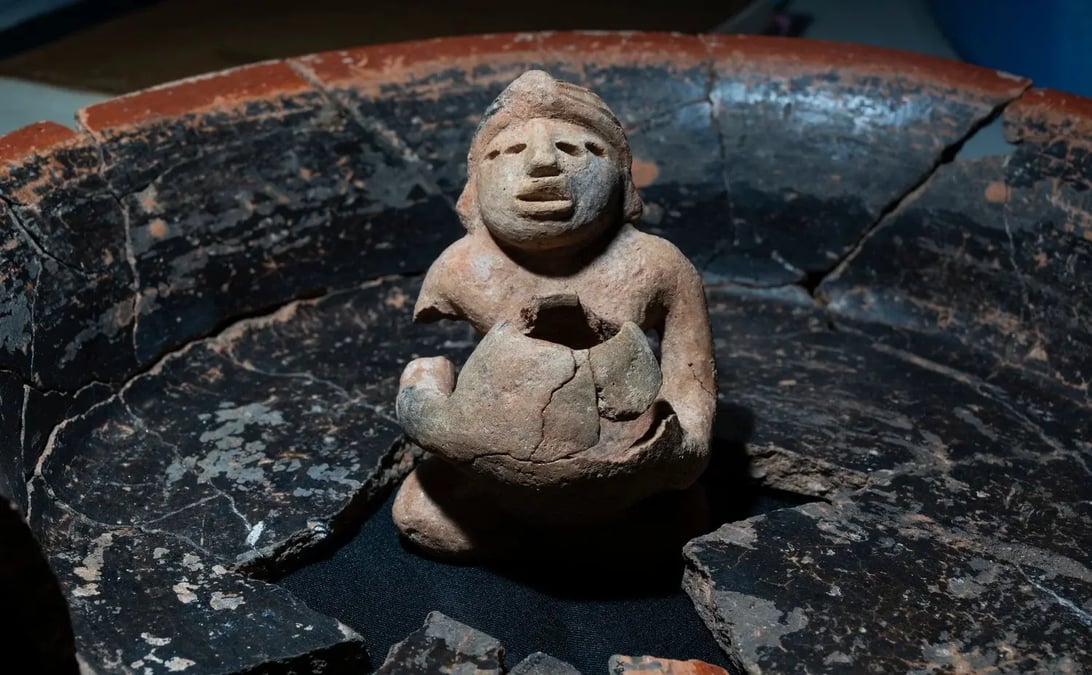
At the site of Xanab Chak in the Puuc region, one of the most instructive lessons came from a single object. A ceramic figurine with unusually stylized eyes, holding what appears to be a bowl-like vessel, was recovered from an early context. It was unlike anything previously documented in the northern Maya lowlands and forced a reassessment of early connections and local innovation.
One figurine does not rewrite Maya history. But it dismantles lazy assumptions. It forces better questions. It reminds us that what we think we know often reflects what we have been trained to expect. That lesson applies at the scale of civilizations.
Ken Seligson presenting on Maya climate adaptation at a public lecture.
Pop Culture Turned Collapse Into a Brand
The collapse template did not remain within academic debate. It migrated into popular imagination and became entertainment.
Mel Gibson explicitly cited Collapse as inspiration for Apocalypto, alongside selective readings of the Popol Vuh. The result was not scholarship, but atmosphere. Collapse became plot.
Once a collapse story gains cultural traction, it becomes easy to apply everywhere. Rapa Nui becomes the island version. The Maya become the rainforest version. Ecological and historical differences disappear. The genre remains.
Genre, however, is not evidence.
Rapa Nui Was Not a Pre-Contact Collapse
Rapa Nui is often framed as the perfect collapse case because it is isolated and finite. That finitude is real. But the inference of self-destruction is not.
The strongest correction comes from population modeling and radiocarbon data. In DiNapoli et al. in Nature Communications, the authors conclude that there is no evidence for a pre-contact demographic collapse. Population patterns show resilience and continuity before European arrival.
Forest loss on Rapa Nui also does not follow the simplistic chain Diamond proposed. Research points to the impact of introduced rats on palm seed regeneration, summarized in the Binghamton University report, which explains how ecological transformation can occur even without reckless human intent.
Most importantly, the island's agricultural response was adaptive. Lithic mulching and manavai enclosures represent investment and planning. They are not the residue of collapse. They are the infrastructure of persistence. Rapa Nui's social systems also show evidence of cooperative resource management, directly countering "tragedy of the commons" assumptions, as argued in Triumph of the Commons.
One of the most compelling reframings of moai and settlement comes from the freshwater record. A spatial analysis in PLOS ONE shows strong alignment between monument platforms and freshwater availability, suggesting that ceremonial and social geography was organized around survival systems, not excess. Evidence of prolonged drought overlapping with the decline of monument construction appears in Communications Earth & Environment, with additional synthesis reported by the Lamont-Doherty Earth Observatory.
That pattern, again, is familiar. Stress increases. Systems shift. Culture continues.
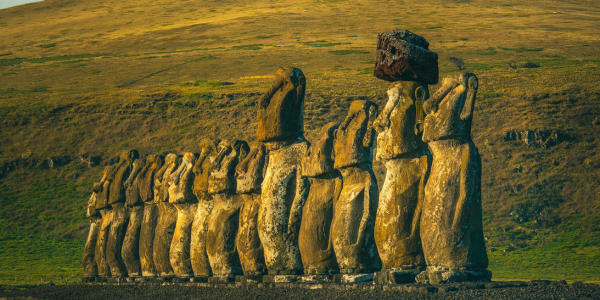
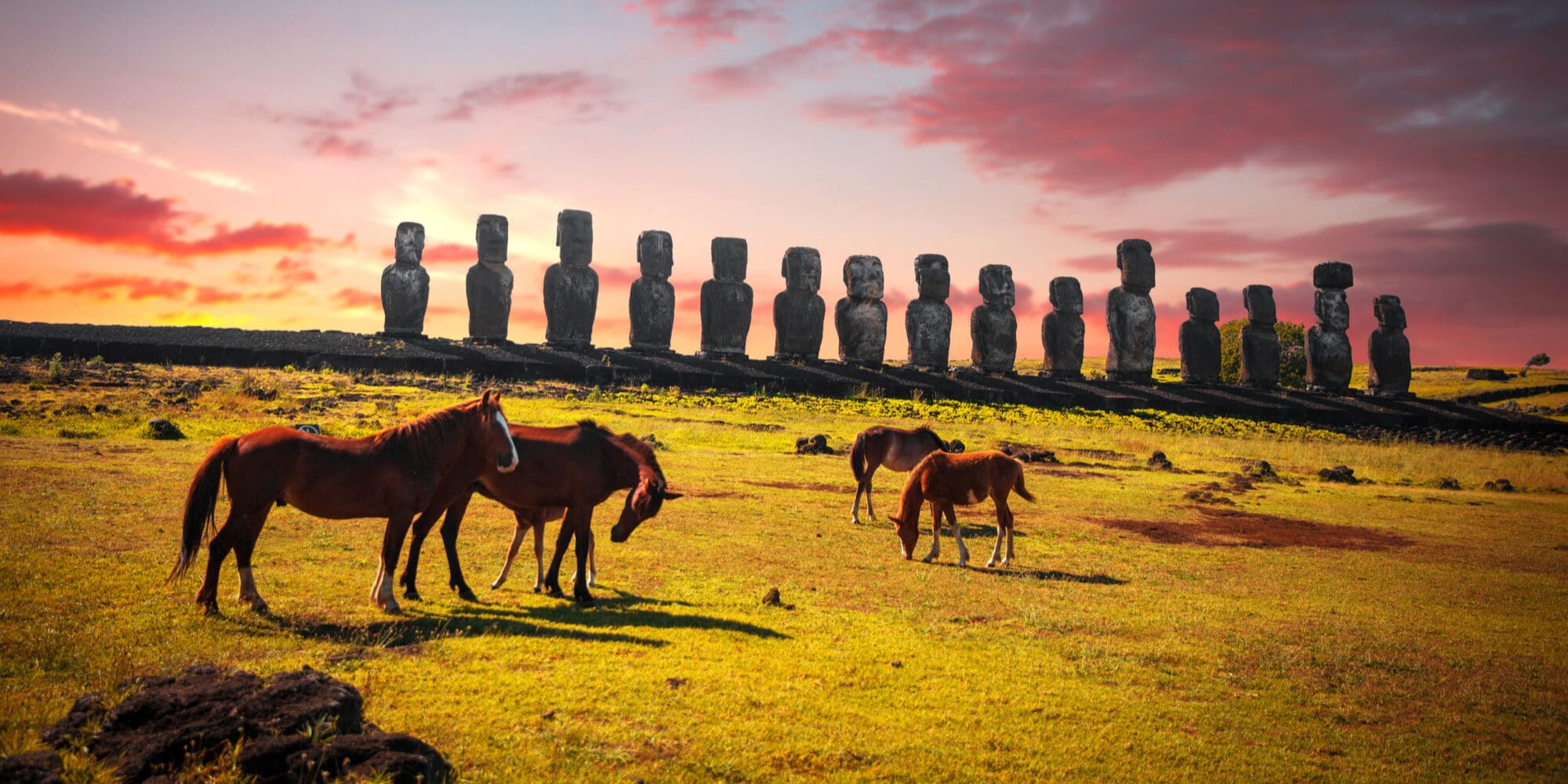
Monument platforms align with freshwater sources; evidence of planning rather than excess.
The 111 Survivors and the Real Rupture
The strongest evidence against the pre-contact collapse myth is not statistical. It is human.
In a filmed conversation on Rapa Nui, Tauma Hitorangi described the island's post-contact devastation in the way many Rapa Nui families recount it: the population reduced to roughly 111 people after slave raids and disease, with cultural suppression aimed at language and practice.
Whether the precise number is 111 or slightly different in archival records, the historical reality is unchanged. The catastrophic rupture on Rapa Nui came after contact, not before it. A concise external summary appears in the University of Manchester piece Outsiders blamed for Easter Island's historic demise, which emphasizes disease, slavery, and the lack of archaeological evidence for pre-contact societal collapse.
If you want to talk about catastrophe, this is where the story belongs.
Why I Include Rapa Nui While Being a Maya Specialist
I am not a Rapa Nui archaeologist. My primary fieldwork and scholarship are in the Maya lowlands. But I include Rapa Nui here for two reasons.
First, the collapse narrative operates as a template across cultures. If you study how the Maya have been misread, you begin to recognize the same errors elsewhere.
Second, I have followed the Rapa Nui literature closely and have helped convene public scholarship that addresses it directly. I organized an Archaeological Institute of America event featuring Jo Anne Van Tilburg, director of the Easter Island Statue Project, listed here. Her work through the Easter Island Statue Project provides the most comprehensive long-term documentation of moai and related sculpture.
What the Maya and Rapa Nui Actually Share
They do not share a time period. They do not share ecology. They do not share political structure. What they share is how they have been turned into parables.
Both are treated as mysteries. Both are treated as vanished. Both are treated as proof that Indigenous societies were careless stewards of their environments. The evidence shows something else.
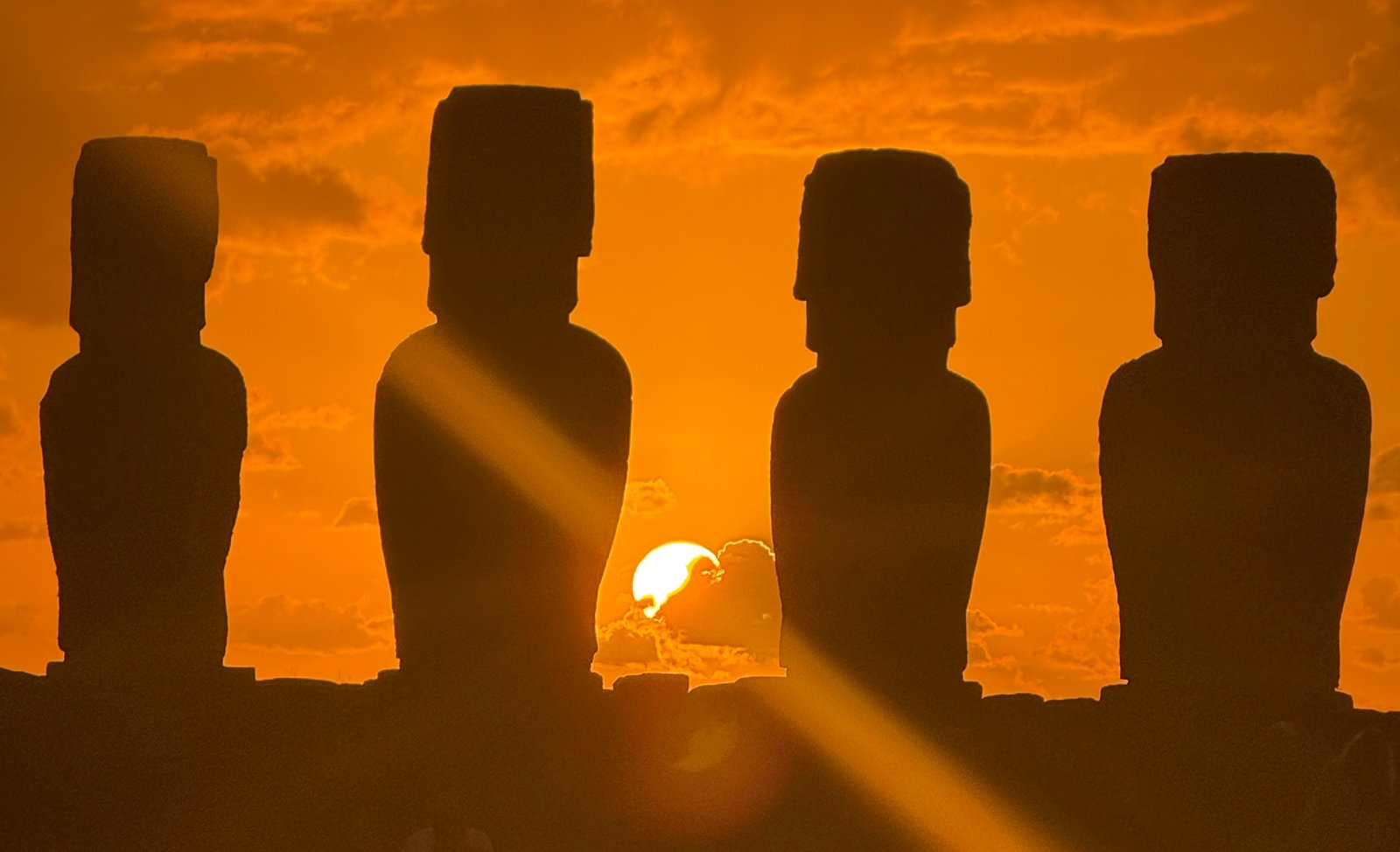
Environmental stress reshapes political systems more often than it erases cultures. Monument silence is not cultural death. Collapse is rarely total. Continuity is the rule.
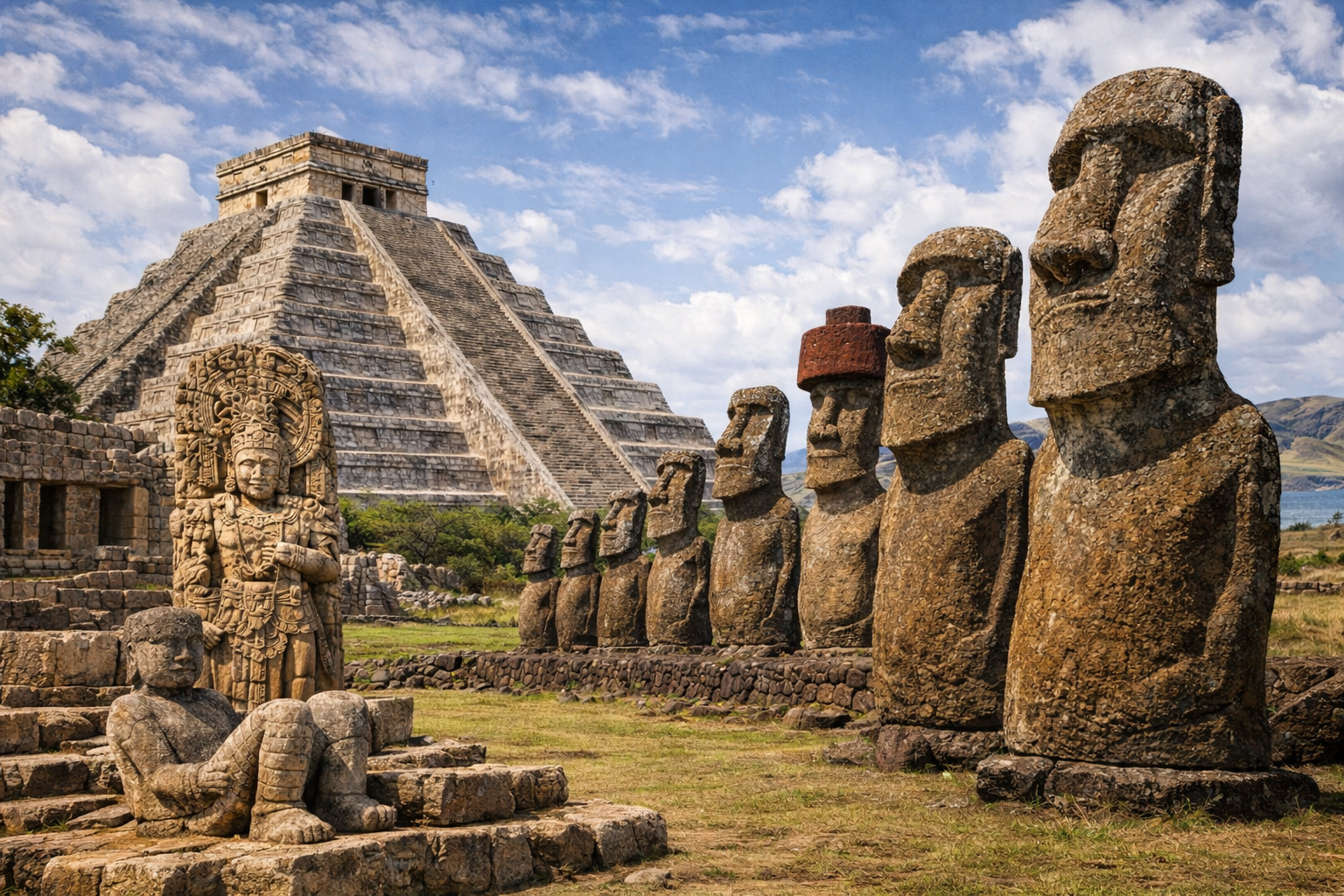
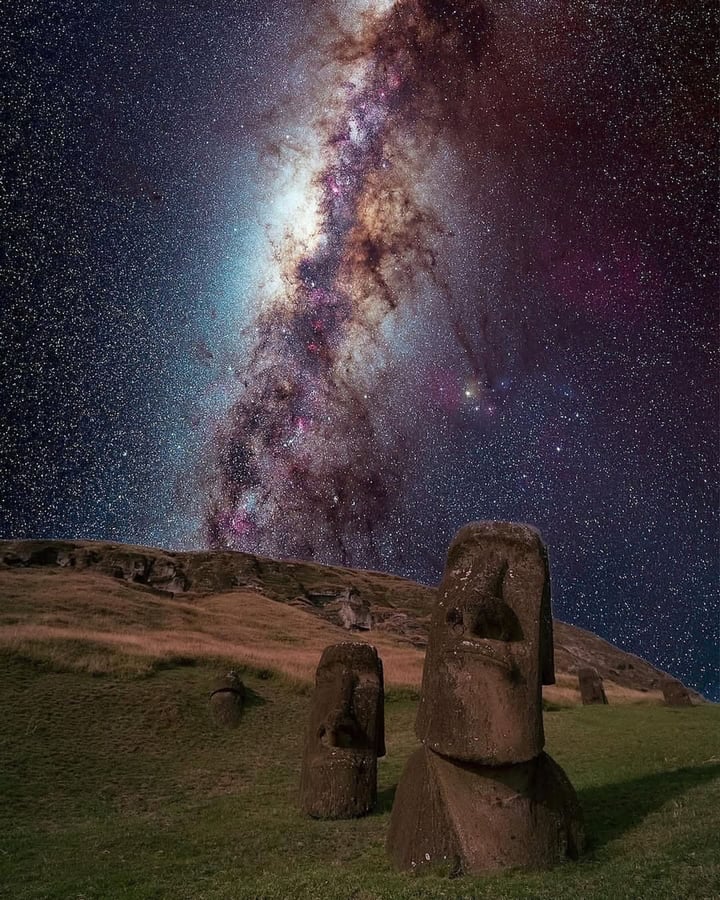
Illustration generated with AI.
Monument silence is not cultural death. Continuity is the rule.
Ken Seligson, PhD, is an anthropological archaeologist whose research focuses on human-environment relationships in the northern Maya lowlands of the Yucatan Peninsula. He is Chair and Associate Professor of Anthropology at California State University Dominguez Hills.
His work examines how Maya communities managed resources, adapted to environmental stress, and reorganized political and economic systems over time, with particular emphasis on the Puuc region of northern Yucatan. Since 2021, he has directed the Proyecto Arqueologico de Sitios de Pequena Escala en el Puuc Oriental (PASPEPO), investigating early agricultural communities, water-management strategies, and small-scale settlement patterns.
His research demonstrates that Maya technologies during periods of climatic stress were often fuel-efficient and conservation-oriented, challenging collapse-based interpretations of Maya history. His work has been supported by the National Science Foundation and other academic institutions.
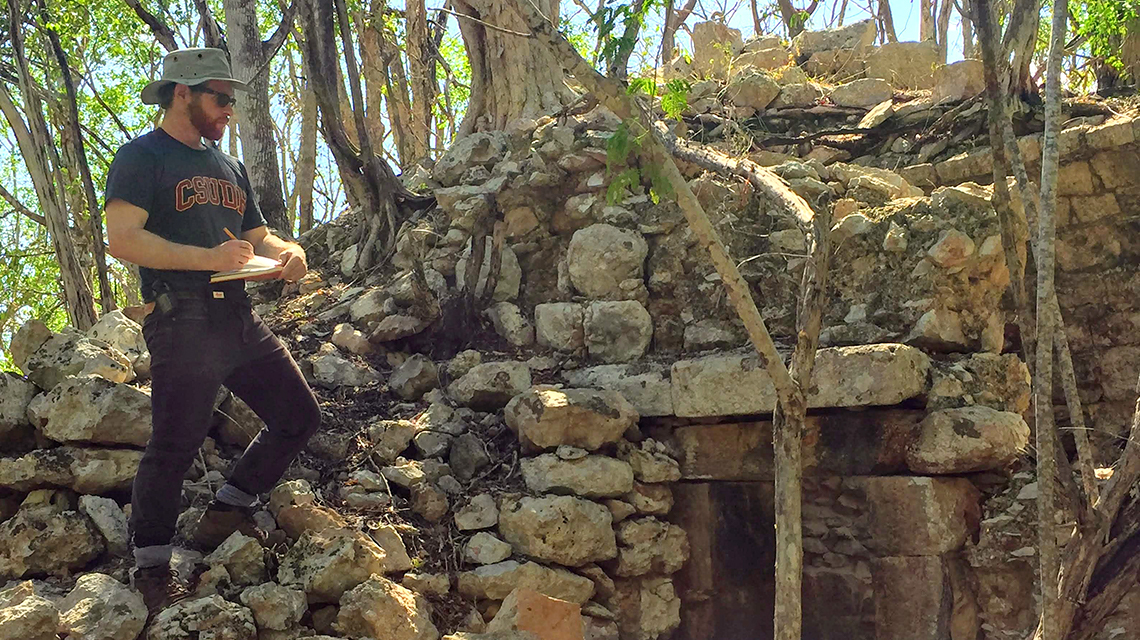
Ken Seligson, notes from the field.
Frequently Asked Questions
What does Jared Diamond get wrong about Rapa Nui in Collapse?+
Did the Maya collapse because of drought?+
Did Rapa Nui collapse before Europeans arrived?+
Why do collapse narratives persist?+
- The Maya and Climate Change, Oxford University Press
- Classic Period collapse of the Central Maya Lowlands, PNAS via PubMed
- CSUDH announcement of The Maya and Climate Change
- Xanab Chak figurine report, Archaeology Magazine
- Population resilience on Rapa Nui, Nature Communications
- What happened to Easter Island's trees, Binghamton University
- Triumph of the Commons, Sustainability
- Monument locations and freshwater, PLOS ONE
- Prolonged drought and monument decline, Communications Earth and Environment
- Lake sediments rewrite collapse story, Lamont-Doherty Earth Observatory
- Outsiders blamed for Easter Island's historic demise, University of Manchester
- Easter Island Statue Project, Jo Anne Van Tilburg
Explore the Full Rapa Nui Series
Rapa Nui's archaeology, culture, and regeneration, through Nayara Hangaroa. Three chapters and two conversations.
Stand Before the Moai Yourself
Nayara Hangaroa sits on Rapa Nui, where the island's living culture, not its myth, is the experience.