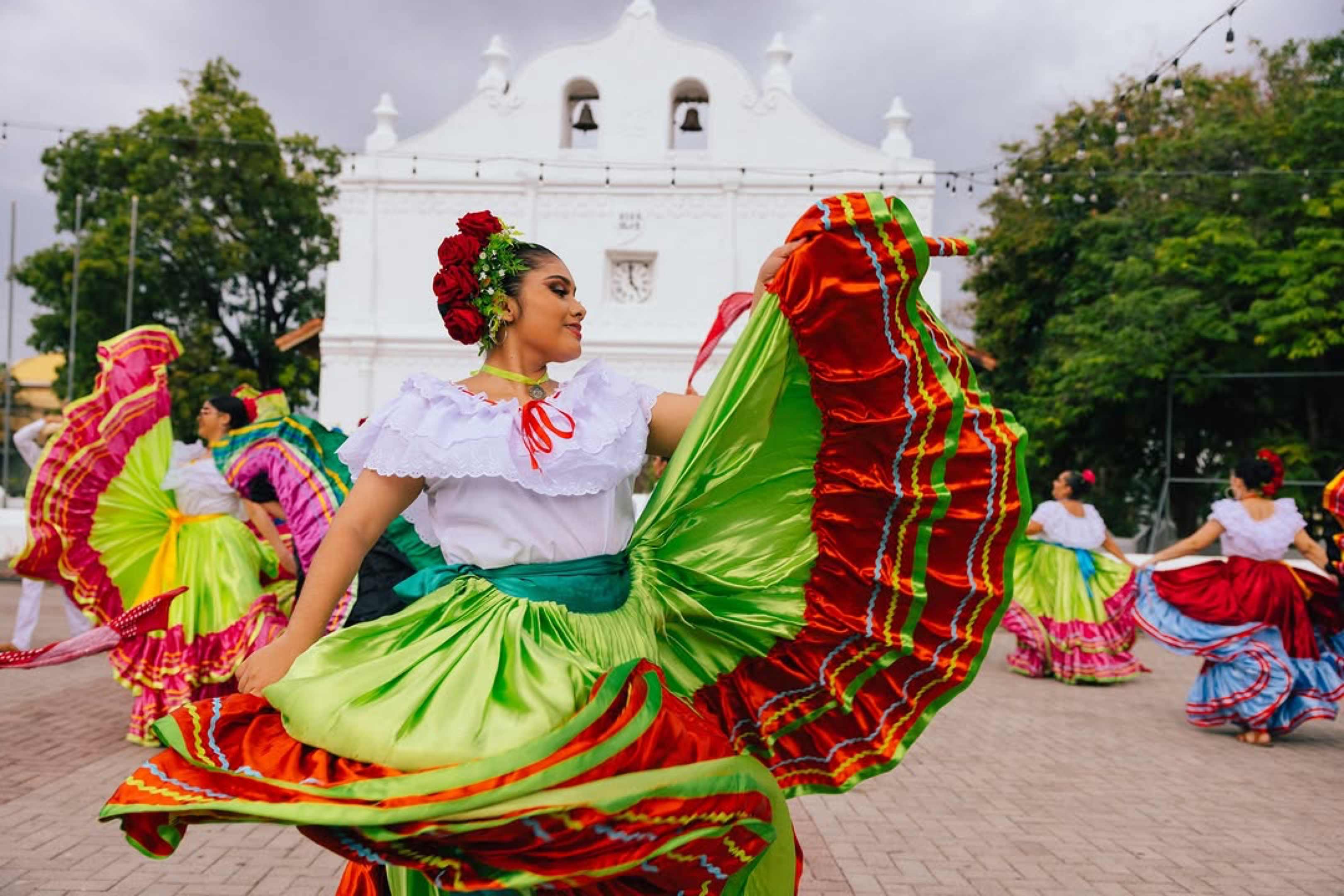
What Is Tapati Rapa Nui and Why It Matters
Every February, Rapa Nui turns culture into practice. Tapati Rapa Nui brings together athletic competition, music, dance, craftsmanship, food and ancestral ritual in a festival sustained by island families rather than staged for visitors.
Tapati takes over Rapa Nui each February through competitions, ceremonies and cultural practice across the island.
The Hitorangi, part owners of Nayara Hangaroa, participate as a Rapa Nui lineage rather than as representatives of the hotel.
From Tau'a Rapa Nui to Haka Pei and Vaka Ama, competition preserves practical knowledge shaped by island life.
A Festival Rooted in Identity
In short: Tapati Rapa Nui is a two-week festival held every February on Rapa Nui, where athletic competition, music, craft and ritual keep Rapa Nui culture alive as lived practice. Guests at Nayara Hangaroa can witness it firsthand.
Each February, Rapa Nui enters a different rhythm. Ceremonial grounds, volcanic slopes and coastal plains become the setting for Tapati Rapa Nui, a cultural festival where athletic competition, music, craftsmanship and ancestral ritual converge.
More than a calendar event, Tapati is a living expression of identity, connecting contemporary island life to traditions formed centuries before European contact. Its importance comes not simply from spectacle, but from participation. Families train. Skills are tested. Knowledge is demonstrated in public.
Cultural institutions such as the Museo Antropológico Padre Sebastián Englert document Rapa Nui culture as an ongoing system of language, lineage, land, and practice, not as something confined to archaeological remains.
For guests staying at Nayara Hangaroa, Tapati offers rare proximity to Rapa Nui culture as lived experience rather than representation.
From Moai to Birdman: The Roots of Tapati
Long before Tapati became Rapa Nui's defining festival, the island's history unfolded through ritual and monumental expression that anchored society in ancestral continuity. Polynesian settlers carried seafaring knowledge, agricultural practice, and cosmologies that took root on one of the world's most isolated inhabited islands.
By the late pre-contact period, religious and political attention increasingly centered on the Tangata manu, or Birdman system. Based at the ceremonial village of Orongo and its offshore islets, the annual ritual tied authority to competition. Representatives of rival lineages crossed open water and climbed volcanic cliffs to retrieve the first egg of the manutara, the migratory sooty tern.
Tapati in its modern form emerged in the twentieth century and was reshaped by Rapa Nui families themselves. Over time, ancestral language, traditional disciplines, music, craftsmanship, and competition transformed it into an institution rooted in Indigenous authority rather than external interpretations of island culture.
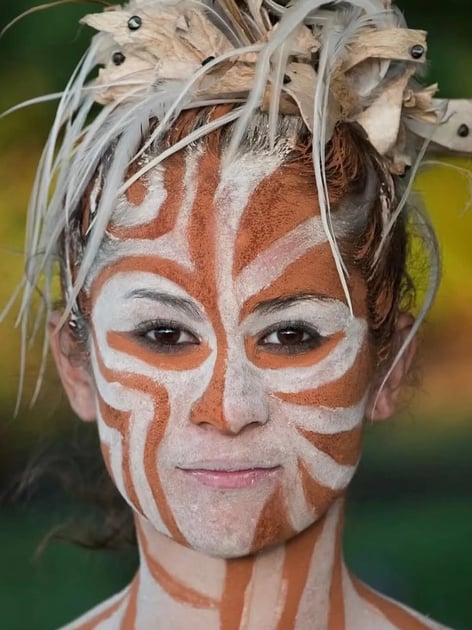
What distinguishes Tapati is how decisively it belongs to the Rapa Nui people themselves.
The Hitorangi Family and Tapati as Living Stewardship
Tapati is sustained not by institutions alone, but by families.
Among the lineages closely tied to the continuity of Rapa Nui culture is the Hitorangi family, whose history on the island stretches through generations of carving, navigation, farming, and cultural leadership. For the Hitorangi, Tapati is not preparation for a performance. It is an extension of responsibility inherited through family and community.
Knowledge survives through practice, apprenticeship and obligation. Carving, chants, language, food, and physical disciplines remain meaningful because people continue to perform them, teach them, and hold one another accountable to standards that predate modern tourism.
Today, that responsibility extends beyond the festival grounds. The Hitorangi family are part owners of Nayara Hangaroa and help shape how guests encounter Rapa Nui culture within a contemporary travel setting. The principle is the same: culture is safeguarded most credibly by those who live it.
During Tapati, family members participate as island community members, not as hotel representatives. Preparation, knowledge and discipline matter because the audience that ultimately matters is local.
Nayara Horizons: Beyond Travel explores this continuity further, with conversations recorded on Rapa Nui that examine how culture persists through lineage, archaeology, and daily responsibility.
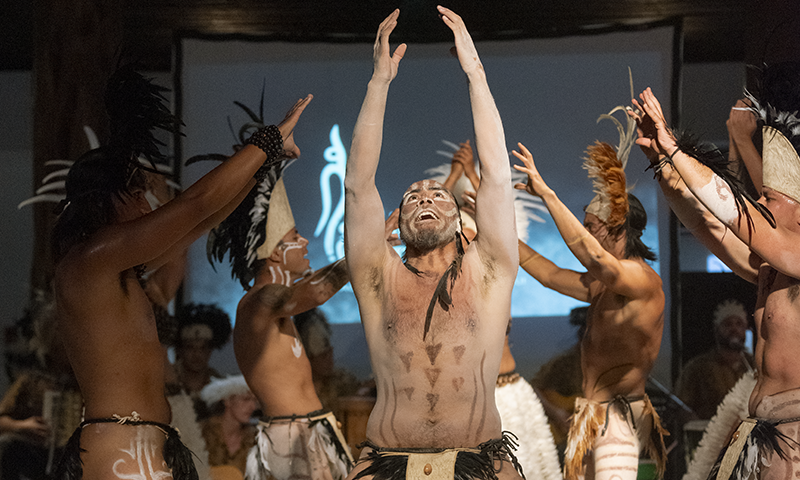
The Hitorangi family participates in Tapati to express lineage and responsibility.
Kings, Queens and Cultural Responsibility
Preparation for Tapati stretches far beyond the festival itself. Extended families and community networks support candidates by contributing time, training, resources, and cultural expertise.
During Tapati, candidates and their clans accumulate points through athletic, artistic and technical competitions. The eventual crown therefore reflects collective effort rather than individual celebrity.
The distinction matters. Tapati royalty is not simply ceremonial. The title carries expectations of cultural responsibility, discipline and public stewardship long after the festival ends.
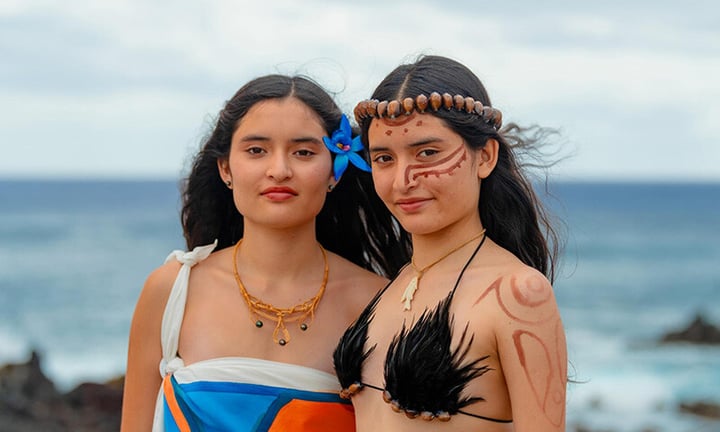
Tapati brings together competition, artistic skill and collective cultural responsibility.
Traditional Events of Tapati
Across the festival, competitors participate in disciplines shaped by the island's geography and cultural history:
- Tau'a Rapa Nui, combining outrigger paddling, running with banana bunches and swimming
- Haka Pei, the descent of Maunga Pu'i on banana trunks
- A'ati Hoi, horseback competition
- Vaka Ama, outrigger canoe racing
- Haka Honu and Haka Ngaru, wave-riding disciplines
- Hi Ika and Here Koreha, fishing competitions
- Mahute, bark-cloth production and decoration
- Traditional cooking, including Umu Tahu, Tunu Ahi and Po'e
- Ori Rapa Nui, dance and music in traditional dress
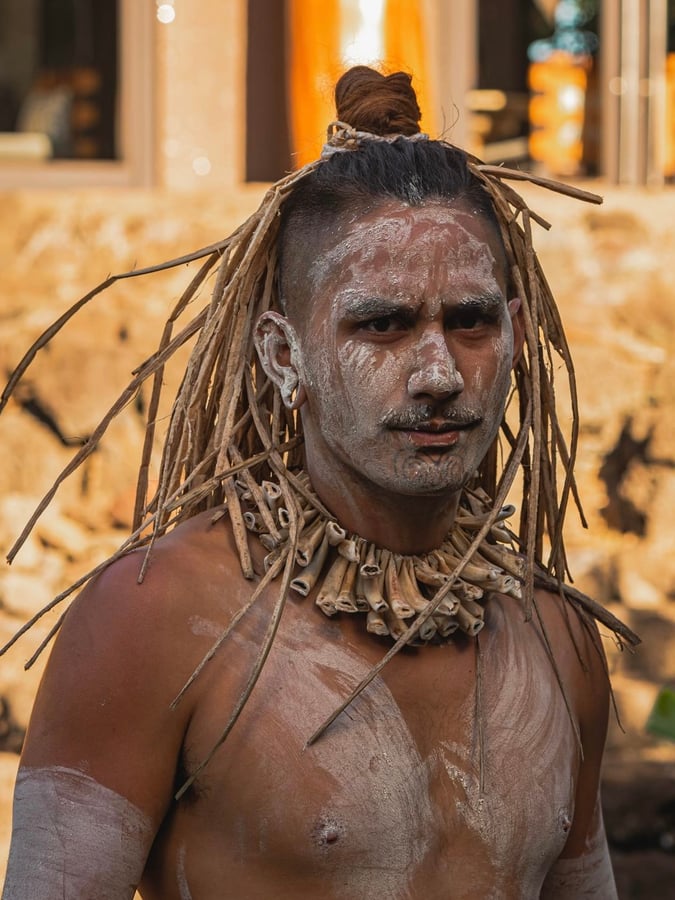
What connects these events is that skill remains embodied. Knowledge is not separated from the body, the landscape or the community evaluating it.
What Tapati Reveals
Tapati endures because it refuses to become symbolic.
On Rapa Nui, culture is not preserved simply by being remembered. It is preserved by being required. Skills must be practiced. Knowledge must be demonstrated. Belonging carries responsibility under conditions shaped by land, lineage and collective memory.
That is why Tapati cannot be reduced to a festival calendar or a list of events. It functions as a civic mechanism through which knowledge moves from one generation to another.
For visitors, the important shift is perceptual. What appears initially as celebration reveals itself as responsibility. What looks like performance resolves into obligation.
The island is not presenting itself. It is continuing itself.
The Rapa Nui Collection
Go deeper into Rapa Nui through archaeology, cultural survival, regeneration, living traditions and the engineering behind the moai.
Witness Tapati on Rapa Nui
Nayara Hangaroa places you within the island's living culture, in February and throughout the year.
Albert Ghitis
Albert Ghitis leads digital marketing at Nayara Resorts, overseeing editorial, email strategy, organic social, paid social, search, and AI discovery. He also hosts Nayara Horizons. Explore the latest episodes below.
Explore the Podcast
Conversations about the people, places, cultures and ideas behind Nayara's destinations.