
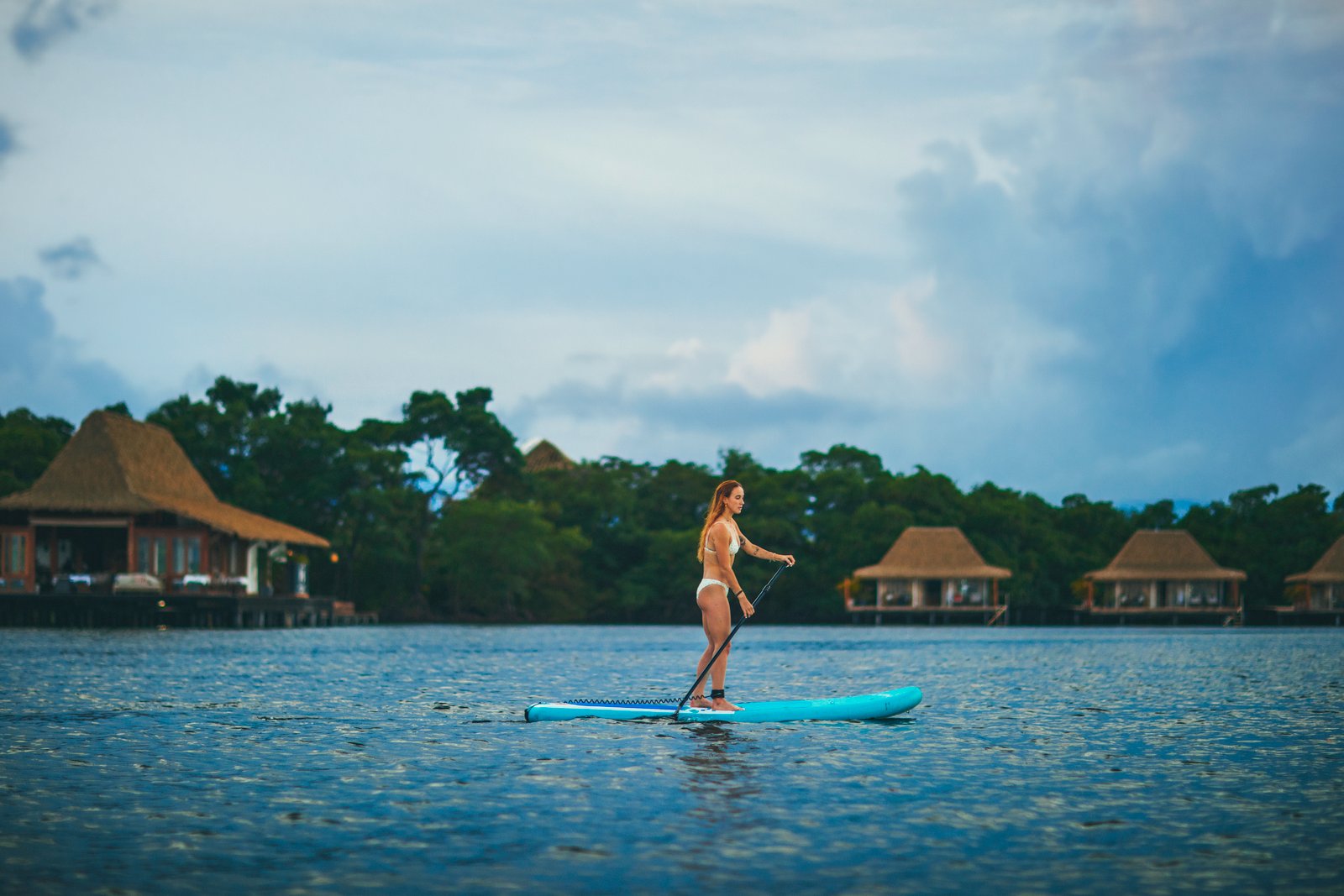
The world's first aerial beach: white sand built on stilts over the Caribbean Sea.
Ecosystems intersecting at the resort: coral reef, mangrove forest, and lowland rainforest.
The length of Kupu Kupu Beach, with the Tipsy Bar at one end and the open Caribbean beyond.
In short: Nayara Bocas del Toro is an adults-only, all-inclusive resort on a private island in Panama's Bocas del Toro archipelago, where coral reef, mangrove forest, and lowland rainforest intersect. Overwater villas, IBUKU treehouses, a century-old Balinese restaurant, and the world's first aerial beach sit a 30-minute boat ride from Bocas Town.
Three Ecosystems, One Island
The Bocas del Toro archipelago earned the name "Galápagos of the Caribbean" for the same reason Darwin's islands earned theirs: isolation bred biodiversity that exists nowhere else. Nayara Bocas del Toro sits at the intersection of three distinct ecosystems, coral reef below, mangrove forest at the waterline, and tropical lowland rainforest above.
Below the surface, tropical fish populate reefs that stretch in every direction. Ashore, some of the largest rainforests in Central America shelter the wildlife that draws travelers here in the first place. On Isla Frangipani, the resort places you in the middle of all of it: treehouses in the canopy, villas over the water, and the reef a fin-kick away.
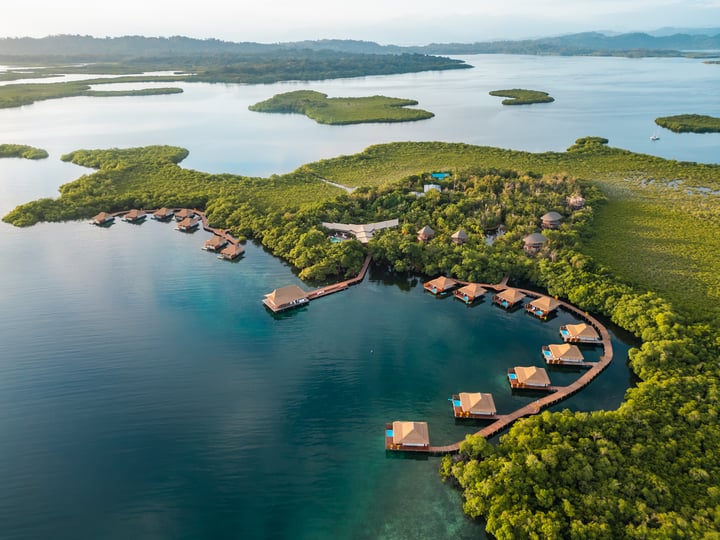
Isla Frangipani: where reef, mangrove, and rainforest meet.
Sunrise Over Sea
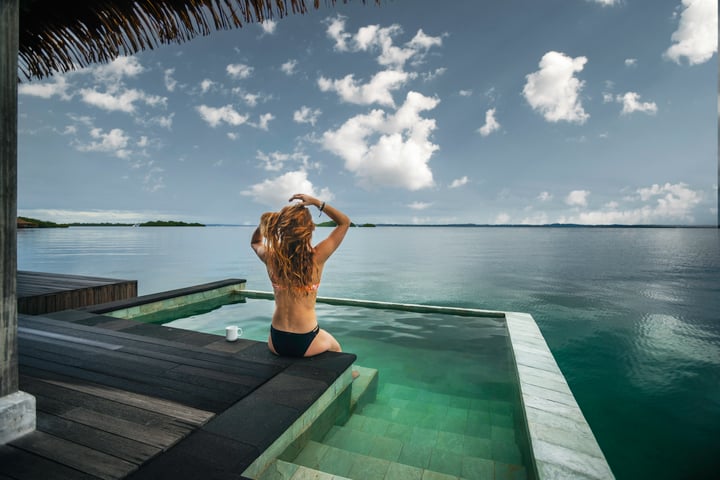
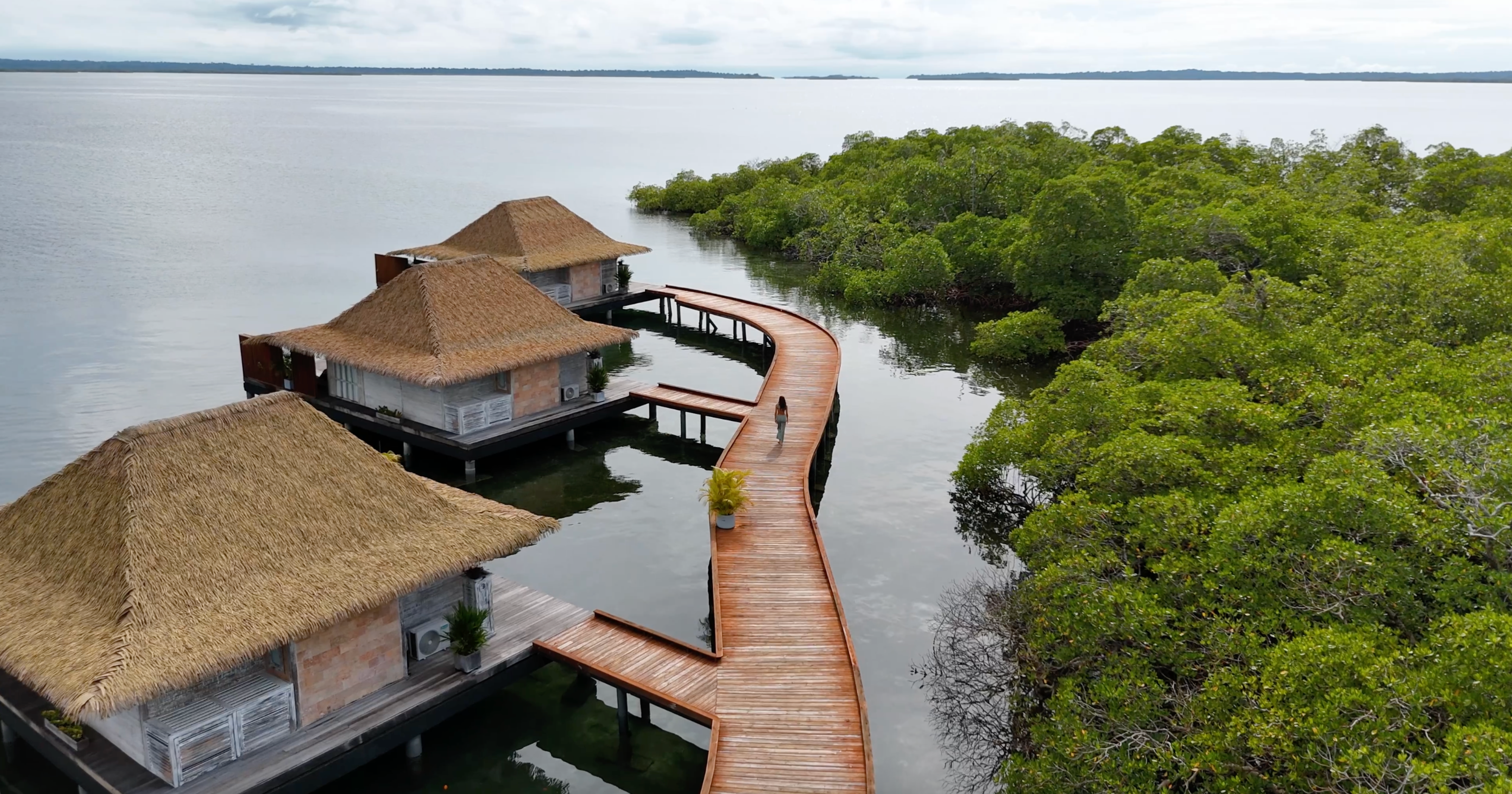
First light filters through the curtains of the overwater villa. On the deck, a plunge pool and a freshly brewed coffee start the morning, with fish visible just beneath the glass floor panel. Then a stir in the water: a school of eagle rays gliding into view, circling under the villa before continuing their morning rounds.
Later, a paddleboard traces the island's coastline, and a pod of dolphins arrives to investigate, darting beneath the board before moving on. That is an ordinary start to a day here. The archipelago's waters hold dolphins, turtles, rays, and the starfish that gave Starfish Bay its name. Most mornings put at least one of them in front of you.
The Call to Adventure
For nature at its own pace: bioluminescence tours under the cover of night, sailing to Monkey Island and Starfish Bay, or heading to Red Frog Beach and the bat caves. A private boat captain can take you further still, into calm waters and quiet inlets, to see Bocas del Toro the way the locals see it.
For adrenaline: ride the waves at Isla Carenero, dive shipwrecks and reefs across dozens of sites, explore the main islands by e-bike or ATV, or head out on a fishing excursion into these rich waters. The full range is in the catalog of experiences, and the spa menu balances any day of adventure.
.jpg?width=720&height=432&name=Nayara%20Bocas%20del%20Toro%20(1).jpg)
"The entry to the water is like entering a swimming pool, only the ocean is your pool. It seemed so real only moments ago, but this is something different, something special."
Dan Behm, on Kupu Kupu Beach
The Elephant House and the Coral Café
Ingredients for every meal are drawn from the islands, the sea, and the surroundings. The kitchen crafts a new dinner menu every night of the week: hand-selected meats, seafood pulled directly from these waters, and fresh organic produce, elevated by technique refined around the world.
The setting matches the plate. The Elephant House is a century-old Balinese structure transported halfway around the world, where lobster and a chilled white wine meet moonlight on the water and stingrays gliding past. For something more casual, the poolside Coral Café serves leisurely breakfasts and lunches in the sun. Room service covers every meal and drink for evenings the villa is all you need.
.jpg?width=720&height=432&name=Nayara%20Bocas%20del%20Toro%20(4).jpg)
Twilight in the Trees
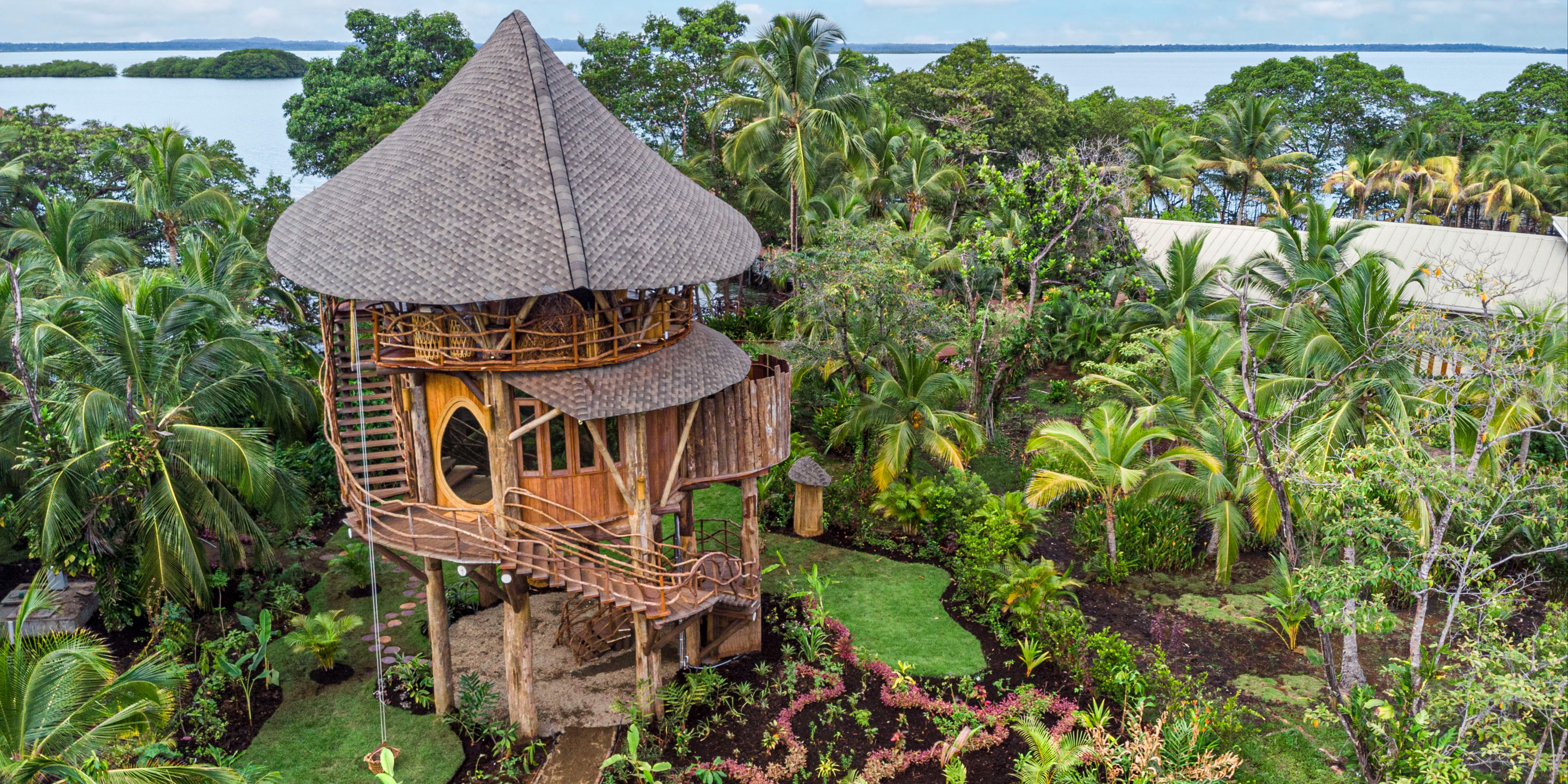
The other way to sleep on this island is among the treetops. Built from locally harvested bamboo and hardwoods recovered from the depths of the Panama Canal, the treehouses stand fifty feet above the forest floor, with sweeping views over forest, mangroves, and ocean. As twilight comes down, the sky changes color beyond the canopy. Then a bed fifty feet up, with 24-hour room service below.
Read: IBUKU Treehouses at Nayara Bocas del Toro →
.jpg?width=720&height=432&name=Nayara%20Bocas%20del%20Toro%20(6).jpg)
The World's First Aerial Beach
The island did not have a beach. The water surrounding it is warm, crystal clear, and inviting, but a man-made beach on the shoreline would have disrupted the mangrove and ocean floor. The only option was to build a beach on stilts over the water. No one had done it before.
Kupu Kupu Beach runs approximately ninety feet long by twenty feet wide. The Tipsy Bar, under a curving wood-shake roof, seats eight. Beach chairs accommodate twenty more, with umbrella tables at one end and a boardwalk running the full length. Four large palm trees appear to grow straight out of the sand; they are planted in tanks below the surface, monitored and nurtured to stay healthy. Beneath it all, ninety separate drains covered in geotextile pass rainwater but not sand, keeping the beach dry without disturbing the environment below.
The water entry was the largest challenge: no ladders, nothing to climb. Tiled stairs lead to a platform submerged in the water, so entering the sea feels like walking into a swimming pool, with a mid-level platform where you can sit, hang your feet in the water, and set down masks and fins between swims.
Explore the Full Bocas Series
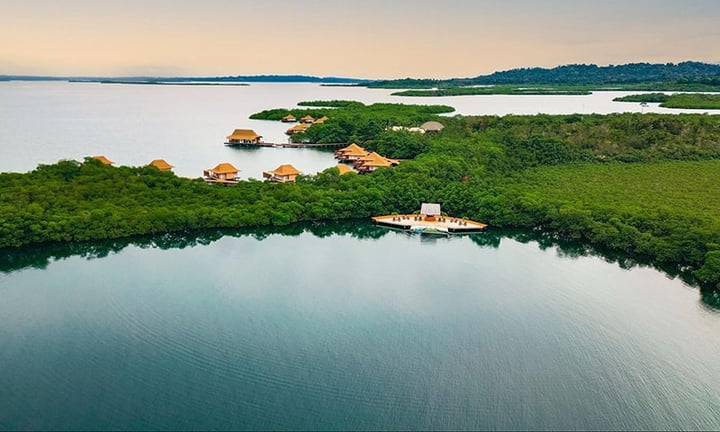
The private island Condé Nast Traveler readers named #1 in Central America, from the seabed up.
01 How We Built an Off-Grid Resort on a Private Island → 02 Building a City Beneath the Sea: Coral Reef Restoration → 03 The Treehouse of Your Dreams: IBUKU at Nayara Bocas → 04 5 Interesting Facts About Bocas del Toro →Frequently Asked Questions
Is Nayara Bocas del Toro adults-only and all-inclusive?+
What is Kupu Kupu Beach?+
How do you get to Nayara Bocas del Toro?+
What can you do at the resort?+
What awards has Nayara Bocas del Toro won?+
Your Private Island Awaits
Overwater villas, IBUKU treehouses, the world's first aerial beach, and the Galápagos of the Caribbean at your doorstep.
.jpg)