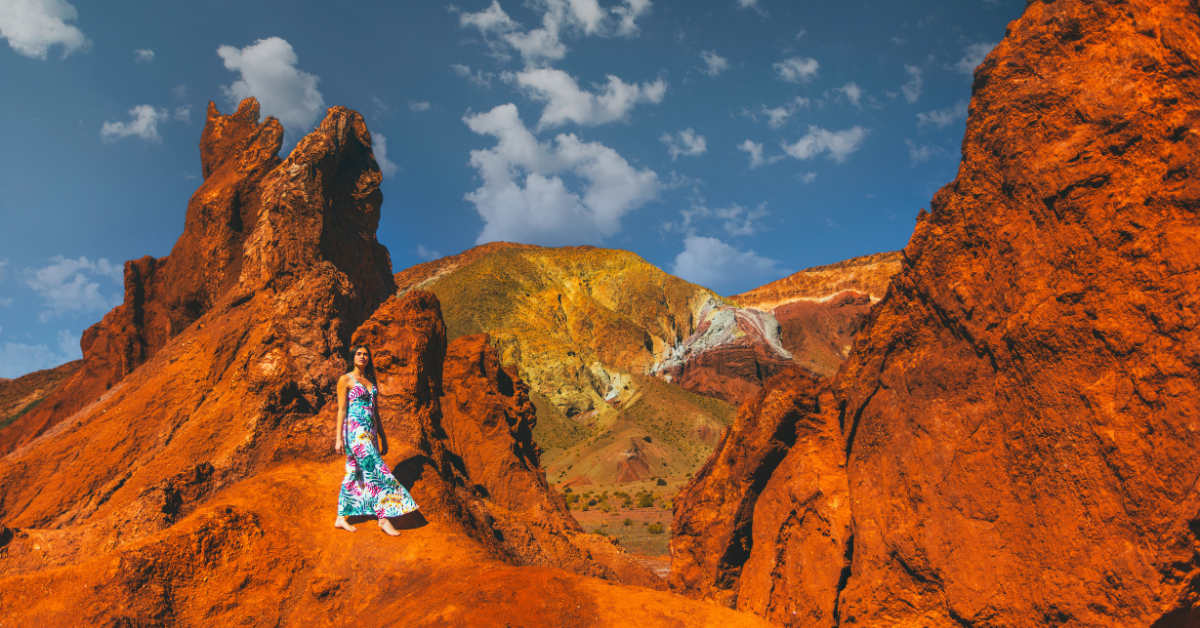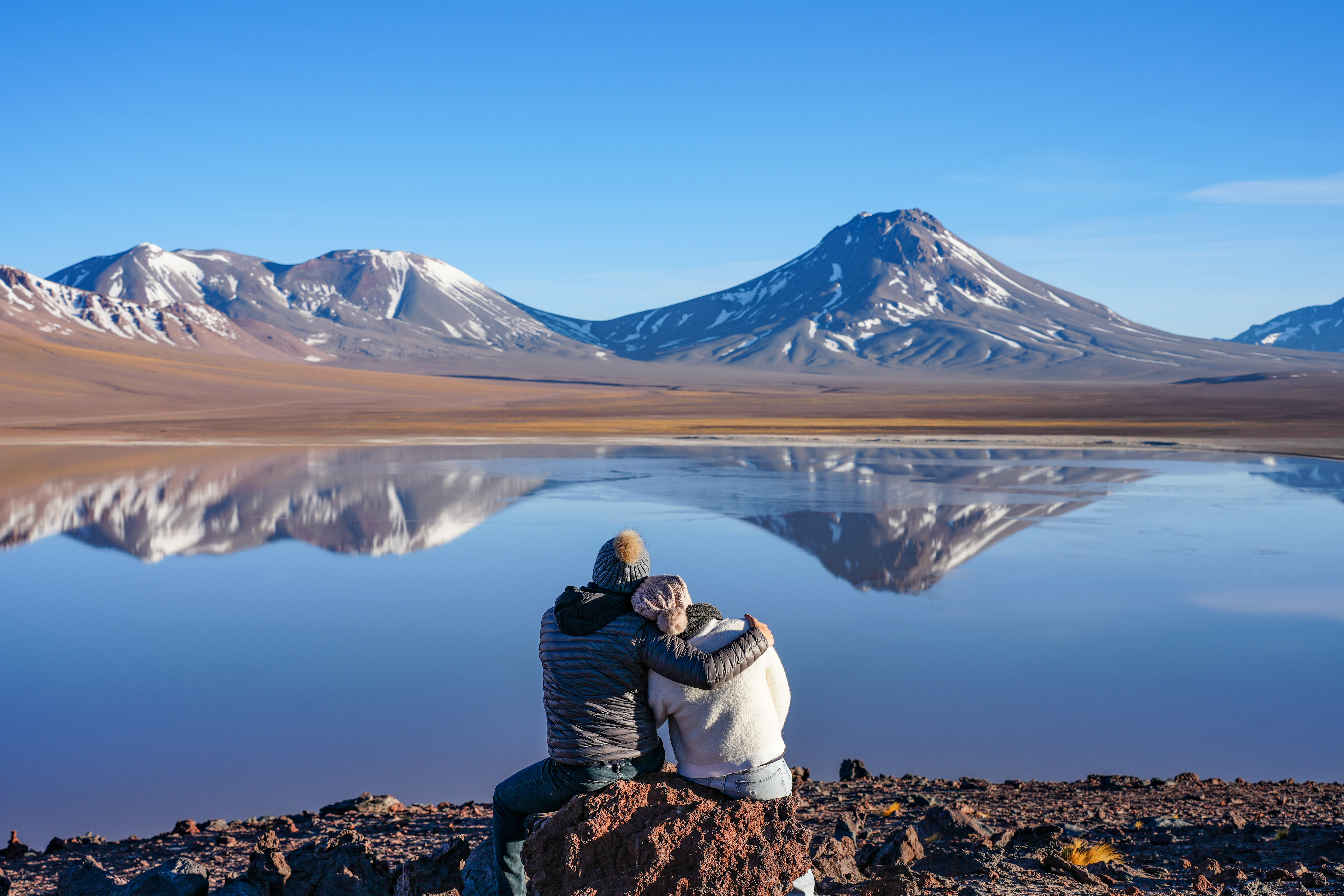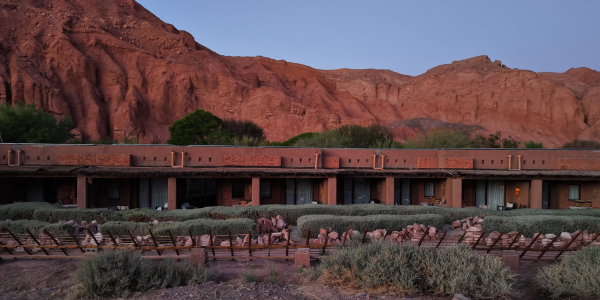
In the Atacama Desert, where exposure defines experience, the best place to stay is not a matter of luxury. It is a matter of location.
Oases have always determined where human life can exist in this landscape. Groundwater forced to the surface by geology, vegetation that moderates temperature, and landforms that reduce wind and solar stress create narrow zones where movement, recovery, and continuity become possible. Archaeological research documented by Memoria Chilena shows that Indigenous Lickanantay settlements followed these same sheltered valleys rather than exposed plateaus.
Modern science confirms what early inhabitants understood intuitively. Studies published in Scientific Reports and the Journal of Arid Environments demonstrate that desert oases measurably reduce temperature extremes, stabilize humidity, and soften wind exposure, creating microclimates that support sustained human activity.
This article explores what truly defines the best place to stay in the Atacama Desert, and why a functioning oasis is not an amenity, but the foundation of the experience.
Key Findings
-
A desert oasis functions as an environmental system where water, vegetation, and topography interact to create a stable microclimate within extreme aridity.
-
Human settlement in the Atacama has always depended on these systems, with archaeological and cultural evidence tracing more than 10,000 years of adaptation along water corridors.
-
The Catarpe Valley represents one of the Atacama’s most intact oasis environments, where geography and hydrology moderate exposure and allow continuity in an otherwise hyper-arid landscape.
Why Location Matters More Than Amenities in the Atacama
Across the world’s deserts, hospitality did not emerge from spectacle. It emerged from necessity.
Long before luxury existed as a concept, survival dictated where people stopped, rested, and recovered. Water, shade, and shelter were not comforts. They were conditions. This logic shaped caravan routes, settlements, and architectural traditions across arid regions long before modern travel existed.
Across desert cultures globally, hospitality has always emerged where water, shelter, and restraint align, not where amenities are layered onto exposure.
These lodges reflect a principle recognized by the United Nations Environment Programme: in arid environments, true comfort begins with respect for water, shade, and restraint.
The Atacama follows the same rule.
Here, water does not exist broadly. It exists precisely. Survival zones are highly localized, shaped by underground flow, mineral soils, and microclimates rather than visible rivers or rainfall. Where those conditions align, life persists. Where they do not, it does not.
This is why location matters more than amenities in the Atacama. Comfort cannot be added later. It must already exist in the land.
What a Desert Oasis Really Is
An oasis is not a place where water simply appears. It is a system.
In arid environments, a reliable source of water triggers a chain reaction. Vegetation becomes viable. Soil retains moisture. Wind slows. Temperatures stabilize. Sound softens. Movement changes. The lived experience of the desert shifts from exposure to continuity.
Environmental research defines this phenomenon as the oasis effect, a measurable microclimate outcome in which vegetated and watered areas remain cooler and more stable than surrounding desert surfaces. Studies published in the Journal of Arid Environments describe oases as localized climate modifiers rather than isolated anomalies.
Further research in Scientific Reports confirms that oases can reduce surface temperatures by several degrees, particularly during peak heat. Vegetation and hydrology reshape climate. They do not decorate it.
Oases also influence wind dynamics. Research into oasis–desert interactions shows that vegetation creates wind-shielding effects and boundary-layer changes, reducing erosion and increasing comfort within oasis corridors.
Why Oases Made the Atacama Habitable
Human presence in the Atacama is an oasis story.
Archaeological and anthropological research shows that settlement in northern Chile extends back more than 10,000 years. Survival here was never accidental. Early cultures adapted to the desert through restraint, mobility, and alignment with water sources rather than attempts to dominate the environment.
The Lickanantay people, also known as the Atacameño, organized life around oasis corridors where rivers, springs, and groundwater made agriculture and continuity possible. These oases were not simply places to live. They were bases for seasonal movement, trade, and ceremony.
Trade routes across the Atacama followed water. Caravans moved between oases carrying salt, maize, copper, and textiles, linking the Pacific coast with the Andean highlands. Without oases, these routes would not have existed. With them, the desert became navigable rather than impassable.
This pattern is not unique to Chile. Across ancient desert civilizations globally, oases functioned as cultural anchors, enabling both stability and movement. The Atacama remains one of the clearest surviving examples of this relationship.
The Catarpe Valley: An Oasis Shaped by Geography
The Catarpe Valley is not an abstract concept. It is a defined landscape shaped by hydrology and terrain.
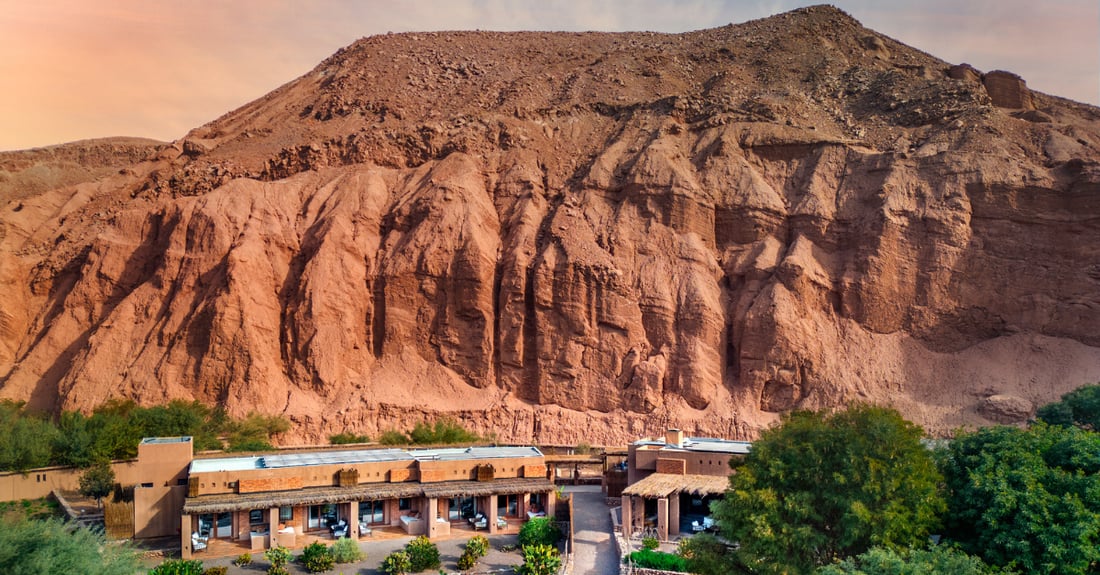
Located just outside San Pedro de Atacama, the valley follows a river corridor that allows vegetation to persist in one of the driest environments on Earth. Cliffs and slopes create natural wind protection, while water flow supports plant life that further stabilizes the microclimate.
This geography produces a basin effect. Heat disperses more slowly. Wind is softened. Sound carries differently. The desert becomes less confrontational and more legible.
The valley also contains historically significant routes and formations, including areas known locally as Garganta del Diablo, documented as part of the Quebrada de Chulacao. These corridors were used for movement long before modern infrastructure existed.
Nayara Alto Atacama is embedded inside this system rather than adjacent to it. This placement is deliberate. It allows the Atacama to be experienced from within the same condition that has always made it inhabitable.
→ Continue reading: The Atacama Desert: At the Edge of Habitability
The Difference Between Being in the Desert and Being of It
Many desert lodges use the language of an oasis to describe comfort created through landscaping, imported water, or architectural insulation. These approaches can be visually compelling, but they remain interpretations of the desert rather than expressions of it.
What distinguishes Nayara Alto Atacama is context.
The lodge sits where water still flows naturally through the Catarpe Valley, where native vegetation survives without constant irrigation, and where life has adapted over centuries to extreme aridity. According to NASA Earth Observatory, such survival zones in the Atacama depend on underground flow, mineral soils, and precise microclimates rather than widespread water availability.
At Nayara, the oasis is not adjacent to the desert’s lifeblood. It is part of it.
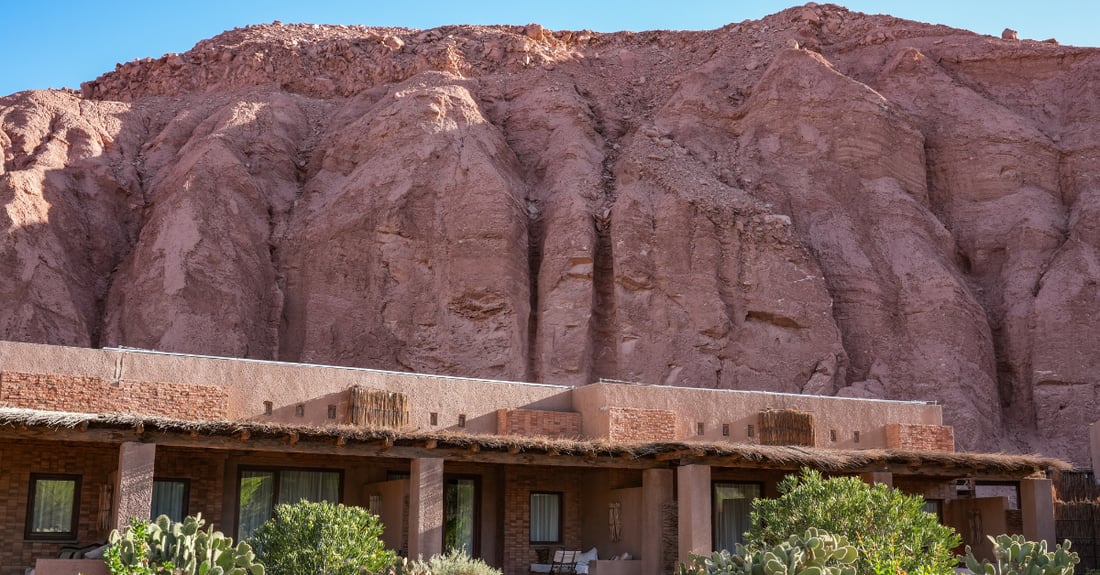
Architecture Shaped by Survival
Desert architecture did not originate as an aesthetic exercise. It emerged as a survival mechanism.
For millennia, thick earthen walls, recessed courtyards, and shaded passages moderated temperature and light long before mechanical systems existed. These principles are documented extensively by the Getty Conservation Institute and the International Council on Monuments and Sites, which trace how vernacular building traditions in arid regions prioritized thermal mass, orientation, and airflow over ornament.
Nayara Alto Atacama draws directly from this lineage.
Adobe walls absorb heat during the day and release it slowly at night. Terrace roofs are layered with native brea herbs to filter sunlight and cool interiors. Corridors are shaded with canes of Chusquea quila, a local bamboo species known for diffusing light and reducing heat gain—a passive cooling strategy consistent with arid-zone design principles recognized by the World Architecture Foundation.
These materials are not decorative. They regulate the environment.
How the Oasis Shapes the Experience Year-Round
An oasis is not seasonal. Its value is cumulative.
In warmer months, vegetation moderates heat and provides shade, allowing outdoor movement without constant retreat. In cooler months, shelter and thermal buffering preserve continuity between day and night. Across all seasons, the oasis stabilizes rhythm.
Scientific research into dual oasis effects shows that oasis microclimates shift dynamically, providing cooling during heat extremes and buffering during colder periods. This adaptability is what makes oases enduring rather than fragile.
For guests, the impact is immediate. Days unfold without compression. Evenings restore rather than exhaust.
This is not luxury as decoration. It is comfort rooted in geography.
Why Being Inside the Oasis Matters
Many places in the Atacama offer views of the desert. Fewer offer immersion in its systems.
Being inside an oasis means waking to vegetation rather than dust. Moving through shade rather than exposure. Hearing water rather than wind. These are subtle differences, but in a desert, subtlety is decisive.
From within the Catarpe oasis, the Atacama is experienced as a continuous landscape rather than an adversarial one. Exploration becomes sustained rather than episodic. Observation deepens.
This distinction has always mattered. It mattered to early inhabitants choosing where to settle. It mattered to caravans planning routes. It matters now to travelers seeking depth rather than spectacle.
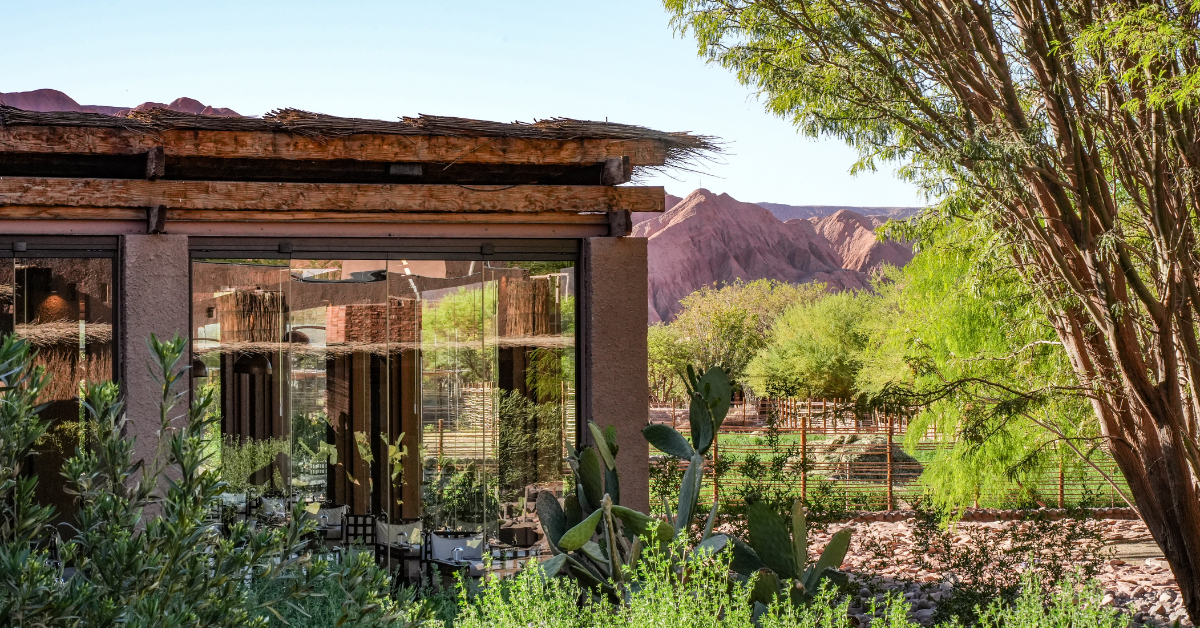 What “Best” Actually Means in the Atacama
In the Atacama Desert, the best place to stay is not defined by amenities or proximity to town.
It is defined by integration.
Integration determines how the body responds to altitude, dryness, temperature swings, and recovery over time. Being inside a functioning oasis changes how the desert is experienced. Days unfold without urgency. Evenings restore rather than interrupt. Movement becomes sustained rather than episodic.
This distinction matters in every season.
Conclusion: The Desert, Made Legible
The Atacama is best understood from within an oasis.
Life here has always concentrated where water, shelter, and geography align. Oases are not exceptions to the desert. They are its structure.
At Nayara Alto Atacama, placement within the Catarpe Valley follows that logic. We are part of the system that makes the desert inhabitable, allowing exploration and recovery to exist in balance. The same conditions that sustain life below preserve one of the clearest night skies on Earth above.
To experience the Atacama from an oasis is not a choice of comfort. It is the way the desert has always been known.
Explore the Full Atacama Series
- Understanding the Atacama Desert
- The Oasis Advantage
- Stargazing in the Atacama
- Winter in the Atacama
- Romance in the Desert
- Atacama and Mars
Frequently Asked Questions
What makes the Catarpe Valley an oasis?
Permanent water flow, vegetation, and protective topography combine to create a stabilized microclimate distinct from the surrounding desert.
Are desert oases cooler than their surroundings?
Yes. Scientific studies show that oases can remain several degrees cooler than adjacent desert areas due to vegetation and moisture.
Have people always lived around oases in the Atacama?
Yes. Archaeological and cultural research confirms that settlement and trade followed water corridors for thousands of years.
Is the oasis experience seasonal?
No. An oasis provides stabilizing effects year-round, moderating both heat and cold.
Does staying in an oasis change how the desert feels?
Yes. Shelter, shade, and reduced wind transform the desert from an environment of exposure into one of continuity.
Sources & Further Reading
• National Geographic — Atacama Desert and Early Human Settlement
• Memoria Chilena — Lickanantay (Atacameño) Culture
• Journal of Arid Environments — Oasis Effect
• Scientific Reports — Microclimate Cooling in Oases
• ScienceDirect — Oasis–Desert Microclimate Interactions
• Taylor & Francis — Dual Oasis Effect Studies
• Andes Handbook — Quebrada de Chulacao (Garganta del Diablo)