Brown desert, black night sky, green rainforest, blue sea. Each places a distinct and measurable demand on the nervous system.
Of the world lives under light-polluted skies. Alto Atacama's true dark sky supports circadian timing and melatonin production.
Costa Rica holds one of only five in the world. Its rainforest measurably lowers cortisol, heart rate, and blood pressure.
In short: Brown desert, black night sky, green rainforest, and blue sea each place a different, measurable demand on the nervous system. Nayara designs each resort around the way the body actually reads its environment, rather than treating "nature" as a single ingredient.
Four Colors, Four Ecosystems, One Body
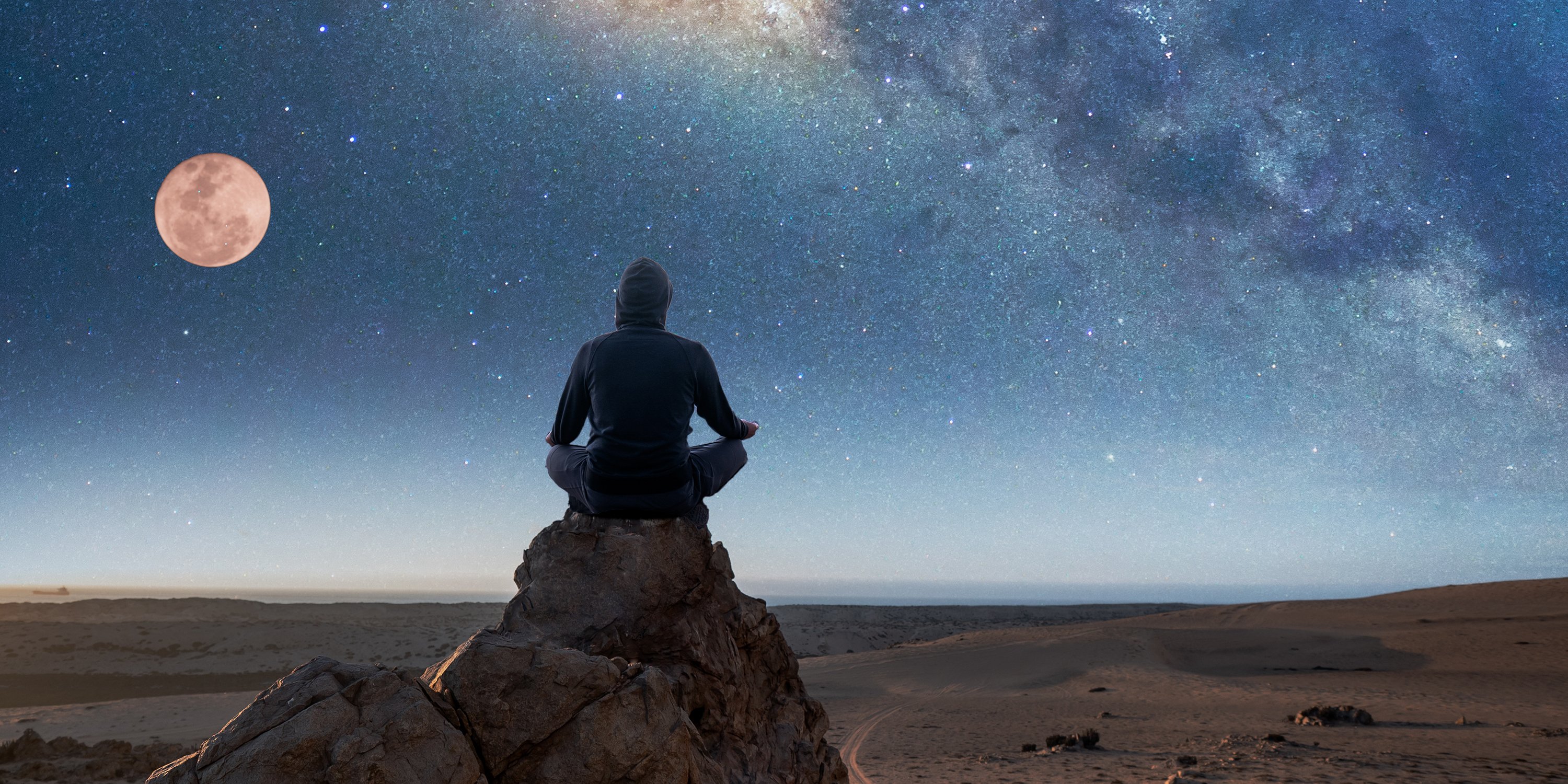
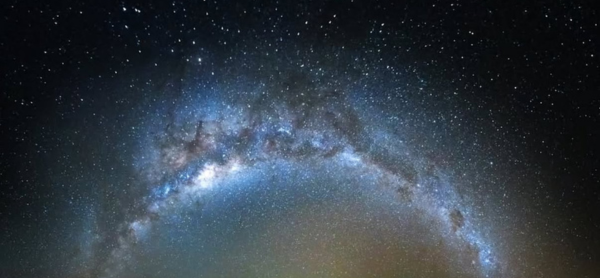
At Nayara Alto Atacama everything you see by day is brown and rust-red sand and rock. The air is dry and thin, horizon lines stay clean, and the Catarpe Valley reads as a simple palette of earth and light. Then night falls, and the landscape turns black. Artificial light drops to a minimum, and the Milky Way stretches from ridge to ridge revealing the world's clearest skies.
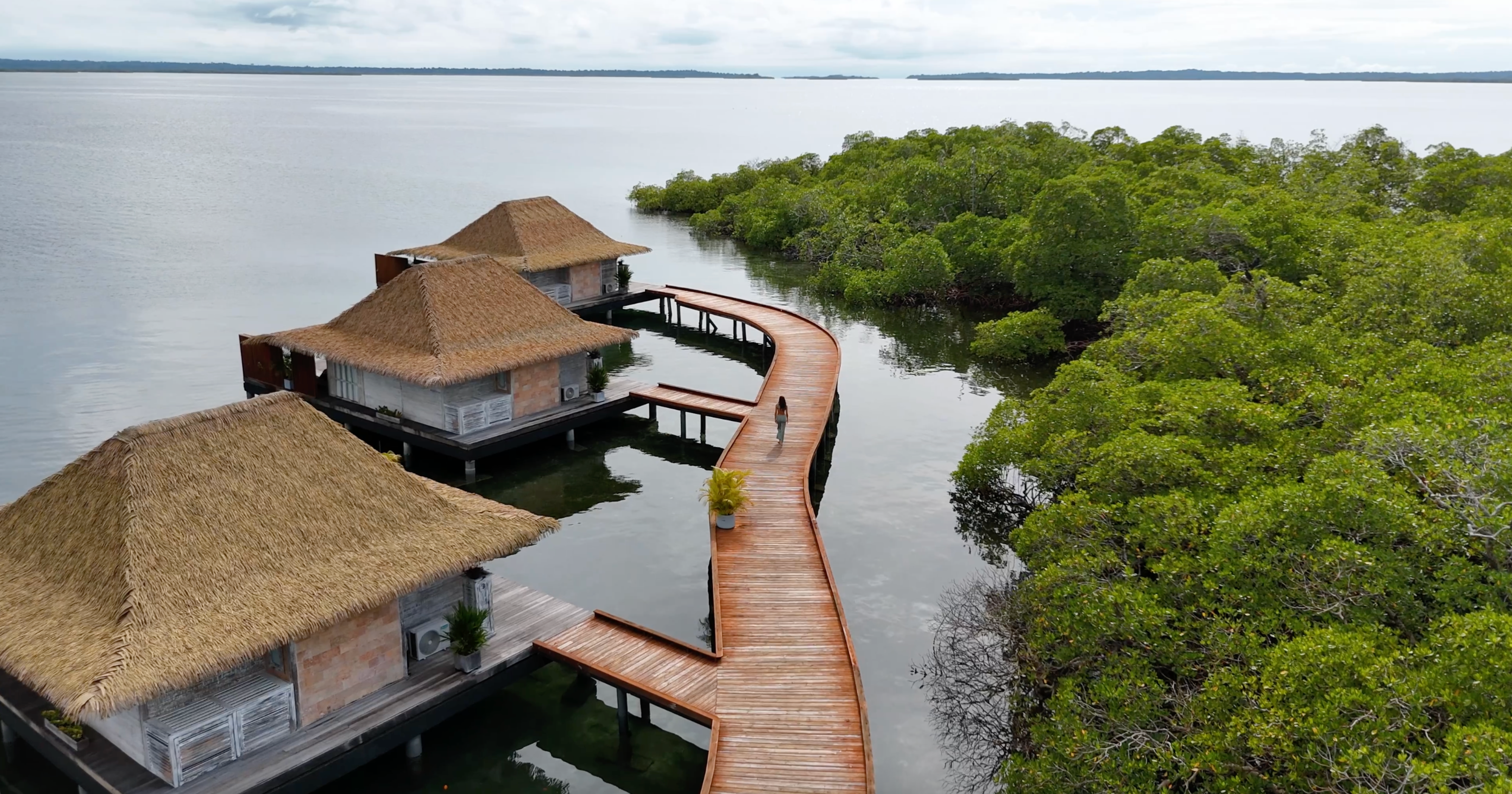
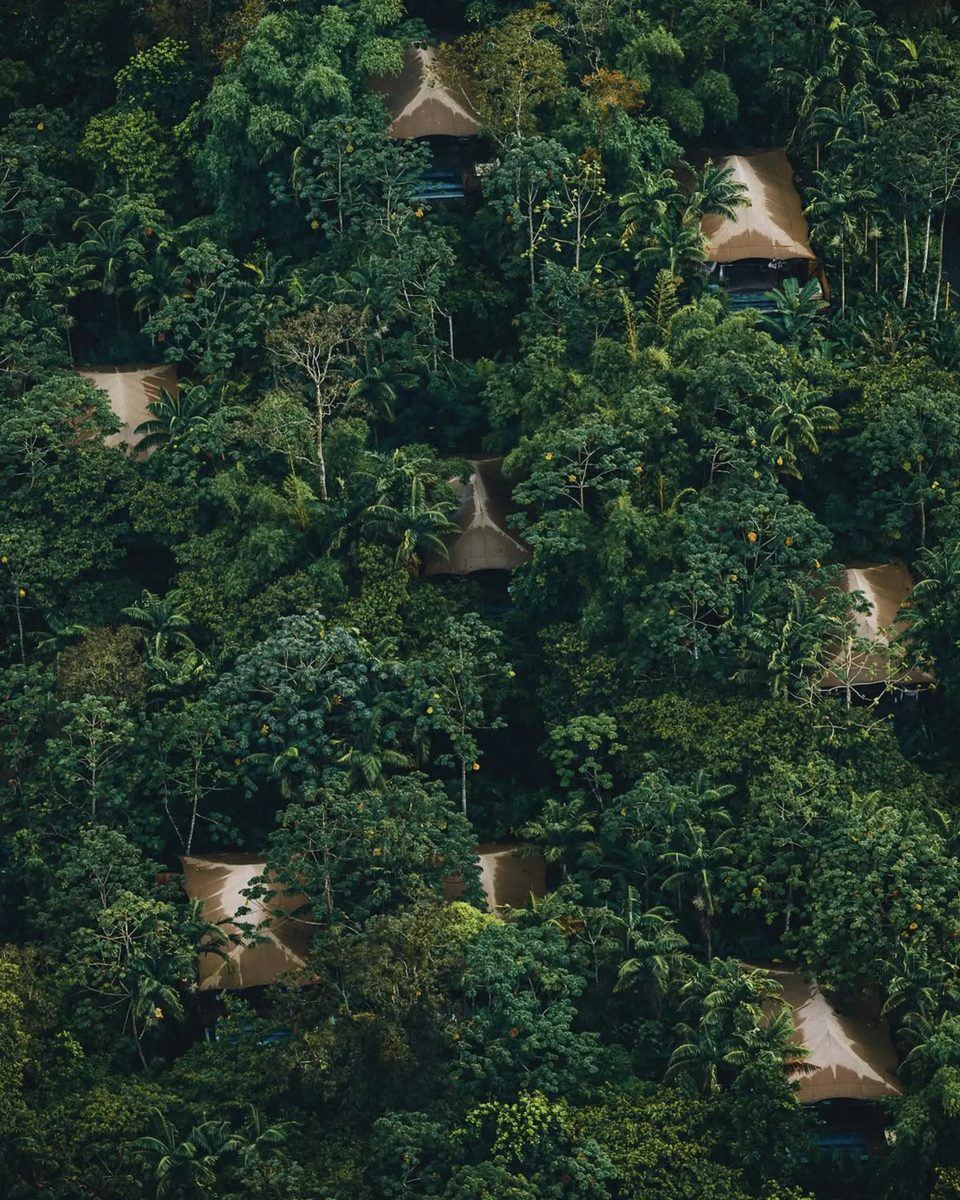
In Costa Rica, the first impression is green. Layers of leaves, mist, and moss within sight of Arenal Volcano. In Bocas del Toro, rainforest meets reef and green meets blue. Water below your overwater villa shifts from pale turquoise over the reef to deep navy where the sea falls away, while mangroves and rainforest close in at the edges.
For us, these are not postcards. Brown, green, blue, and black describe four different workloads for the nervous system. Deserts strip the visual field to light, rock, and distance. Rainforests overwhelm it with biodiversity, humidity, and sound. Oceans offer rhythm, horizon, and immersion. Dark skies change what the brain does with scale and time.
Atacama Desert by Day
Across the deserts of the world, true oases are rare: living ecosystems where water, vegetation, and ancient human settlement coexist in harmony. In South America, only one luxury lodge lies inside such a landscape. Nayara Alto Atacama sits within the fertile Catarpe Valley at the edge of Chile’s Atacama Desert, where adobe architecture and native gardens blend seamlessly with the cliffs and streams of a real oasis.
By day the desert setting feels stripped back to its elements. You step out from low adobe walls into a valley of rock, sand, and sky. The palette is almost entirely brown, with green held close in native gardens and vegetable plots. Paths run past small pools, terraces, and cactus beds toward dry riverbeds and distant ridges.
Buildings sit low and follow the contours of the valley, using earth-toned adobe and stone so that walls blend into the canyon rather than standing out against it. Gardens are planted to frame views rather than block them, and pool areas are tucked into sheltered courtyards where water and rock stay in balance.
For guests who arrive from dense, overstimulating cities, that combination of brown earth, open space, and quiet can feel like taking off a pair of heavy headphones they did not realise they were wearing.
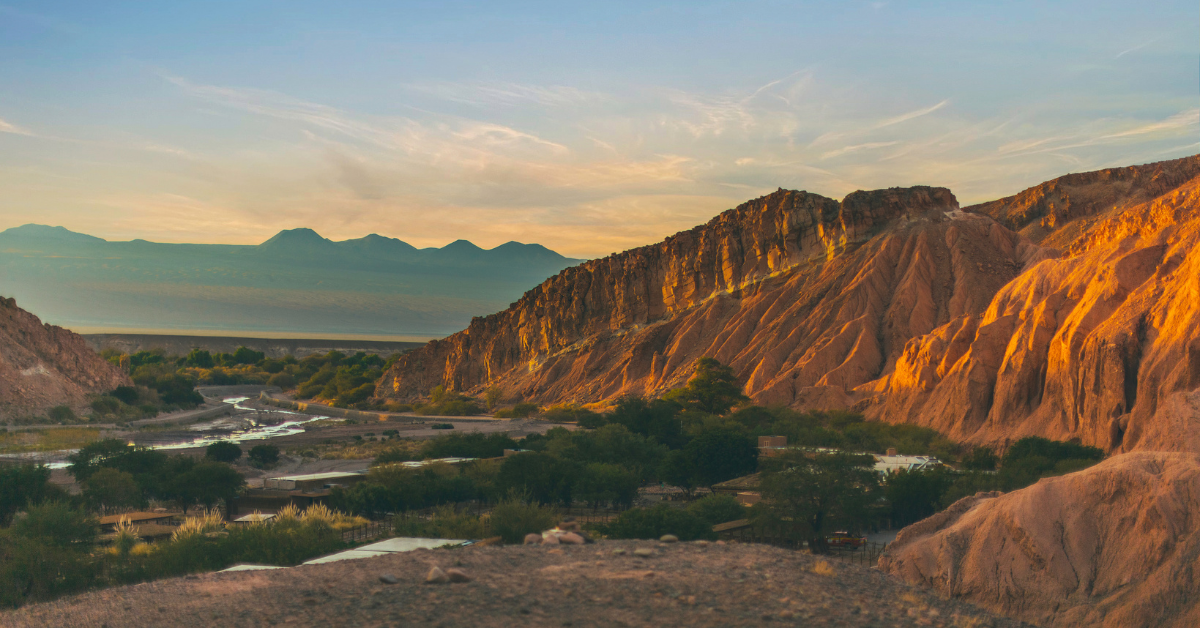
Low adobe walls and native gardens follow the contours of the desert valley.
The Science of Brown Space
Attention Restoration Theory argues that environments with low sensory clutter, coherent structure, and a strong sense of "being away" help restore fatigued attention and reduce mental overload (Journal of Environmental Psychology).
Reviews show that bright light during the day and low artificial light at night support melatonin timing, sleep quality, and mood regulation, while irregular light exposure and excess light at night are linked with metabolic and mood problems.
High altitude deserts with intense sunlight and very dark skies sit at the intersection of these mechanisms. That is why we treat the Atacama as a setting for clarity and reset rather than as empty space.
Brown earth, open space, and quiet can feel like taking off a pair of heavy headphones you did not realise you were wearing.
Dark-Sky Wellness
When the sun drops behind the ridge at Nayara Alto Atacama, the desert trades brown for black. Artificial light across the property stays intentionally low. Pathways are lit just enough for safety. Rooms use warm, carefully directed fixtures rather than bright, upward-facing beams. Once your eyes adapt, the sky takes over as the main feature.
For most of human history, darkness was normal. Night arrived, the horizon dimmed, and the stars took over. Today that baseline has shifted. Artificial skyglow has been increasing by roughly 7 to 10 percent per year, which means the number of stars visible to the naked eye is falling generation by generation (GFZ German Research Centre for Geosciences).
That black sky is not only an aesthetic asset. It is a health input. When light fades, the suprachiasmatic nucleus receives a time signal. Melatonin levels rise, core body temperature drops, and the cardiovascular system shifts toward rest. Strong contrast between bright days and genuinely dark nights supports circadian timing, metabolic regulation, and tissue repair.
The Science of Black Space
When light fades, melatonin levels rise, core body temperature begins to drop, and the cardiovascular system shifts toward rest. These changes support metabolic regulation and tissue repair.
The experience of awe under a clear night sky shows up in social science as a modifier of mood, stress, and even prosocial behaviour. Reviews on artificial light at night show that late evening light exposure disrupts these patterns and is associated with poorer sleep and a range of health risks (DarkSky International, 2025).
Rainforest Wellness in Costa Rica
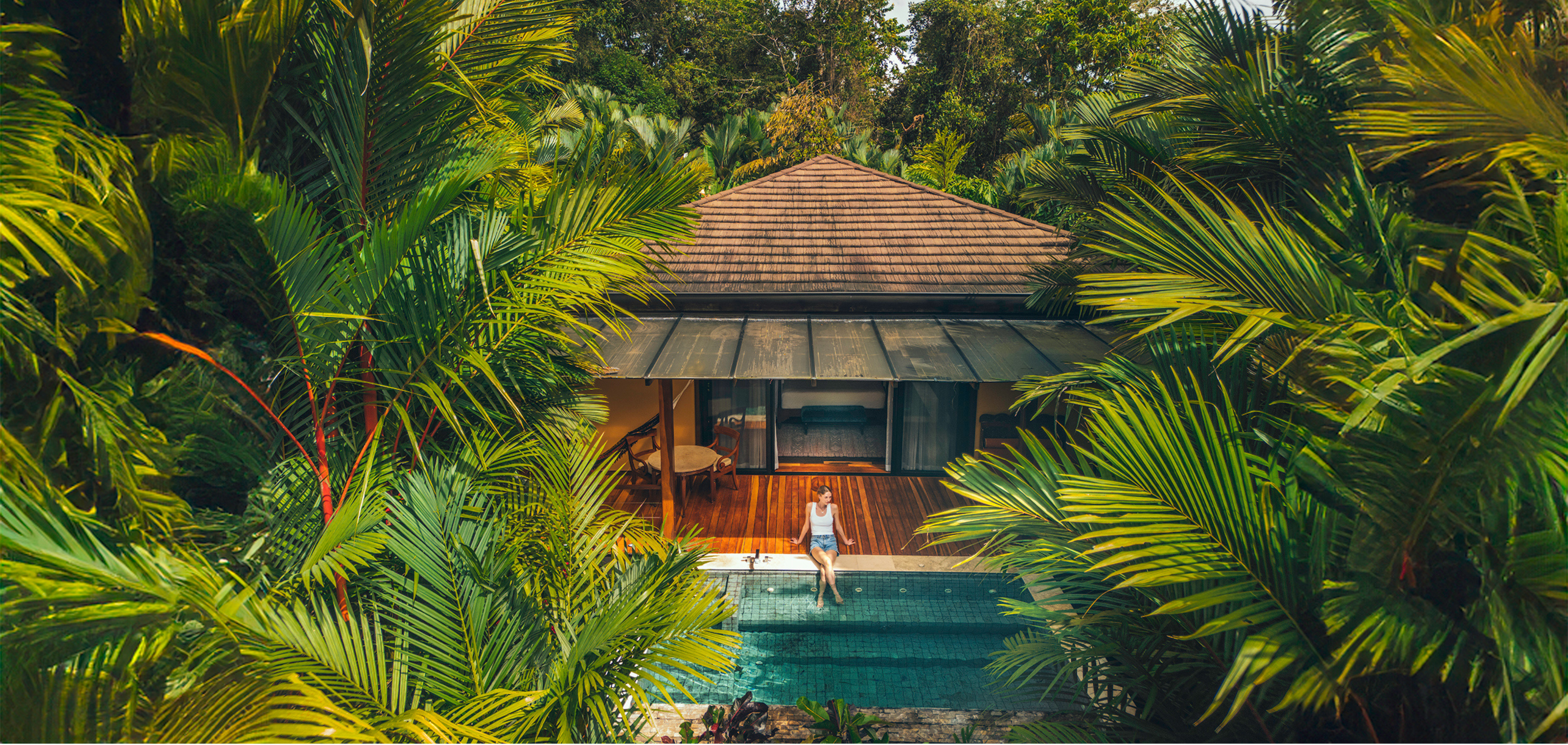
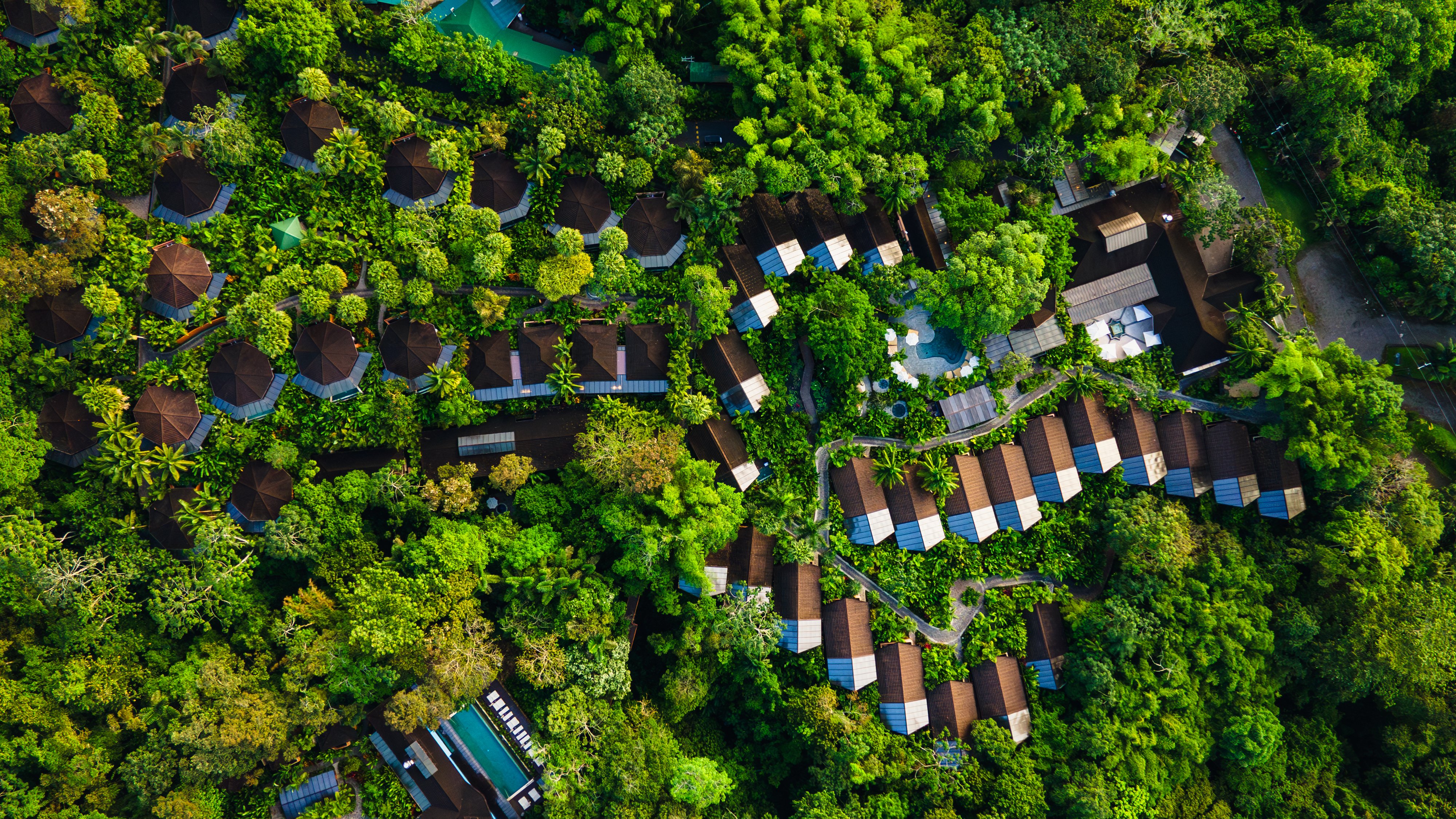
Walk out of your villa in Arenal and you are in the color green. Not a single shade, but layers: broad leaves at eye level, moss on trunks, epiphytes in the branches, a canopy that filters light into shifting bands. Air feels thicker here. You hear water before you see it. Bird calls overlap with insect pulses and the low rush of a nearby spring.
Life here follows rainforest timing. Morning yoga in an open-air pavilion overlooks the canopy. Movement stays slow and deliberate, synced to birds and wind. Sound healing carries a double soundtrack: singing bowls close by, water and forest beyond. In the shared hot springs, conversations drop in volume without effort. Guests sit in thermal water, half-hidden by plants, watching mist rise between trees.
Privacy is part of the effect. Villas and tents are spaced so you can step from bed to pool without feeling observed. That intimacy is why we treat these spaces as more than amenities. They are small laboratories where green exposure, warm water, and quiet time reinforce one another. Read the full story: Why Private Villas and Hot Springs Plunge Pools Define Luxury in Costa Rica

"Small laboratories where green exposure, warm water, and quiet time reinforce one another"
The Science of Green Space
Reviews and meta-analyses of forest bathing and forest therapy report that guided time in wooded environments tends to reduce symptoms of anxiety and depression and improve overall mental wellbeing.
Trees emit volatile organic compounds, including terpenes such as alpha-pinene and limonene. Reviews suggest these compounds may have antioxidant, anti-inflammatory, and immune-modulating effects.
Experimental forest walks often show lower cortisol, lower heart rate, and lower blood pressure compared with matched urban walks, along with higher parasympathetic activity.
Where Blue Meets Green: Bocas del Toro
Arriving at Nayara Bocas del Toro, the shift happens before you see your villa. The boat engine cuts, and the loudest sounds become water against the hull, wind in mangroves, and the occasional call of a bird. There are no cars and no roads on this private island.
From there, blue and green pull you in different directions at once. Below the boardwalks and overwater villas, there is only the Caribbean. Around and behind the property, forest and mangroves close in. Guests experience both the calming effect of horizon and waves and the multi-sensory richness of vegetation and wildlife in the same setting.
Wellness here starts with geometry. Overwater villas give you direct step-to-sea access for swimming, kayaking, or snorkelling among coral heads and seagrass. Treatments happen on your private deck with water underfloor and horizon ahead, or in the new Treehouse Spa, suspended high in the canopy with views across treetops to the reef edge.
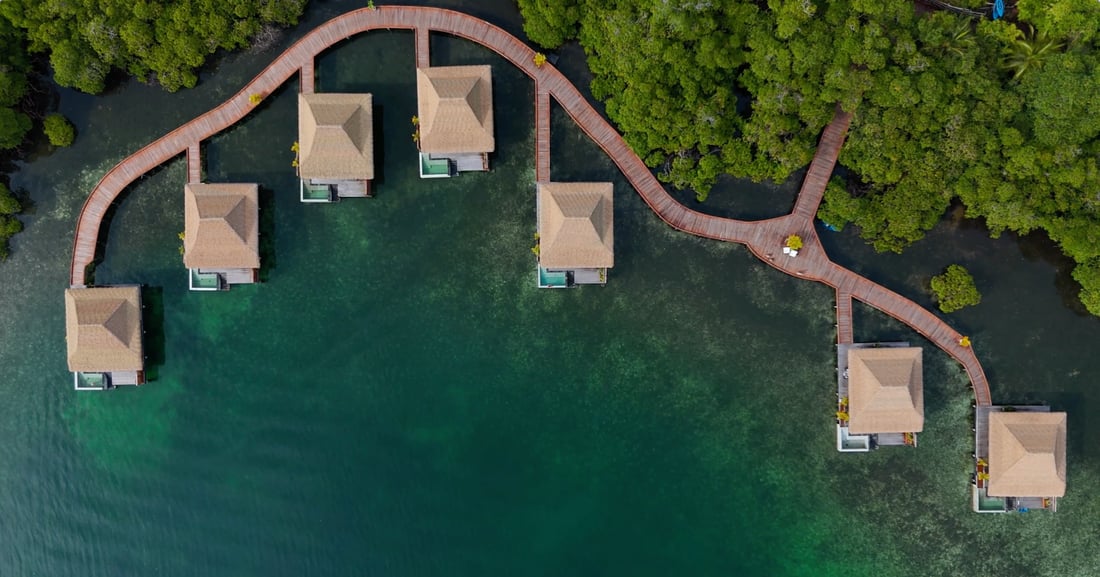
Overwater villas and the canopy-level Treehouse Spa at Nayara Bocas del Toro.
The Science of Blue Space
Reviews of blue-space research in environmental psychology link regular time near coasts, rivers, and lakes with higher life satisfaction and lower psychological distress, even after accounting for income and urban form.
One synthesis outlines a "blue health" model where aquatic environments support wellbeing through stress reduction, physical activity, social contact, and better environmental quality (White et al., Environmental Research, 2020).
Water immersion adds tactile and vestibular components to blue-space exposure. Doctors use floating, warm-water immersion, and mindful swimming as practical tools for anxiety reduction and body awareness.
Nature-Based Wellness Meets Sustainability
Look a decade ahead and one pattern becomes unavoidable. The very things that make brown, black, green, and blue spaces so powerful for human health are under pressure. Night skies grow brighter as light pollution spreads. Deserts face changing rainfall patterns and heat extremes. Rainforests lose biodiversity to land use and climate shifts. Coral reefs and mangroves sit on the front line of warming oceans.
For nature-based wellness to stay honest, it has to confront that tension. A dark-sky stargazing session, a rainforest hot-spring soak, or a morning swim above a living reef can no longer be framed only as personal escapes. They are also moments that depend on complex, vulnerable systems.
At Nayara, that means two parallel tracks. First, continuing to refine how each ecosystem shapes your stay, so that a week in Atacama, Arenal, or Bocas del Toro feels less like a generic holiday and more like a specific intervention for your nervous system. Second, investing in the regeneration that keeps these color worlds alive: reforestation and water stewardship, solar energy, and coral reef restoration.
Protecting brown, black, green, and blue is not only an environmental gesture. It is the only way the experiences they create can continue to restore the people who seek them.
Wellness at Nayara
Three perspectives on how nature, science, and design converge at Nayara.
What is nature-based wellness?+
Why is the Atacama Desert good for sleep and stress?+
What are the health benefits of spending time in the rainforest?+
What is blue space and how does it support wellbeing?+
Which Nayara resort is best for wellness?+
- American Psychological Association: Nurtured by Nature
- Nature-based Health Interventions (Frontiers in Psychology)
- Spending at Least 120 Minutes a Week in Nature (Nature Scientific Reports)
- Attention Restoration Theory (Journal of Environmental Psychology)
- Light at Night, Chronodisruption, and Health
- GFZ: Star Visibility Declining Faster Than Previously Assumed
- DarkSky International: Artificial Light at Night (2025)
- Forest Bathing and Health Benefits (NCBI)
- Forest-Bathing and Nature Therapy Review (Frontiers in Psychology)
- White et al.: Blue Space and Health (Environmental Research)
Choose Your Color
Brown desert, black sky, green rainforest, blue sea. Each Nayara resort is a different intervention for the nervous system.