The moderate soak most balneotherapy guidelines suggest in comfortably warm water, with breaks to cool down and rehydrate.
When the Romans built Aquae Sulis around a natural hot spring, fusing architecture and geothermal water into a civic center.
Calcium, magnesium, bicarbonate, and silica: the gentle profile of Arenal's volcanic springs, well-suited to long private soaks.
Water You Do Not Share
In short: Private plunge pools fed by volcanic hot springs combine the ancient health benefits of thermal bathing with the modern luxury of solitude. At Nayara, every villa has its own.
For most of modern hotel history, luxury was measured in scale. The largest lobby, the grandest ballroom, the biggest pool. That logic has shifted. High-end travelers now value space, seclusion, and control: their own entrance, their own deck, and water they do not share with strangers.
A Forbes article framed it bluntly: privacy is "the new luxury" of travel. A similar study by McKinsey confirms that high-net-worth guests are more likely to travel to disconnect, enjoy privacy and exclusivity, while also preferring nature-rich, less crowded destinations.
Private villas with their own plunge pools remove the social calculation that comes with a shared pool: where to sit, who is watching, how noisy it is, whether you feel on display. Privacy becomes a spatial and psychological condition, not just an architectural detail.
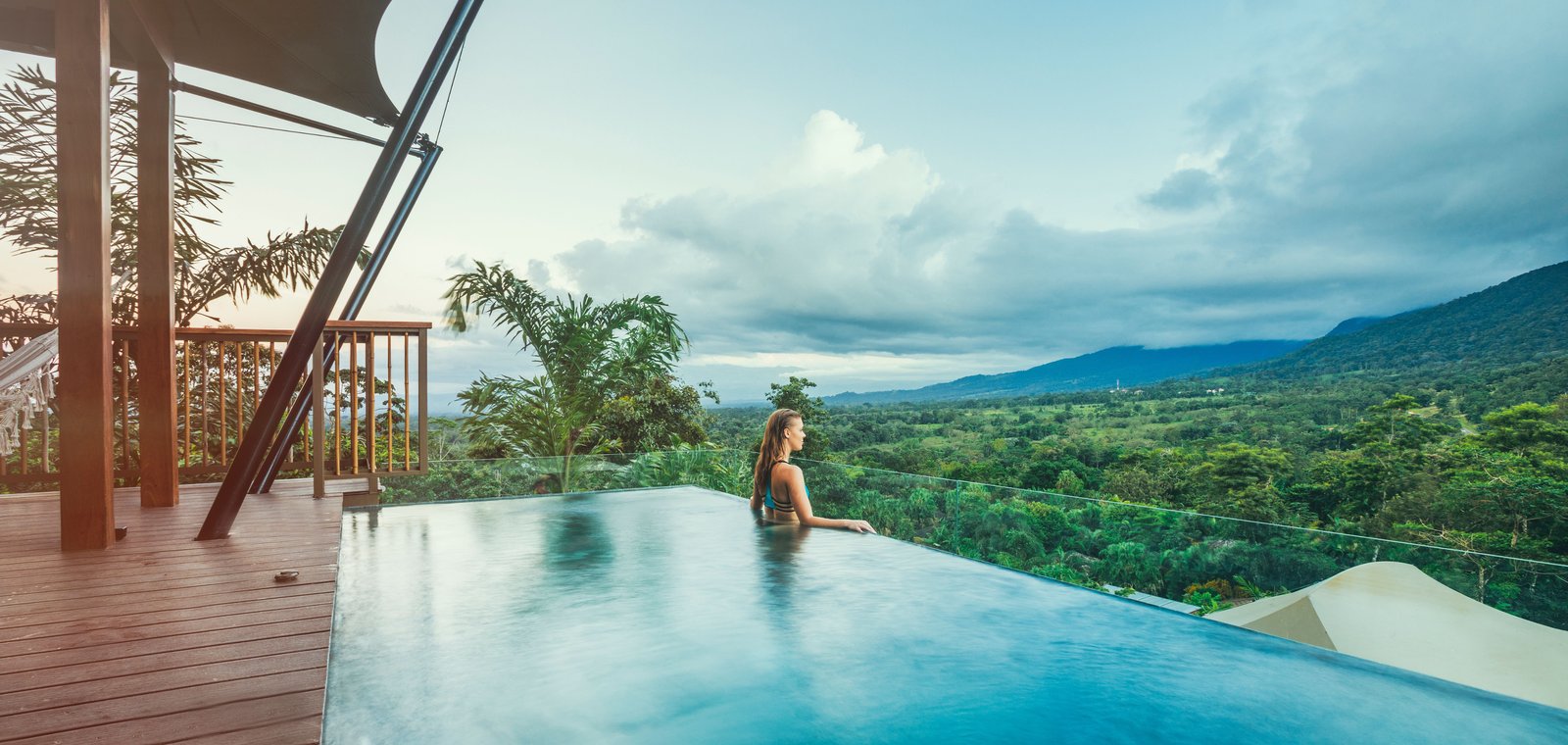
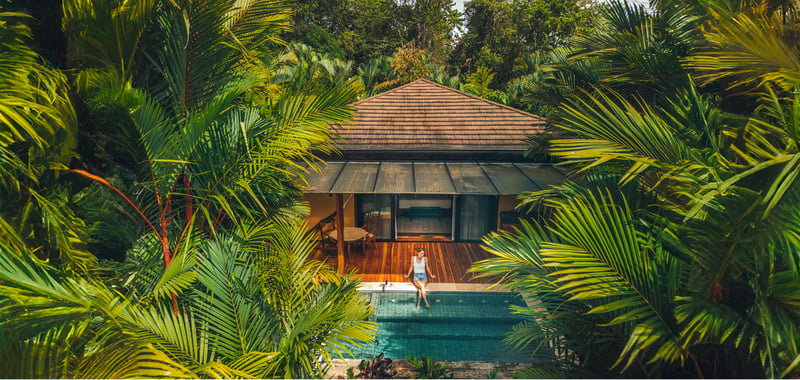
Now imagine stepping into your own natural hot springs plunge pool fed by the same Arenal Volcano that frames your view. This is not simply "a nicer pool." It is a different category of stay. And it is what defines nature-based wellness at Nayara Springs and Nayara Tented Camp.
How Settled Life Invented Privacy
Private hot spring plunge pools sit at the crossroads of geology, history, and modern wellness science. The history is just as fascinating as the chemistry.
Long before homes and fences, early hunter-gatherers lived as mobile bands beneath open skies. Privacy came from distance instead of doors. As groups grew, families camped farther apart, creating personal space without walls.
With farming, everything changed. Permanent villages, storage, and land ownership pushed people closer together. Bricks, thatch, and early fences started to mark thresholds between public and private life. Courtyards and enclosed rooms appeared, and shared rituals such as communal bathing began to carry new social meaning.
Jared Diamond's work on the shift from nomadic bands to sedentary villages helps explain why private plunge pools feel so instinctively restorative today. In Guns, Germs, and Steel, he describes how early farming communities, no longer mobile, were forced into closer and more permanent proximity. What once had been natural privacy created by distance now required walls, thresholds, and architectural boundaries.
When guests enter a private plunge pool in a rainforest setting, they experience a reversal of that pattern. Landscape and water no longer force communal gathering; instead, they restore the autonomy early humans once had.
From Roman Baths to Rainforest Springs
For most of recorded history, water was a shared experience. Roman thermae, Ottoman hammams, and Mesoamerican temazcales treated bathing as civic or ritual acts. Bodies gathered, steam circulated, conversations flowed. Privacy was neither expected nor structurally possible; community was built into the architecture.
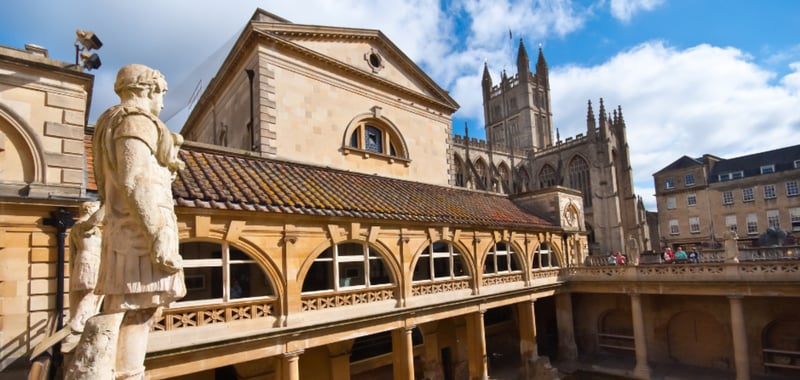
In Roman Britain, the city now called Bath grew around a natural hot spring. The Romans built a major bathing complex, Aquae Sulis, there in the first century, combining temple, pools, and social spaces around it. It remains one of the clearest examples of how architecture and geothermal water fused into a civic and religious center.
The rise of private bathing unfolded slowly. Early modern Europe introduced enclosed "bathing cabinets" for nobility. By the nineteenth century, wealthy spa travelers increasingly requested rooms with individual tubs, separating the curative role of water from its social one.
Costa Rica represents the next evolution. Here, geothermal water emerges not in classical cities or European spa towns but in dense rainforest beneath an active volcano. A private plunge pool fed by volcanic hot springs becomes not simply an amenity but a direct encounter with geology, heat, and landscape. It takes the ancient communal impulse to seek healing in warm mineral waters and reinterprets it as an individual immersive experience.
Japan's Onsen Culture and Iceland's Blue Lagoon
The global picture of thermal waters today is shaped as much by Asia and the North Atlantic as by Roman Europe. Two of the clearest contemporary examples are Japan's onsen culture and Iceland's Blue Lagoon.
In Japan, onsen are deeply embedded in domestic travel and daily life. Traditional ryokan inns often center their design around communal or private baths fed by geothermal sources, with an emphasis on quiet, ritual, and respect for surroundings. The Japanese Hot Springs Law defines onsen by mineral content and temperature, and many resorts classify their waters by chemical profile.
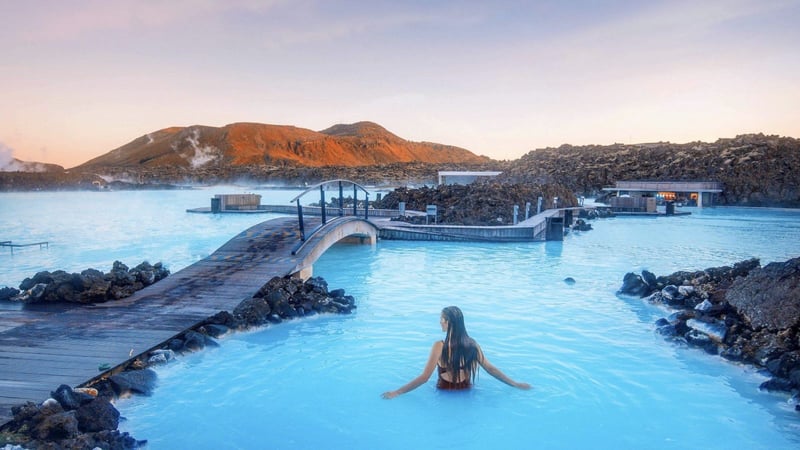
In Iceland, the Blue Lagoon represents a different model. Set in a lava field on the Reykjanes Peninsula, it is filled with geothermal seawater rich in silica, which gives the lagoon its milky blue color. Originally formed from water discharged from a nearby power plant, it evolved into a wellness destination after visitors reported improved symptoms of skin conditions such as psoriasis.
Not All Hot Springs Are Created Equal
Arenal's geothermal water differs from many historic bathing regions. Roman springs such as Bath are calcium- and sulfate-rich, fed by deep limestone aquifers. Iceland's Blue Lagoon is silica-dominant because its water originates from geothermal seawater. Japan's onsen vary by region but often carry high sulfur, sodium chloride, or bicarbonate content.
Arenal's springs are heated by magmatic systems beneath an active stratovolcano, producing naturally warm water with moderate mineralization: calcium, magnesium, bicarbonate, and silica. The result is a profile that is gentle on the skin, comfortably warm, and well-suited for prolonged soaking in private pools.
Privacy at Nayara Springs and Tented Camp is engineered. Villas and tents are oriented using controlled sightlines so no terrace overlooks another. Dense rainforest vegetation acts as living screening, while elevation changes and setbacks eliminate cross-visibility. Recessed decks, angled railings, and careful pool placement ensure that when a guest steps into warm water, no one else can see.
The Water Remembers
From roaming tribes to resort villas, the story of bathing mirrors the human journey from communal life to individualized comfort. Yet even in private plunge pools, the spirit of those ancient hot springs survives: we still seek warmth, relaxation, and maybe a little magic from the earth beneath our feet.
Taken together, the picture is consistent. Warm water can ease pain and promote relaxation. Green and blue environments support psychological restoration. Private, controllable spaces increase the sense of safety needed for deep rest. A private villa with its own plunge pool in a rainforest setting is, in effect, a small, purpose-built environment where all three elements intersect.
"Privacy emerges as a response to density, not an indulgence."
The Science
- Systematic reviews of balneotherapy for musculoskeletal pain suggest that repeated immersion in warm, mineral-rich baths can reduce pain and improve function in conditions such as osteoarthritis and chronic low back pain.
- Reviews of balneotherapy mechanisms highlight three broad levers: heat (improved circulation and muscle relaxation), hydrostatic pressure (joint support and venous return), and mineral content (possible local or systemic effects depending on composition).
- Luxury Daily connects the rise in villa demand directly to a desire for fewer shared spaces, higher control over social contact, and the ability to gather with loved ones in seclusion.
- Work in hospitality psychology suggests that perceived control over one's environment plays a significant role in how restorative a space feels. Private rooms with views of nature are consistently rated as more restorative than shared or windowless spaces.
Wellness at Nayara
Three perspectives on how nature, science, and design converge at Nayara.
01 Wellness by Color: How Four Ecosystems Restore the Body → 02 Pura Vida: Why Costa Rica Feels the Way It Does →Are hot-spring plunge pools medical treatments?+
How long should a typical soak last?+
Do private pools use more water or energy than shared ones?+
Is there evidence that nature views matter if you are already in warm water?+
How does privacy factor into wellness beyond comfort?+
- McKinsey, "Updating perceptions about today's luxury traveler"
- Forbes, "How Privacy Will Be The New Luxury"
- Balneotherapy in chronic low back pain (SpringerOpen, 2025)
- NIH / PMC review on balneotherapy mechanisms
- Roman Baths, Bath, official history
- Japan National Tourism Organization, onsen overview
- Blue Lagoon, research and development
- Clinical work on Blue Lagoon and psoriasis
Your Own Volcanic Spring, and No One Else's
Private plunge pools fed by Arenal's hot springs, at Nayara Springs and Nayara Tented Camp.