Nature-Based Wellness at Nayara Resorts: How Deserts, Rainforests, Oceans, and Night Skies Shape Human Health

Nature-Based Wellness at Nayara Resorts: How Deserts, Rainforests, Oceans, and Night Skies Shape Human Health

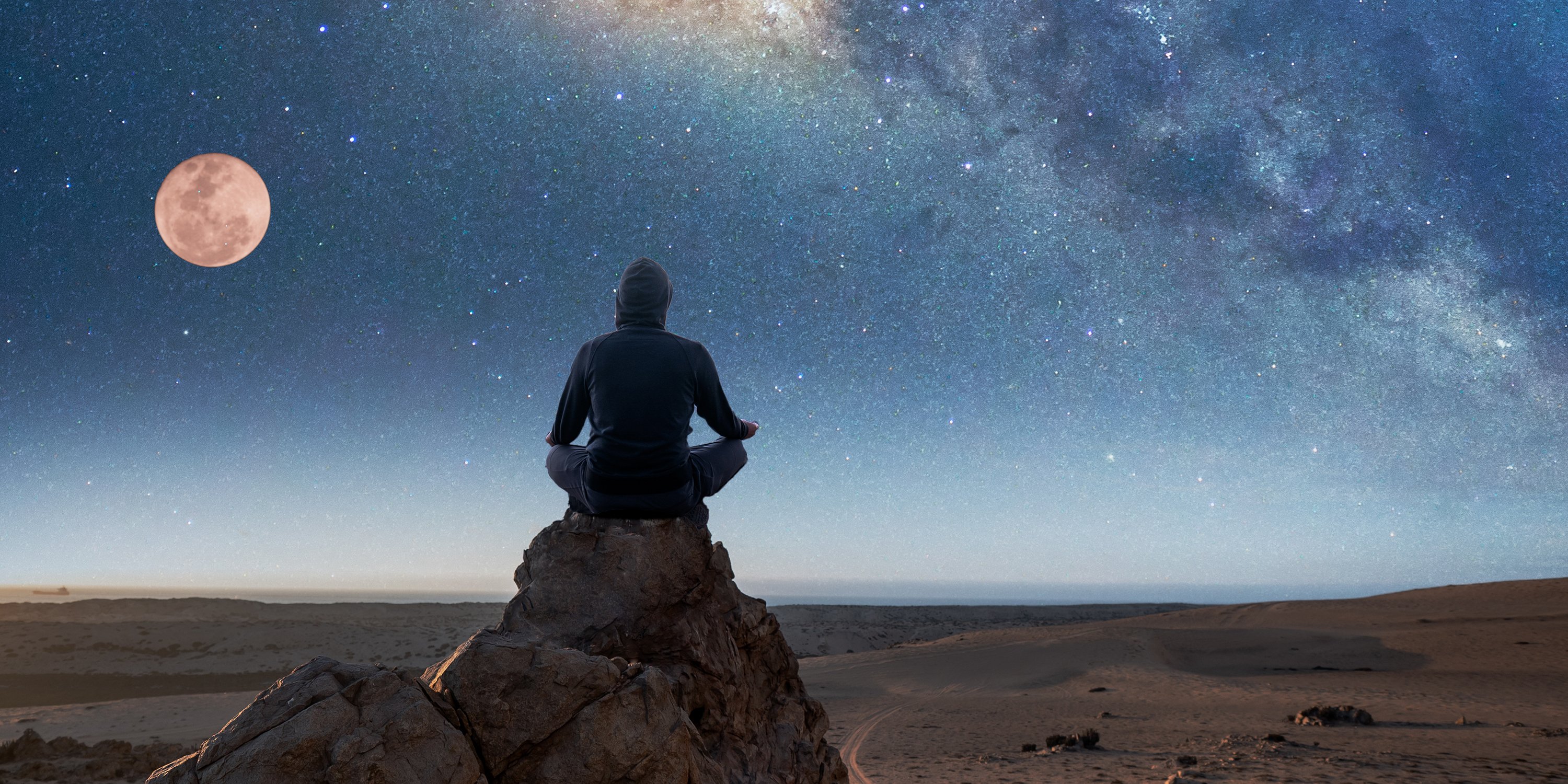
At Nayara Alto Atacama everything you see by day is brown and rust red rock and sand. The air is dry and thin, horizon lines stay clean, and the valley reads as a simple palette of earth and light. Then night falls, and the landscape turns black. Artificial light drops to a minimum, and the Milky Way stretches from ridge to ridge in one of the world’s clearest dark-sky views.

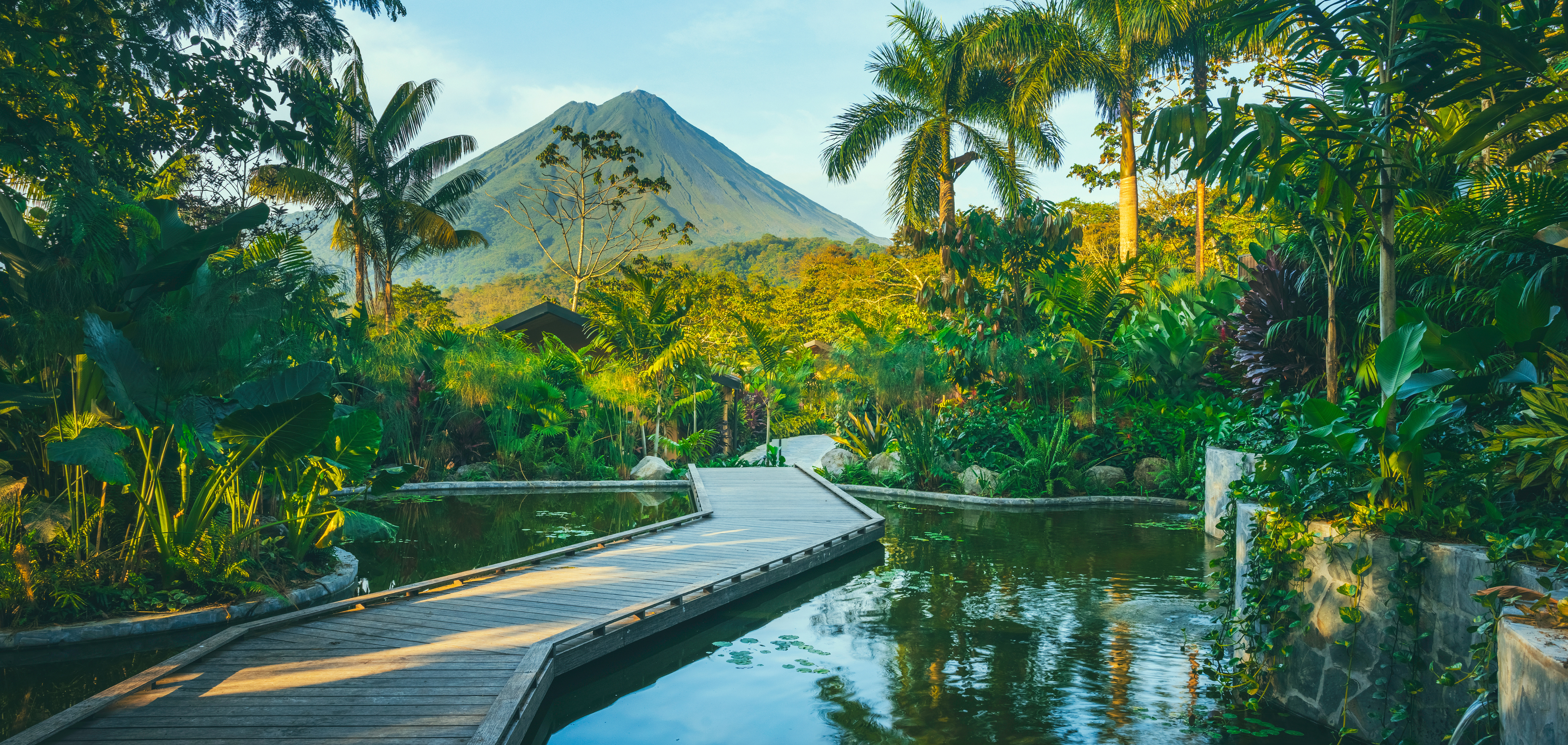
In Costa Rica, the first impression is green. Layers of leaves, mist, and moss around Arenal Volcano. Paths between villas feel like narrow tunnels through vegetation. Hot springs steam in the cool air and birds stitch sound through the canopy.

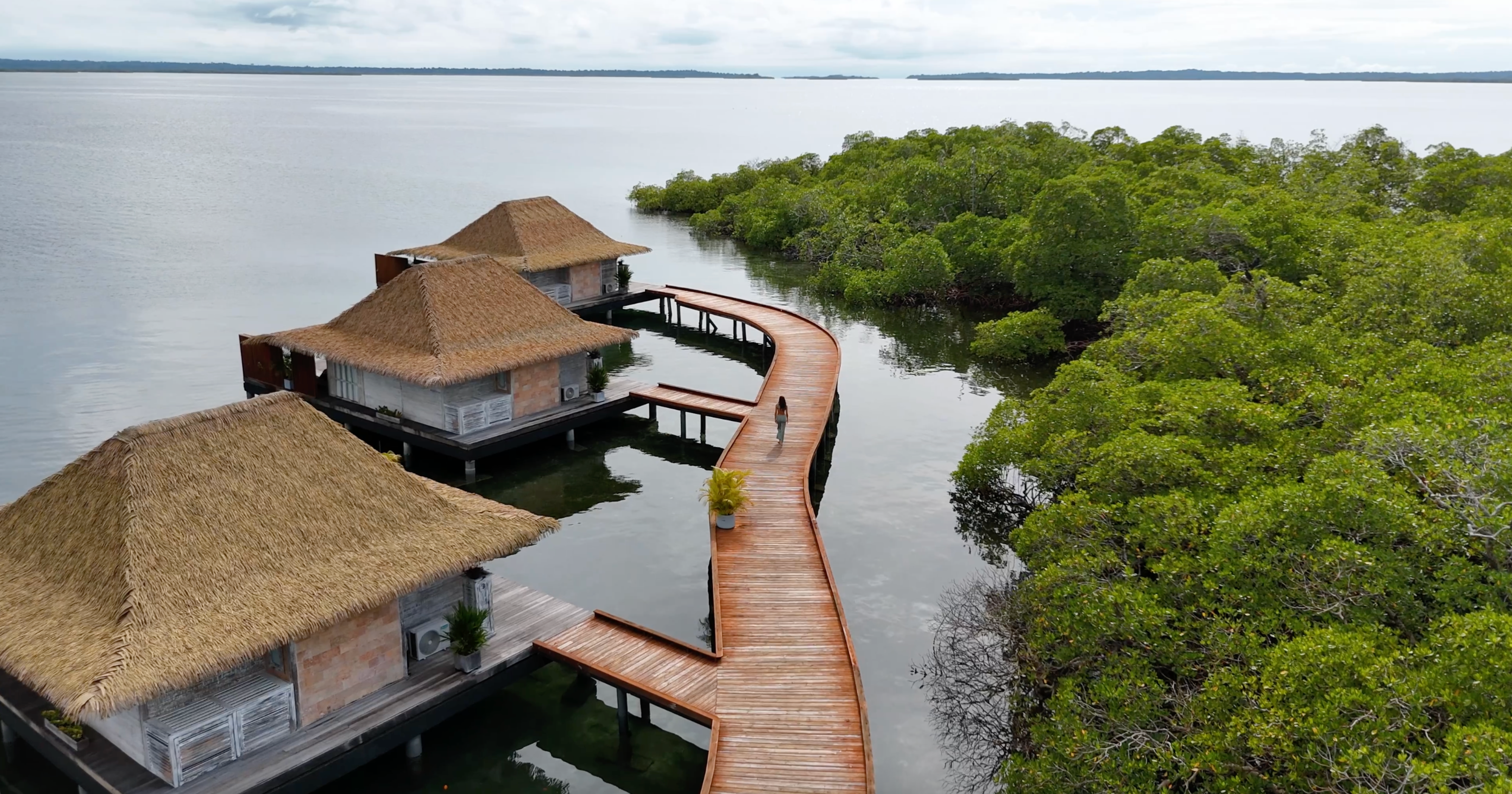
In Panama’s Bocas del Toro, blue and green meet. Water below your overwater villa shifts from pale turquoise over the reef to deep navy where the sea falls away, while mangroves and rainforest close in at the edges. From the new Treehouse Spa, you look across treetops to the reef line in a single glance.

For us, these are not postcards. Brown, green, blue, and black describe four different workloads for the nervous system. Deserts strip the visual field to light, rock, and distance. Rainforests overwhelm it with biodiversity, humidity, and sound. Oceans offer rhythm, horizon, and immersion. Dark skies change what the brain does with scale and time.

Over the past decade, research has started to treat nature exposure as a measurable input rather than a vague feeling. Large population studies suggest a weekly “dose” of at least 120 minutes in natural environments is associated with better self-reported health and wellbeing.

Reviews of green and blue spaces link regular contact with forests, parks, coasts, and rivers to lower stress, improved mood, and better sleep (American Psychological Association Nurtured by nature Work on restorative environments and light shows that bright days and dark nights support circadian alignment, melatonin production, and mental health (Tähkämö et al., 2019: NIH article).

At Nayara, we take a simple position: ecosystems are the active ingredient in our wellness philosophy. Our desert lodge in Chile, our rainforest resorts in Costa Rica, and our reef-and-rainforest island in Panama are three different delivery systems for brown, green, blue, and black exposure. In what follows, we look at each color in turn, starting with narrative – what it feels like to be there – then grounding those experiences in the science that sits underneath.

3-Nov-26-2025-02-34-59-4966-AM

Brown Spaces in Chile’s Atacama Desert

By day at Nayara Alto Atacama, the desert feels stripped back to its elements. You step out from low adobe walls into a valley of rock, sand, and sky. The palette is almost entirely brown and rust, with green held close in native gardens and vegetable plots. Paths run past small pools, terraces, and cactus beds toward dry riverbeds and distant ridges.

There is very little noise. Wind across stone. An occasional bird. The soft run of water in narrow channels. No traffic, no elevators, no city hum. The visual field is just as sparse. Long sightlines, few moving objects, clean horizons in almost every direction. For guests who arrive from dense, overstimulating cities, that combination of brown earth, open space, and quiet can feel like taking off a pair of heavy headphones they did not realise they were wearing.
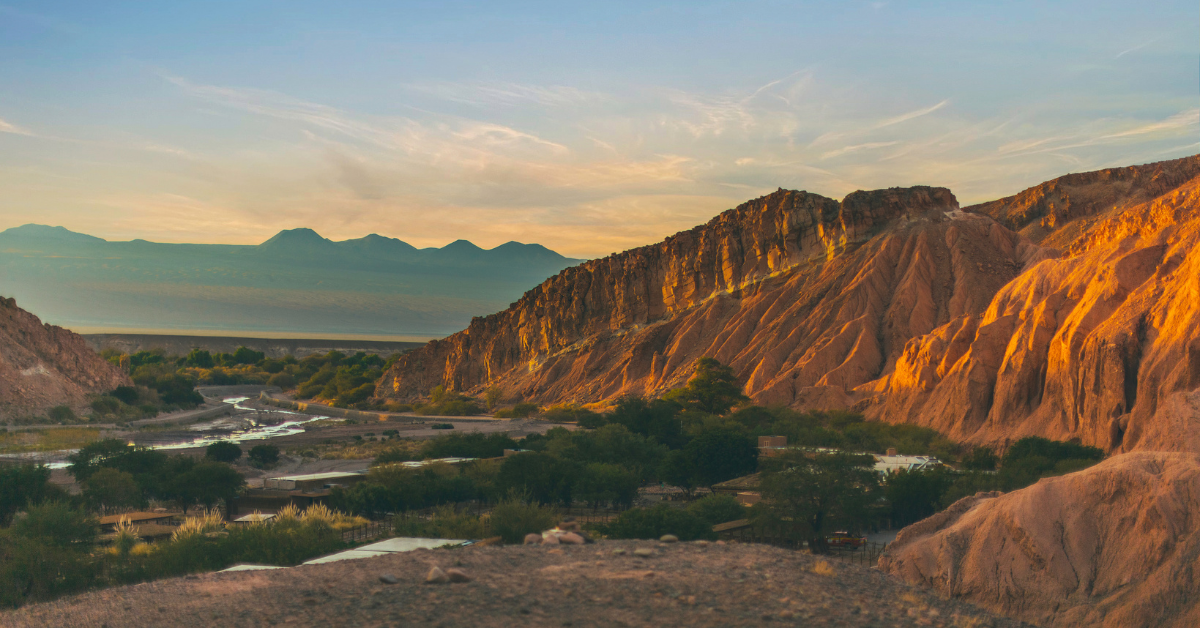
The architecture at Nayara Alto Atacama supports that effect. Buildings sit low and follow the contours of the valley, using earth-toned adobe and stone so that walls blend into the canyon rather than standing out against it. Gardens are planted to frame views rather than block them, and pool areas are tucked into sheltered courtyards where water and rock stay in balance. The result is a daytime environment that keeps mechanical input low and lets light, air, and land do most of the work.

Key evidence behind brown-space clarity in the Atacama


– Attention Restoration Theory proposes that environments with simple, coherent structure and a sense of being away help restore directed attention. Stephen Kaplan’s work shows that scenes with open skies, clear lines, and gentle variation are consistently rated as more restorative than complex urban streetscapes, which demand constant monitoring and decision making (Kaplan, 1995).
– Reviews of restorative environments note that natural scenes with low visual clutter and strong horizon lines support mental reset, particularly after heavy cognitive work. Simple landscapes that are easy to understand visually appear again and again in experiments on perceived restorativeness (Berto, 2014)

– Research on light and circadian biology shows that bright daytime light helps stabilise internal clocks, improves alertness, and supports later sleep quality, especially when paired with softer light in the evening (Tähkämö et al., 2019). High, dry regions with long, clear days naturally deliver this kind of exposure.
– Public health guidance summarised by Harvard Health notes that many people receive too little bright light in the day and too much artificial light at night, a pattern linked with sleep problems and mood disturbance. Deserts like the Atacama offer the opposite pattern during daylight hours.

• How we build these levers into Nayara Alto Atacama
– Keep structures low-rise and earth coloured so that the surrounding valley, not the building mass, dominates the visual field. You can see this clearly in property imagery on the Nayara Alto Atacama site.
– Encourage time outdoors during the day on terraces, in gardens, and at viewpoints, where guests receive strong daylight and long-horizon views that match restorative-environment profiles.
– Use materials such as adobe, stone, and planted edges to absorb and diffuse sound, reducing echoes and blocking external mechanical noise so that natural sound stays primary.

In this daytime frame, the Atacama functions as our brown space. It is the place in the Nayara portfolio where simplicity, dryness, and clean views give the nervous system a low-input environment to recover from the chronic overload of dense urban life.


iotw2334a_crop

Dark-Sky Wellness and Stargazing at Nayara Alto Atacama

When the sun drops behind the ridge at Nayara Alto Atacama, the desert trades brown for black. Artificial light across the property stays intentionally low. Pathways are lit just enough for safety. Rooms use warm, carefully directed fixtures rather than bright, upward-facing beams. Once your eyes adapt, the sky takes over as the main feature.

Northern Chile is home to some of the most important observatories in the world. The European Southern Observatorycalls the region one of the best places on Earth for astronomical observation because of its high altitude, aridity, and minimal light pollution. Popular accounts of stargazing in the Atacama describe a sky so dense with stars that familiar constellations become difficult to pick out (ESO news on Atacama skies; The Guardian on Atacama stargazing).

From our stargazing platform at Nayara Alto Atacama, guests see the Milky Way as a distinct band, not a faint suggestion. On clear nights, the structure of the galaxy is visible from horizon to horizon. Guided sessions focus on the experience of standing in that darkness and looking up, with periods of silence built in. Many guests report that time feels slower, that worries shrink to a manageable scale, or that they sleep more deeply after a night under the stars.

The black sky is not only an aesthetic asset. It is a health input. Strong contrast between bright days and genuinely dark nights supports circadian timing. The experience of awe under a clear night sky shows up in social science as a modifier of mood, stress, and even prosocial behaviour. In the Atacama, those mechanisms are built into the geography.

Key evidence behind black-sky wellness and stargazing

• Dark nights, light pollution, and circadian rhythms
– Reviews on light exposure and health report that exposure to artificial light at night can suppress melatonin, shift circadian phase, and impair sleep, while consistent dark nights and bright days support better sleep quality and more stable mood (Tähkämö et al., 2019; Chronobiology in Medicine overview).
– Public-facing summaries from Harvard Health underline that evening exposure to strong indoor and screen light is associated with delayed sleep onset and poorer rest. In a dark-sky environment like Alto Atacama, outdoor night light is minimal by design, which reduces this pressure on the circadian system.

• Awe under the night sky and emotional regulation
– Experimental work on awe finds that experiences which make people feel small relative to something vast, such as panoramic night skies or large natural vistas, are linked with lower stress, increased prosocial feelings, and changes in how people perceive time (Piff et al., 2015). Participants in awe conditions often report feeling more present and less focused on daily worries.
– These effects are not limited to telescopes or scientific settings. Observational studies and field reports in dark-sky reserves and remote stargazing locations describe similar changes in mood and perspective when visitors encounter a truly dark sky for the first time.

• Dark skies in the Atacama context
– The European Southern Observatory and other astronomy organisations have warned that increasing development and light around observatory sites threatens the quality of the Atacama night sky. This underscores that darkness is a finite resource, not a guarantee.
– Articles such as The Guardian’s coverage of Atacama stargazing emphasise how few places remain where the Milky Way is visible in this way to the naked eye. Protecting that darkness has both scientific and experiential value.

• How we integrate black-sky science into Nayara Alto Atacama
– Limit outdoor lighting to low, warm, and well-directed fixtures that preserve dark adaptation and keep the sky, not built elements, as the brightest feature at night, in line with guidance on reducing light pollution and protecting circadian health. You can see how the property sits within a dark valley in imagery on the Nayara Alto Atacama website.
– Use stargazing sessions as structured awe experiences. Rather than filling the hour with constant explanation, guides allow time for silent observation, which aligns with research on awe, reflection, and emotion regulation.
– Treat dark skies as part of wellness infrastructure. Decisions about development, lighting, and programming in and around the lodge incorporate the idea that preserving black skies is as important for long-term guest wellbeing as preserving trails or gardens.

Within the color framework of this blog, these black skies over the Atacama are our night-space counterpart to the brown daytime desert. Together, they form a full 24-hour environment for clarity, sleep support, and emotional reset, built from light, dark, and the absence of urban noise rather than from equipment or screens.

4-Nov-05-2025-03-44-38-3167-AM

Green-Space Wellness in Costa Rica

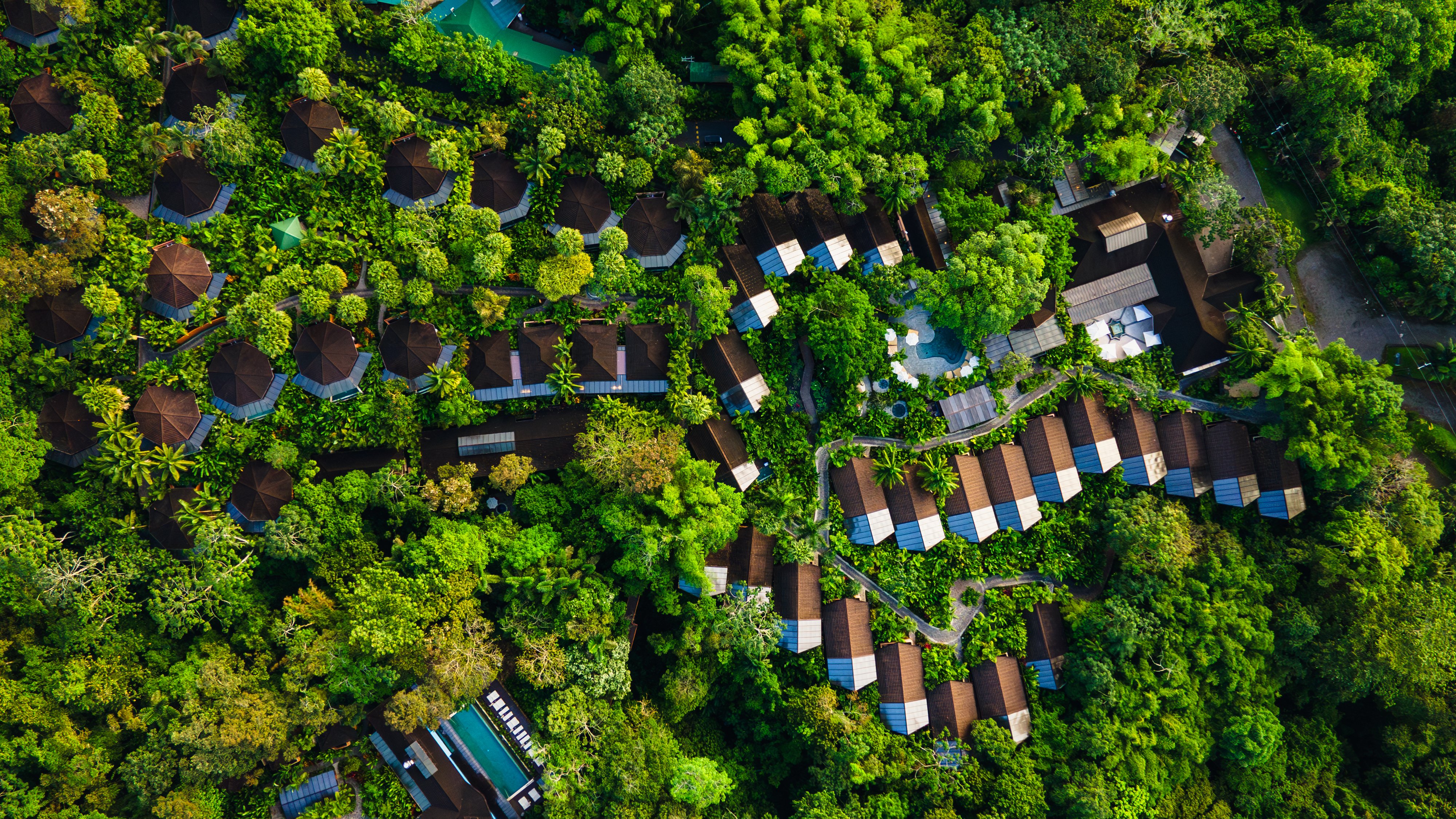
Walk out of your villa in Arenal and you are in the color green. Not a single shade, but layers: broad leaves at eye level, moss on trunks, epiphytes in the branches, a canopy that filters light into shifting bands. Air feels thicker here. You hear water before you see it. Bird calls overlap with insect pulses and the low rush of a nearby spring.

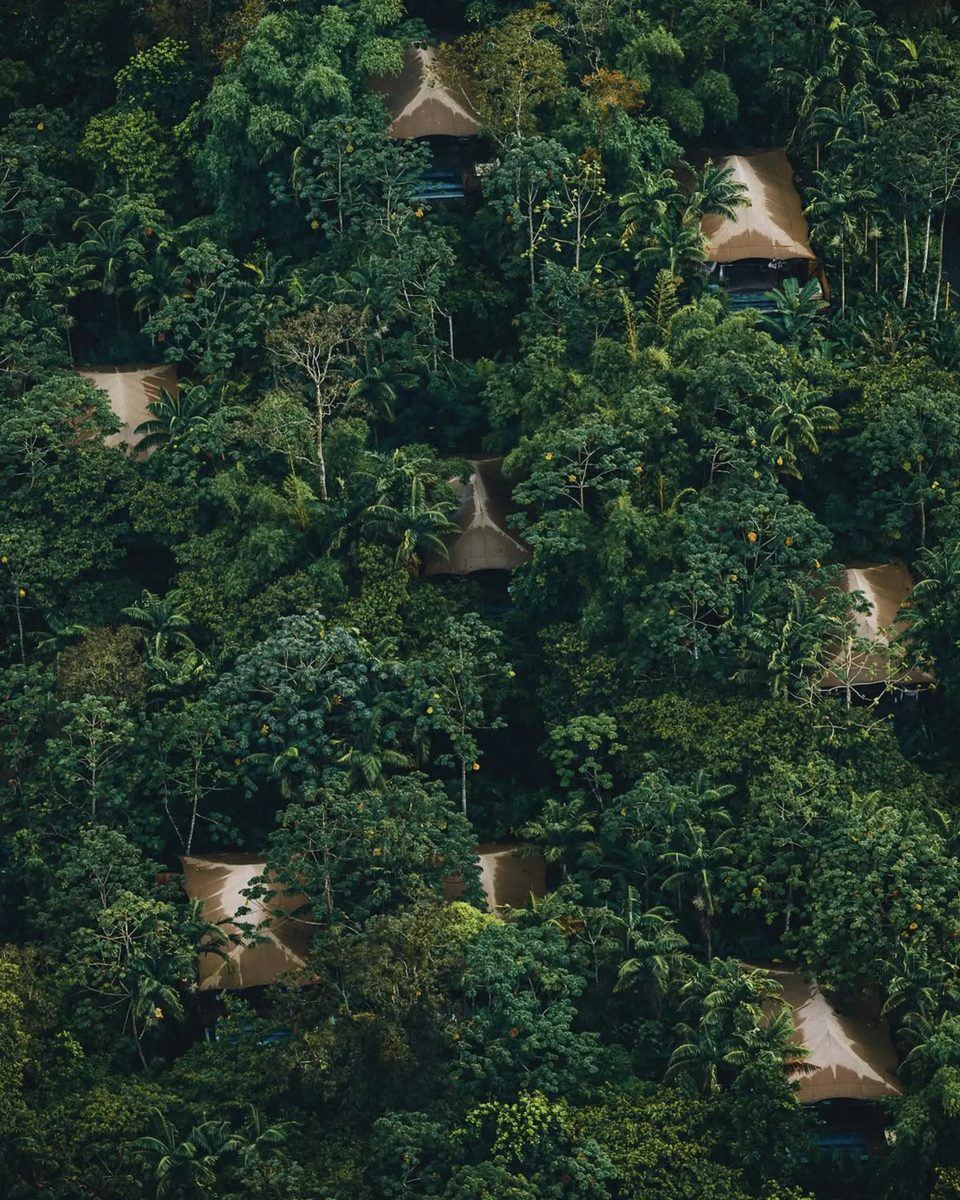
At our three Costa Rican properties around Arenal, that green is the main ingredient in wellness. Nayara Gardens wraps casitas and villas in dense planting, so you follow curved paths where other guests appear only in passing. Nayara Springs, our adults-only refuge, pairs each villa with a private mineral hot-spring plunge pool framed by foliage and views toward the volcano. Nayara Tented Camp stretches along the hillside, with canvas tents and geothermal plunge pools that sit almost level with the treetops.

Life here follows rainforest timing. Morning yoga in an open-air pavilion overlooks the canopy. Movement stays slow and deliberate, synced to birds and wind. Sound healing in the Suka Spa carries a double soundtrack: singing bowls close by, water and forest beyond. In the shared hot springs, conversations drop in volume without effort. Guests sit in warm water, half-hidden by plants, watching mist rise between trees.

Privacy is part of the effect. In Arenal, villas and tents are spaced so you can step from bed to pool without feeling observed. That intimacy is why we treat these spaces as more than amenities. They are small laboratories where green exposure, warm water, and quiet time reinforce one another. For the full story on how private villas, plunge pools, and thermal water work together at Arenal, see our companion piece on private villas with hot springs in Costa Rica.

What the research says about green spaces and rainforest immersion

• Nature dose and general health
– A study of 19,806 adults in England found that spending at least 120 minutes per week in natural environments was associated with higher self-reported health and wellbeing than little or no nature contact, regardless of how visits were distributed through the week (White et al., Scientific Reports, 2019). You can read the details in Scientific Reports.

• Forests, stress, and cardiovascular markers
– Reviews and meta-analyses of forest bathing and forest therapy report that guided time in wooded environments tends to reduce symptoms of anxiety and depression and improve overall mental wellbeing, even when specific physiological outcomes vary between studies. Recent summaries in Frontiers in Psychology and systematic reviews in Environment International both point in this direction.
– Experimental forest walks often show lower cortisol, lower heart rate, and lower blood pressure compared with matched urban walks, along with higher parasympathetic activity. These findings appear in several trials reported in journals archived on PubMed and in open-access platforms such as the Public Library of Science.
• Immune function and forest air
– Studies from Japan and elsewhere report increases in natural killer cell activity and beneficial changes in immune markers after multi-day forest trips, with some effects persisting for days after participants return to urban environments. These results appear in articles hosted by the National Institutes of Health’s PubMed Central.

• Soundscapes and perceived restoration
– Research on restorative soundscapes finds that environments dominated by birdsong, water, and wind in vegetation score higher on perceived rest, immersion, and preference than spaces where mechanical or traffic noise is prominent. Reviews in Frontiers in Psychology and case studies in Science of the Total Environment highlight the role of natural sound in complementing visual greenery.

• Thermal water and warm immersion
– Reviews of balneotherapy and hydrotherapy suggest that repeated immersion in warm, mineral-rich water can reduce pain and improve function in conditions such as osteoarthritis and chronic low back pain. A 2025 systematic review in BMC Complementary Medicine and Therapies and mechanistic overviews in International Journal of Biometeorology describe the combined roles of heat, hydrostatic pressure, and buoyancy.

How we translate green-space evidence into experience at Nayara Arenal

• Layered rainforest exposure
– We keep building heights low and circulation paths narrow, so guests move through near-continuous vegetation rather than across open lawns. That design increases time spent within sight, sound, and smell of living forest, not only during scheduled activities but in the simple act of walking to breakfast.

• Private hot-spring plunge pools as daily practice
– At Nayara Springs and Nayara Tented Camp, every villa or tent includes a private geothermal plunge pool. Temperature is set for comfortable, repeated use rather than extreme heat, which encourages short, frequent soaks. This aligns with the moderate-duration immersions used in many balneotherapy protocols.

• Open-air yoga and sound-based sessions
– Yoga platforms and Suka Spa treatment spaces are open to the air and oriented toward canopy and springs rather than inward toward walls. That layout ensures that forest sound and microclimate are present during each session, matching evidence that multi-sensory natural input supports restoration more than visual exposure alone.

• Visual and acoustic buffering from roads
– Dense planting, terrain, and building placement keep traffic and mechanical noise outside the guest acoustic field. Within the properties, water features and natural soundscapes supply the broadband background that research associates with reduced annoyance and improved mood compared with intermittent mechanical noise.

• Programmes that encourage regular time outdoors
– Guided walks, birdwatching outings, and unstructured time in hot springs help guests accumulate far more than the 120-minute weekly nature threshold many population studies use as a reference point. Our goal is to make that exposure effortless rather than a task, so the “dose” of green space becomes part of the stay rather than an isolated activity.

Untitled design-6

Blue and Green: Where Rainforest Meets Reef

Arriving at Nayara Bocas del Toro, the shift happens before you see your villa. The boat engine cuts, and the loudest sounds become water against the hull, wind in mangroves, and the occasional call of a bird. There are no cars and no roads on the island. Movement happens on foot, by bicycle, or by boat.

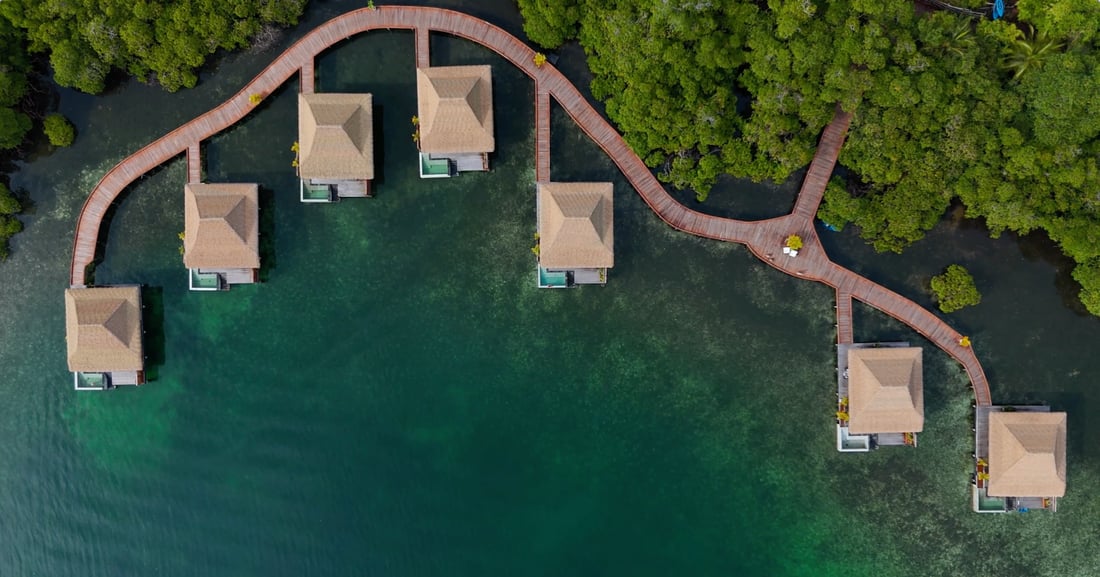
From there, blue and green pull you in different directions at once. Below the boardwalks and overwater villas, clear Caribbean water runs from pale turquoise over the reef shelf into deeper blue where the sea drops away. Around and behind the property, coastal forest and mangroves close in, adding crickets, frogs, and leaves to the sound field. It is one of the few settings where you can watch reef fish under your villa in the morning, then look back at dense tree canopy from a spa table that sits above it.

Wellness here starts with that geometry. Overwater villas give you direct step-to-sea access for swimming, kayaking, or snorkelling among coral heads and seagrass. Treatments can happen on your private deck with water underfloor and horizon ahead, or in the Treehouse Spa, suspended high in the canopy with views across treetops to the reef edge. Blue (water and horizon) and green (forest and mangroves) are never far from view. Emotional balance comes less from a schedule of sessions and more from repeated, easy contact with both elements.
Key evidence behind blue and blue–green spaces

• Blue spaces and mental health

  • Reviews of blue-space research in environmental psychology link regular time near coasts, rivers, and lakes with higher life satisfaction and lower psychological distress, even after accounting for income and urban form. One synthesis outlines a “blue health” model where aquatic environments support wellbeing through stress reduction, physical activity, social contact, and better environmental quality (White et al., Environmental Research, 2020).

  • A longitudinal analysis from England found that people reported better mental and general health in years when they lived closer to the coast, consistent with the idea that everyday access to water environments matters, not only occasional trips (Mitchell et al., Scientific Reports, 2019).

• Water immersion, exercise and mood

  • Studies on outdoor aquatic activity suggest that swimming and other water-based exercise are associated with improved mood, reduced stress, and higher self-reported vitality relative to some land-based activities, although study designs and populations vary (Gascon et al., Health & Place, 2020).

  • Broader work on “blue gyms” indicates that coastal and aquatic settings provide both restorative views and opportunities for moderate physical activity, which together support cardiovascular health and mental wellbeing (BlueHealth review).

• Green edges: mangroves, forest and biodiversity exposure

  • Reviews of nature exposure and health note that contact with biodiverse green environments is associated with lower perceived stress, better mood, and in some studies modest benefits for cardiovascular and metabolic markers (Twohig-Bennett & Jones, Environmental Research, 2018; Labib et al., Scientific Reports, 2021).

  • Coastal forests and mangroves sit at a blue–green edge. They provide shade, humidity, and complex soundscapes while remaining visually and physically tied to water. In practice, that means guests experience both the calming effect of horizon and waves and the multi-sensory richness of vegetation and wildlife in the same stay.

How we translate this into experience at Nayara Bocas del Toro

• Everyday blue–green immersion

  • Overwater villas are positioned so that the sea is in view from almost every point inside. Glass floor panels and decks over shallow reef areas make reef life a visible part of daily routines rather than a separate excursion.

  • Boardwalks, forest paths, and docks are laid out to keep guests close to water and vegetation, with minimal hard separation between land and sea.

• Water as an active ingredient, not a backdrop

  • Step-to-sea access from villa decks lowers the friction for gentle activity: short swims, kayak launches, or snorkelling among coral and seagrass. This supports the combination of visual restoration and moderate exercise described in blue-health frameworks.

  • The Treehouse Spa uses altitude to reframe that relationship. Treatments happen above the canopy, where you see both forest and reef edge in a single view and hear insects, birds, and low surf together.

• Sound and the nervous system

  • The absence of cars removes a major source of low-frequency mechanical noise. Dominant sounds become surf, wind, insects, and distant boat engines. Research on natural soundscapes and restoration suggests that such broadband natural sound fields help people recover from stress more effectively than silence in noisy contexts, because they both mask intrusions and signal safety.

  • Treatment rooms, villas, and common areas are built in timber and other sound-diffusing materials that let natural sound in while avoiding harsh echoes, so the acoustic environment stays soft rather than hollow.

• Linking back to the wider wellness pillar

  • For guests who want to understand the water component in more detail, our separate blog on private villas and plunge pools in Costa Rica traces how thermal water, privacy, and rainforest setting intersect in Arenal. Together with this blue–green lens on Bocas and the brown and black sections on the Atacama, the three pieces form a single nature-based wellness arc across our portfolio.

Within that arc, Nayara Bocas del Toro holds the role of emotional stabiliser. It is where reef and rainforest meet, where guests spend much of the day within sight or sound of water, and where blue and green exposures are layered on top of each other rather than offered in isolation.


What the Science Says 

The appeal of a private plunge pool in the rainforest or facing a volcano is intuitive. Warm water, fresh air, and greenery feel good. Research from several fields helps explain why. Randomized and controlled trials on balneotherapy for musculoskeletal pain indicate that regular warm-water immersion, with or without specific minerals, can reduce pain, improve joint mobility, and enhance reported quality of life in conditions such as rheumatoid arthritis and chronic low back pain, especially when used alongside standard care.

One 2025 trial in Turkey found that warm salt-water and warm fresh-water baths for hands and feet, three times per week for six weeks, led to significant improvements in pain, fatigue, and sleep quality in people with rheumatoid arthritis compared with a control group, with the salt-water group showing the strongest gains in functional capacity.

Reviews of hydrotherapy emphasize the combined effect of heat, hydrostatic pressure, and buoyancy, which together promote muscle relaxation, support joints, aid venous return, and reduce perceived effort.

Work in environmental and hospitality psychology suggests that perceived control over one’s environment, including the ability to withdraw from others and control visibility, plays a significant role in how restorative a space feels. Private rooms with views of nature are consistently rated as more restorative than shared or windowless spaces, even when floor area is similar.

Studies on hotel privacy and guest trust show that when guests feel their physical and informational privacy are respected, satisfaction and loyalty intentions rise. Perceived crowding and lack of privacy can increase stress and reduce perceived quality, even when other service elements are strong.

How Ecosystems Become the Active Ingredient in Your Stay

Spend a week moving through our three core regions and you can feel how the same body behaves differently in each. In the Atacama, long horizons and very dry air push you outdoors by day and into darkness and quiet at night. In Arenal, rainforest paths, hot springs, and birdsong pull you into a slower rhythm where you are never far from water or canopy. In Bocas del Toro, you are surrounded by tide, breeze, and the meeting point of forest and reef, so most choices involve some mix of sea, mangrove, and sky.

We design stays around those differences. Alto Atacama works as a brown and black space, a place for light, darkness, and cognitive reset. Nayara Gardens, Nayara Springs, and Nayara Tented Camp form a green and green-blue circuit where humidity, biodiversity, and thermal water become everyday conditions rather than occasional treats. Nayara Bocas del Toro is our blue and blue-green edge where rainforest meets reef and guests use water, tree canopy, and horizon to navigate big life questions or a simple need for rest.

Architecture, programming, and even walking distances are mapped onto these levers. In Chile, we keep lines clean and visual clutter low, protect dark skies, and schedule quiet, small-group stargazing rather than late-night noise. In Costa Rica, we lean into immersion, with villas wrapped in foliage, private hot-spring pools visible from the bed, and yoga pavilions that stay open to mist and sound. In Panama, we keep you close to tide and treetops, with overwater villas where you move from spa table to sea ladder in a few steps, and a Treehouse Spa that lifts treatments into the forest layer.

Underneath the design is a simple logic. Different ecosystems push different buttons in the nervous system. Our role is to align buildings, programs, and pacing with what the data suggests those environments already want to do.

How we translate ecosystems into stays

• Atacama as brown and black space
– Alto Atacama preserves low building heights, earth-toned materials, and open sightlines to keep visual complexity down and horizon length high.
– External lighting is controlled at night so that guests experience genuine darkness and Milky Way views, in line with evidence that strong day–night light cycles support circadian timing, melatonin release, and sleep quality, and that artificial light at night can disrupt those systems. Reviews on light and circadian health summarise these effects clearly in both lab and field settings, for example in work discussed in Chronobiology in Medicine and related overviews.
– Programming leans toward quiet, small-group astronomy, canyon walks, and thermal pools that sit in silence rather than music driven spaces.

• Arenal as layered green space with hot springs
– In Costa Rica, we cluster villas, tents, and casitas so that guests move through rainforest for almost every activity, pushing weekly nature contact far past the 120 minute threshold associated with better health and wellbeing in large population samples from England, as reported in White et al., Scientific Reports 2019.
– Nayara Springs and Nayara Tented Camp place mineral hot-spring plunge pools on private terraces, so thermal immersion is folded into daily routine rather than reserved for a separate spa visit.
– Forest bathing research shows that time in wooded environments can lower cortisol, improve heart-rate variability, and support mood compared with urban walks, as summarised in reviews such as Park et al., 2010 and Antonelli et al., 2019. We layer that with evidence on balneotherapy and warm-water immersion to give guests both forest and thermal inputs in the same place.
– For guests who want to go deeper into the privacy and thermal side of the story, we continue it in our separate piece on private villas and plunge pools in Costa Rica, which focuses on villa design and the history and science of hot springs.

• Bocas del Toro as blue and blue-green space


– At Nayara Bocas del Toro, every villa sits either over the water or directly in the forest canopy, so blue and green are present every time you step outside. The new Treehouse Spa lifts treatments into the treetops without losing sight of the reef and the horizon.
– Blue-space research links regular time near coasts, rivers, and lakes with higher life satisfaction and lower psychological distress, as described in reviews such as White et al., 2020 and related BlueHealth work. Proposed mechanisms include negative air ions near breaking waves, opportunities for activity, and the calming effect of wide water views.


– When rainforest reaches the water line, as it does in parts of Bocas del Toro, guests receive both green-space and blue-space inputs at once. That combination is still under-studied compared with forests or oceans alone, but it aligns with broader findings that diverse natural exposures tend to support restoration.

– Nayara Hangaroa sits at the edge of a very different story, where wellness is more cultural and spiritual than programmatic. Here, moai sites, ocean cliffs, and a spa shaped like a traditional manavai form part of a cultural wellness arc rather than a colour zone in this framework.


Key evidence behind ecosystem-specific wellness

• Large reviews of nature-based interventions find that programmes built around guided outdoor activity, green and blue space exposure, and structured time in nature are generally associated with reduced stress, anxiety, and depressive symptoms, although study designs differ and more standardisation is needed. A clear example is the review of reviews in Frontiers in Psychology.

• Theoretical frameworks such as Attention Restoration Theory and Stress Recovery Theory, presented in work by Kaplan and others and summarised in outlets like this overview in the Journal of Environmental Psychology, explain why environments that feel coherent, low in clutter, and distinct from daily life support mental reset. These ideas map naturally onto desert, forest, and coastal settings.

• Forest-focused studies highlight both psychological and physiological responses to green immersion, from improved mood to changes in immune markers and cardiovascular indicators, as reported in sources such as Li, 2010 and later follow-up work.

• Blue-space work, including coastal and inland waters, links water proximity and use with better self-reported health, wellbeing, and sometimes modest gains in life expectancy, for example in analyses discussed in Science of the Total Environment and related coastal health studies.

• Climate and environmental science, including the IPCC Working Group II report and work on climate impacts on ecosystems in journals like Nature Climate Change, emphasise that the quality and continuity of these environments are critical for both ecological and human wellbeing, which is why regeneration sits inside our wellness strategy rather than next to it.


Where Nature-Based Wellness Goes Next

Look a decade ahead and one pattern becomes unavoidable. The very things that make brown, black, green, and blue-green spaces so powerful for human health are under pressure. Night skies grow brighter as light pollution spreads. Deserts face changing rainfall patterns and heat extremes. Rainforests lose biodiversity to land use and climate shifts. Coral reefs and mangroves sit on the front line of warming oceans.

For nature-based wellness to stay honest, it has to confront that tension. A dark-sky stargazing session, a rainforest hot-spring soak, or a morning swim above a living reef can no longer be framed only as personal escapes. They are also moments that depend on complex, vulnerable systems. In our view, the next phase of luxury wellness is not about more technology or longer treatment menus. It is about deepening this connection between personal restoration and environmental resilience.

At Nayara, that means three parallel tracks. First, continuing to refine how each ecosystem shapes your stay, so that a week in Atacama, Arenal, or Bocas del Toro feels less like a generic holiday and more like a specific intervention for your nervous system. Second, investing in the regeneration that keeps these color worlds alive, from rainforest restoration in Costa Rica to reef protection and responsible marine access in Panama and careful water stewardship and light control in Chile. Third, giving guests tools to carry some of these patterns home, whether that is more time outdoors, small changes in light use at night, or a new relationship with sound and quiet in daily life.

Next month, we will pick up this thread in two companion pieces. One will look at luxury travel trends through this lens, asking how wellness, privacy, and regeneration are reshaping what high-end travel looks like in 2025 and beyond. The other will focus on the future of coral reef restoration and rainforest reforestation around our destinations, and what it means for guests who care about both their own health and the health of the places they visit.

Key evidence behind the forward look

• Climate adaptation and health
– The IPCC Working Group II report outlines how climate change is already affecting ecosystems and human wellbeing, including through heat stress, food and water security, and mental health impacts from environmental loss. It also highlights the protective role of healthy ecosystems in buffering climate risks.

• Ecosystem decline and human wellbeing
– Work in journals such as Nature Climate Change documents how coral reefs, forests, and other key habitats are changing under warming and acidification, with knock-on effects on coastal protection, fisheries, and local livelihoods. The same systems underpin many wellness experiences, from snorkelling above reefs to walking in old-growth forests.

• Dark skies as a disappearing resource
– Research on light pollution, summarised in multiple environmental and astronomical reviews, shows that very dark night skies are becoming rarer worldwide as artificial light spreads. This affects not only astronomy but also wildlife behaviour and human circadian health, reinforcing the value of protecting places that still offer true black-space conditions.

• Regeneration as wellness infrastructure
– Conservation biology and social science increasingly frame restoration projects as public health infrastructure. Reforestation, wetland recovery, and reef restoration support air and water quality, reduce disaster risk, and maintain the green and blue spaces that nature-based interventions rely on. Reviews of nature-based solutions in environmental health journals make this link explicit, positioning ecosystem restoration as a shared foundation for human wellbeing.

Together, these strands point in the same direction. The future of wellness travel belongs to places that treat ecosystems as active ingredients in both design and responsibility. For us, that means continuing to refine what brown, black, green, and blue-green spaces do for the nervous system, while working to ensure that guests can still experience those colors in full a decade from now.


Frequently Asked Questions

What is nature-based wellness?

Nature-based wellness refers to health benefits that come from spending time in natural environments and designing stays around those settings. Instead of focusing only on treatments or equipment, it treats ecosystems themselves as the primary input for stress reduction, sleep support, mood, and cognitive recovery. Reviews of nature exposure and health summarise wide-ranging benefits for mental and physical wellbeing, as seen in this umbrella review in Frontiers in Psychologyand in work on nature and health summarised by the American Psychological Association.

What do you mean by brown, black, green, and blue-green spaces?

These are shorthand labels for the main environments our guests move through. Brown refers to the open, low-vegetation desert landscapes around Nayara Alto Atacama. Black refers to true dark-sky conditions at night, when artificial light is minimal and the Milky Way is visible. Green refers to the rainforest and canopy immersion around Arenal in Costa Rica. Blue-green describes the meeting of rainforest and reef at Nayara Bocas del Toro, where forest and sea are both present in the same frame. Each of these settings places different demands on the nervous system and supports different types of restoration, as described in nature and health work such as Kaplan’s attention restoration framework and studies of green and blue spaces in Scientific Reports and Environmental Research.

Is there real science behind forest bathing, hot springs, and time near water?

Yes, although methods and quality vary. Forest bathing studies show that short visits to wooded environments can reduce cortisol and blood pressure and increase parasympathetic activity compared with urban walks, as reviewed in work such as Park et al., 2010 and Antonelli et al., 2019. Reviews of balneotherapy indicate that repeated immersion in warm, mineral-rich water can reduce pain and improve quality of life for some musculoskeletal conditions when used alongside conventional care, for example in this recent systematic review on low back pain in BMC Complementary Medicine and Therapies. Blue-space research links regular time near coasts, rivers, and lakes with higher life satisfaction and lower psychological distress, as summarised in White et al., 2020.

How much time in nature do I need for it to matter?

There is no single rule, but one large English study of 19,806 adults found that people who spent at least 120 minutes per week in natural environments were more likely to report good health and high wellbeing than those with less or no nature contact, regardless of whether that time came in one long visit or several shorter ones, as reported in White et al., Scientific Reports 2019. For most guests, a week at any Nayara property comfortably passes that threshold, simply through daily walks, time on terraces, forest or desert activities, and time near water.

How do Nayara properties fit into this color-based framework?

Nayara Alto Atacama is our primary brown and black space, with open desert views, minimal vegetation, and protected dark skies that align with attention-restoration and circadian findings from environmental psychology and light research, such as the work summarised in Chronobiology in Medicine and related circadian reviews. Nayara Gardens, Nayara Springs, and Nayara Tented Camp together form a green and green-blue rainforest circuit that aligns with forest-immersion research in Frontiers in Psychology and with thermal-water work on balneotherapy. Nayara Bocas del Toro is our blue and blue-green setting, echoing blue-space studies that link coastal environments with better mental health and higher life satisfaction, as seen in reviews like White et al., 2020.

Are these experiences medical treatments?

They are not positioned as medical treatments and should not replace clinical advice. The research base indicates that nature exposure, forest immersion, thermal bathing, and time near water can support mental health, stress recovery, sleep, and quality of life, and in some cases help manage symptoms alongside standard care. Reviews in journals such as BMC Complementary Medicine and Therapies and umbrella reviews of nature-based interventions in Frontiers in Psychology stress that evidence is encouraging but still heterogeneous. Guests with specific conditions should follow guidance from their clinicians, especially regarding heat, exertion, and travel.

How is this different from a typical spa or wellness retreat?

Traditional spa menus often start with treatments and add the setting later. Our approach starts with ecosystems and treats architecture, programming, and spa design as ways to deliver specific types of exposure to desert, rainforest, reef, and night sky. This aligns with work on wellness real estate and health-focused design, which highlights air, light, acoustics, and nature connection as primary health levers in buildings. The Global Wellness Institute summarises that logic in its reports on wellness real estate and wellness tourism, for example in the Global Wellness Institute wellness tourism report and related real-estate briefings. Spa treatments at Nayara sit on top of that ecological base rather than replacing it.


Further Reading and Sources

Nature-based wellness and environmental psychology

Nurtured by nature – American Psychological Association overview of nature and mental health.
Nature-based health interventions – review of reviews in Frontiers in Psychology on programmes built around nature exposure.
Spending at least 120 minutes a week in nature is associated with good health and wellbeing – White et al., Scientific Reports 2019.
Attention Restoration Theory and restorative environments – overview of how different environments support mental reset.

Desert, darkness, and circadian health

Light at night, chronodisruption, and health – review of light exposure and circadian rhythms in Chronobiology in Medicine.
IPCC AR6 Working Group II report – climate impacts on ecosystems and human wellbeing, including drylands and high-altitude regions.
Climate change and ecosystems – Nature Climate Change article on how warming affects key habitats.
• Astrotourism and dark sky discussions in Atacama and comparable regions are summarised across astronomy and travel literature, including observatory and dark-sky advocacy sites.

Rainforests, green space, and hot springs

Forest bathing and health benefits – Park et al., work summarising physiological responses to forest visits.
Forest-bathing and nature therapy review – Antonelli et al., Frontiers in Psychology.
Balneotherapy and low back pain – systematic review in BMC Complementary Medicine and Therapies.
Mechanisms of balneotherapy – review of heat, hydrostatic pressure, and mineral effects.
• Nayara context and villa-level details for Arenal, private pools, and thermal water are presented in our separate article on private villas with plunge pools in Costa Rica, which focuses on privacy, hot springs, and the science behind them

BlueHealth: blue spaces and health

IPCC AR6 Working Group II report – core reference on impacts, adaptation, and vulnerability.
Nature Climate Change article on climate impacts and ecosystems
• Global Wellness Institute reports on wellness tourism and wellness real estate, which place nature connection, air, light, and acoustics at the center of health-focused hospitality design.