Water is not a backdrop to life on Earth. It is the system that shapes climate, biodiversity, and human survival. Oceans regulate heat and weather, rivers connect inland forests to coastal ecosystems, and rainfall patterns determine whether a landscape becomes desert, rainforest, or reef. This understanding sits at the heart of the partnership between Nayara Resorts and One Ocean Planet.
Seeing the Planet Through Water
The ocean is often treated as a destination rather than a system. In reality, it is the downstream expression of almost everything humans do on land. Water carries nutrients, sediments, and pollutants from forests and cities into coastal ecosystems. Ocean temperatures influence rainfall patterns thousands of miles inland. Climate, biodiversity, and water are inseparable.
Understanding this continuum changes the question from how we protect individual places to how our actions in one landscape reshape others. Coral bleaching, deforestation, desertification, and freshwater stress are not isolated crises. They are connected outcomes of how the planet’s water systems are managed.
One Ocean begins with a simple but demanding idea: all ecosystems are connected by water. What happens in a rainforest watershed shapes the health of coral reefs downstream. What is conserved or wasted in a desert reflects a broader relationship with scarcity and survival. Stewardship, therefore, cannot be isolated by geography. It must follow the flow.

Who Is One Ocean Planet?
The One Ocean Planet Foundation works to advance ocean literacy as a foundation for planetary health. Its mission centers on education, applied science, and collective action, grounded in the belief that people protect what they understand.
Through initiatives such as Generation Blue, One Ocean Planet integrates ocean science into education systems, helping students, educators, and communities understand how ocean health is inseparable from climate stability, biodiversity, and human wellbeing.
This philosophy aligns naturally with nature-based hospitality. If travel brings people into direct contact with living ecosystems, it also creates an opportunity to deepen understanding of how those ecosystems function and why they matter.
Its mission focuses on education, applied science, and global action, empowering schools, youth, scientists, and communities to understand that ocean health is inseparable from planetary well-being and our own future.
More about their mission and education programs can be found at oneoceanplanet.org
Why the Ocean Is Sounding the Alarm
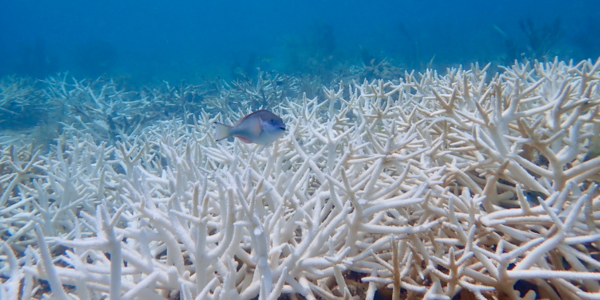
The planet’s environmental systems are under strain, and nowhere is this more visible than in the ocean. Coral reefs are experiencing unprecedented stress due to rising ocean temperatures, acidification, and land-based pollution.
In 2024, the U.S. National Oceanic and Atmospheric Administration confirmed the fourth global coral bleaching event on record, driven by prolonged marine heatwaves affecting reefs across the Atlantic, Pacific, and Indian Oceans.
- According to NOAA Coral Reef Watch, bleaching-level heat stress has affected more than 80 percent of the world’s coral reef area, making this the most widespread bleaching event ever documented. (Coral Reef Watch)
- The Intergovernmental Panel on Climate Change reports that at 1.5°C of global warming, coral reefs are expected to decline by 70 to 90 percent, with losses exceeding 99 percent at 2°C. (IPCC)
- On land, biodiversity loss is accelerating. The Intergovernmental Science-Policy Platform on Biodiversity and Ecosystem Services identifies land-use change, deforestation, and climate stress as primary drivers of ecosystem degradation worldwide. (Global Assesment)
- Forests regulate rainfall, stabilize soils, and filter water before it reaches rivers and coastal zones. When forests are removed or fragmented, erosion increases and water quality declines downstream, directly affecting marine ecosystems. (United Nations)
- The ocean reflects all of this. It absorbs over 90 percent of excess heat trapped by greenhouse gases and roughly one-quarter of global carbon dioxide emissions, buffering climate impacts while becoming warmer and more acidic. (IPCC)
This is the context in which One Ocean exists. Not as an abstract idea, but as a response to a planet whose water systems are sending increasingly clear signals of stress.
Reef
Nayara and OOP will work alongside national and international experts to explore, assess, and co-design opportunities for coral reef restoration and conservation in two strategic territories.
Each represents a distinct ecosystem with unique challenges and potential. For this reason, coral restoration will be approached through a scientific, community-based, and culturally respectful lens, advancing only when there is technical recommendation, local feasibility, and the support of authorities and territorial stakeholders.
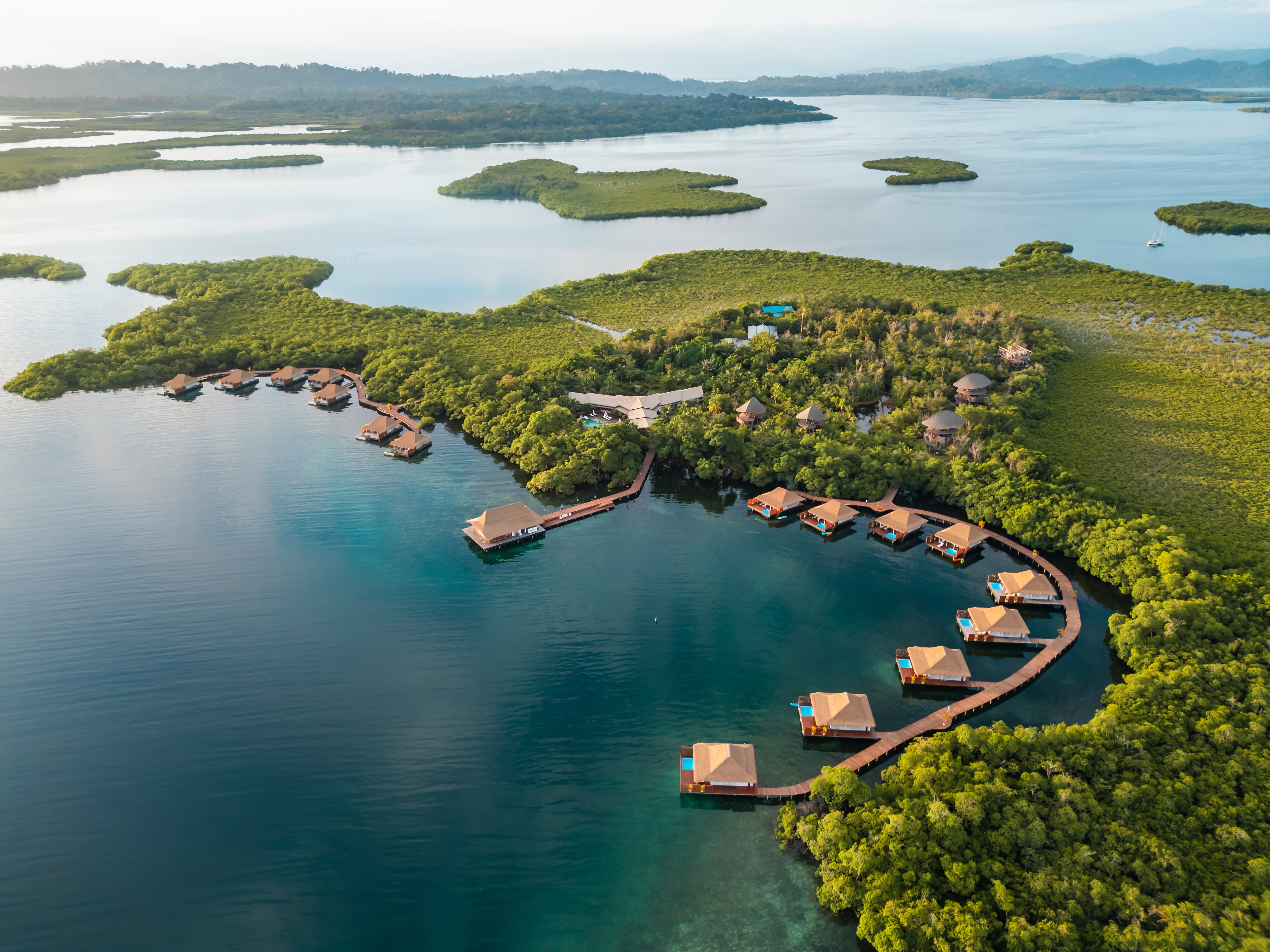
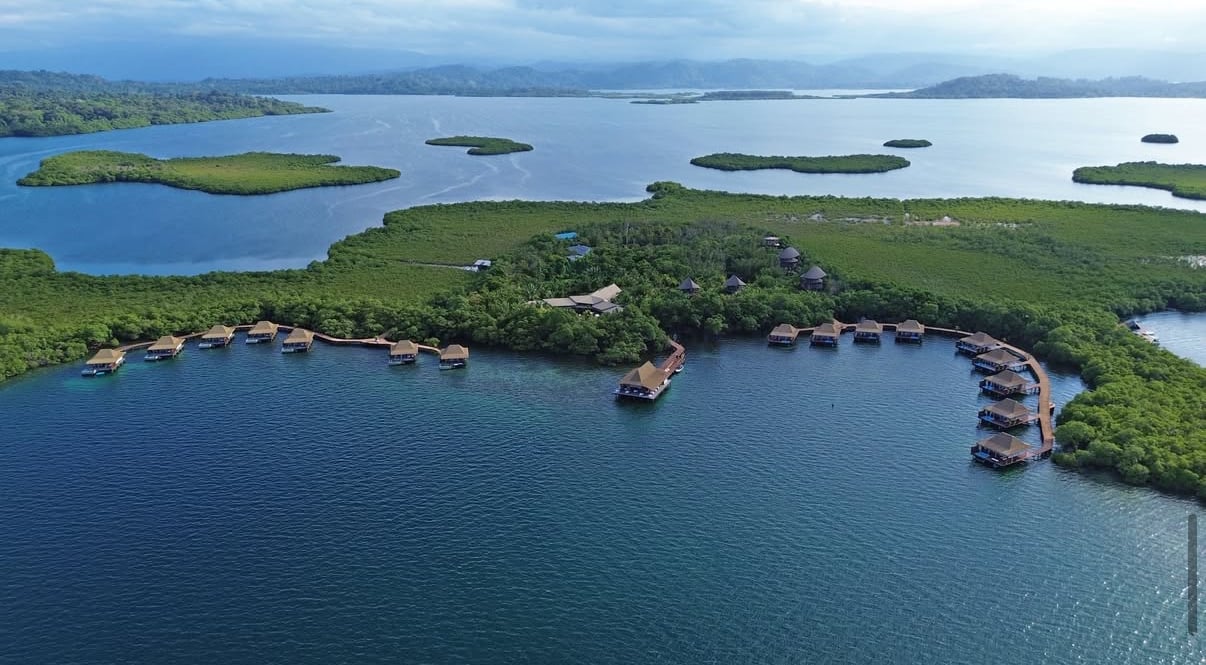
In the Caribbean archipelago of Bocas del Toro and the waters surrounding Rapa Nui, coral reefs serve as living indicators of planetary health. These ecosystems support marine biodiversity, protect coastlines, and sustain local communities.
Within the One Ocean partnership, reefs are understood not as isolated marine habitats, but as downstream recipients of land-based decisions. Education and science-informed restoration efforts are approached carefully, grounded in local context, ecological feasibility, and respect for cultural heritage. The focus is not on quick fixes, but on understanding resilience, stress, and the conditions required for recovery.
The University Challenge program will connect Nayara Resorts with master’s programs at national and international universities, allowing postgraduate student teams to work on real challenges emerging from Nayara and its territories.
Here, reefs become classrooms, revealing how climate, water quality, and human activity intersect in visible and immediate ways.
Rainforest
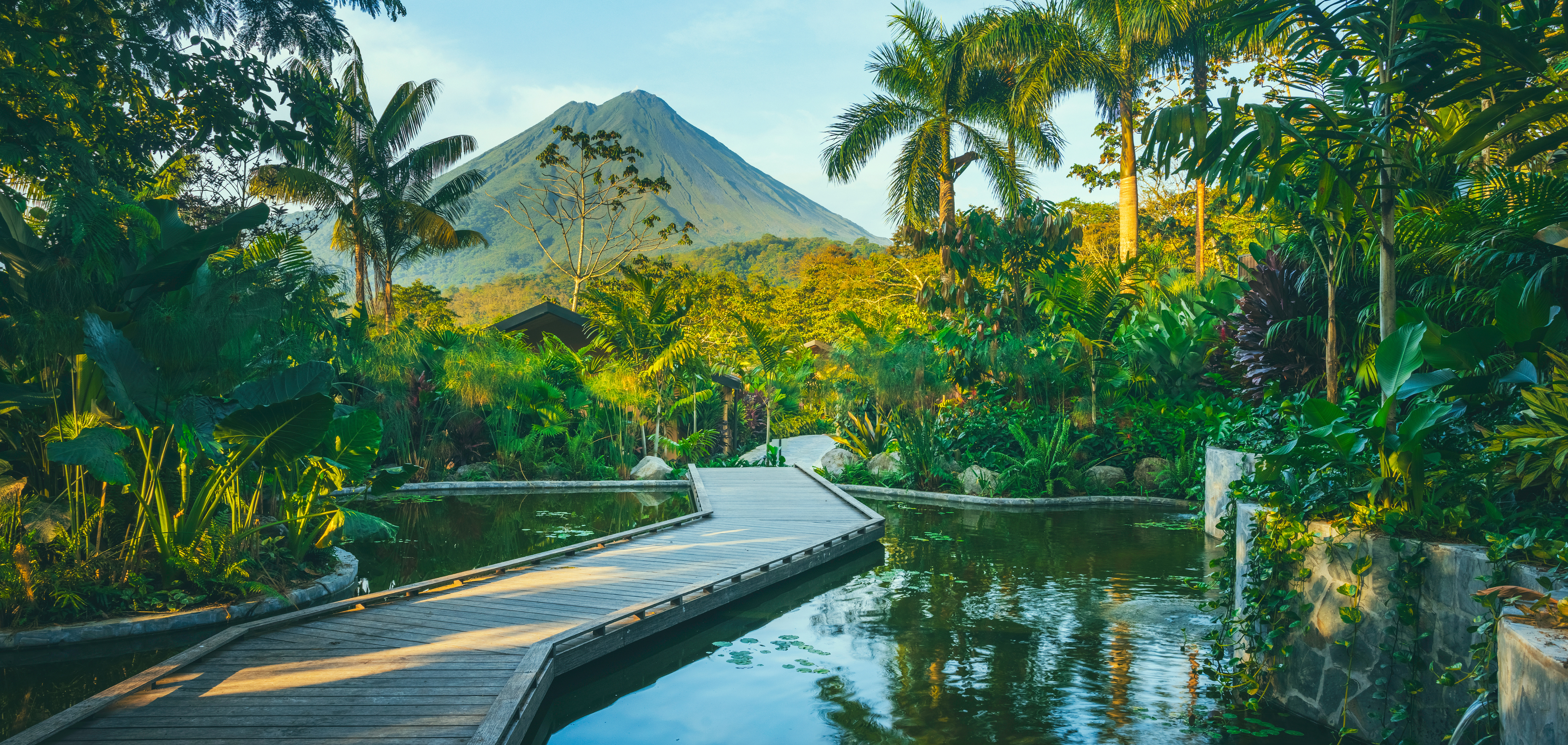
Costa Rica offers a powerful counterpoint. Here, water is abundant, biodiversity is dense, and forests play a critical role in regulating climate and hydrology. The country’s long-standing commitment to conservation and reforestation has made it a global reference for protecting natural capital while supporting economic development.
Within Costa Rica, Nayara’s presence is embedded in rainforest landscapes where reforestation, wildlife corridors, and watershed protection are lived realities, not abstract ideas. Healthy forests stabilize water flow, reduce erosion, and protect downstream marine ecosystems. These land-based efforts are understood not only as forest conservation, but as marine stewardship by extension, linking inland regeneration directly to the health of coastal and ocean systems.
Desert
Northern Chile’s Atacama Desert stretches nearly 1 000 kilometres between the Andes and the Chilean Coast Range. Cool, upwelling waters from the Humboldt current suppress cloud formation and prevent humid air from reaching land, while the high Andes block moisture from the east. The result is a hyper‑arid landscape.
As such, water defines everything. Scarcity sharpens awareness and every drop matters.
In this environment, water is not assumed. It is measured, protected, and respected. The desert reveals the true value of water and the limits of human systems. Within the One Ocean framework, Atacama is where responsibility becomes unavoidable. It forces a fundamental question: in a world defined by limits, how do human systems adapt without eroding the ecosystems they depend on?
One Ocean Nayara Stewardship Lab
Emerging from this shared vision is the One Ocean Nayara Stewardship Lab, the educational framework that brings the partnership to life.
The Stewardship Lab is not a single place or program. It is a learning platform spanning ecosystems, audiences, and disciplines. It exists to translate complex science into lived understanding and shared responsibility.
- For guests, the Lab reframes travel as participation, offering context for the landscapes they experience and the water systems that sustain them.
- For teams, it builds ecological literacy into daily operations, embedding stewardship into how decisions are made.
- For communities, it creates shared spaces for learning and collaboration, respecting local knowledge while expanding understanding of interconnected systems.
The Lab reflects a shared conviction: change begins with people, and people change through education. Awareness is not an outcome. It is the starting point.
Education as the Catalyst
Across desert, rainforest, and reef, education is the constant. One Ocean positions learning as the foundation of stewardship. When people understand how water connects ecosystems, responsibility becomes intuitive rather than imposed.
Hospitality becomes a platform for learning. Ocean science becomes a bridge between land and sea. Stewardship becomes part of how people relate to place. The future of the planet is inseparable from the health of the ocean. And that future begins with understanding.
The alliance between Nayara and OOP redefines what sustainability means in the tourism industry. It is not only about minimizing impact, but about actively regenerating ecosystems, strengthening communities, and transforming how people relate to nature.
The partnership is not a promise of solutions. It is a commitment to understanding, education, and shared responsibility. It recognizes that protecting what sustains us requires clarity, humility, and long-term thinking.
Together, Nayara Resorts and One Ocean Planet show that tourism can be a driver of learning, action, and hope. A way to protect what we love by understanding how deeply connected it all is.
Because the future is blue, and it begins with those who choose to protect it.