.jpg?width=1600&name=Nayara%20Bocas%20del%20Toro%20(1).jpg)
Ocean Habitat Restoration in Bocas del Toro
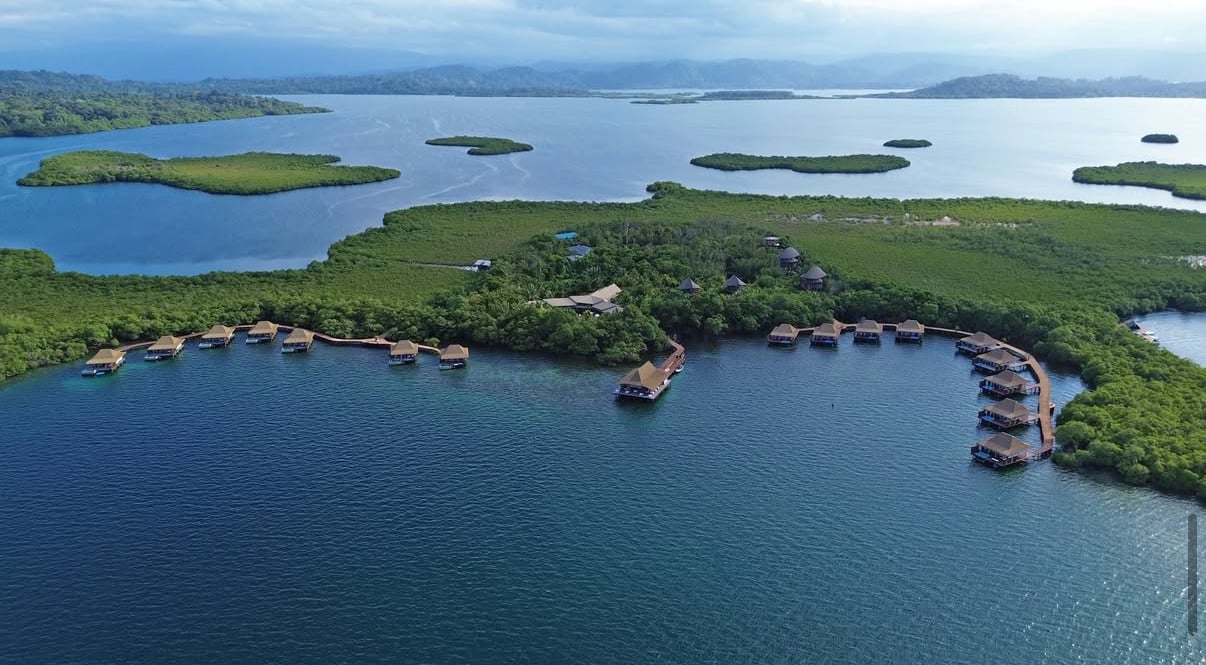
At Nayara Bocas del Toro, coral restoration is moving beyond conservation toward active ecosystem rebuilding. In partnership with the Caribbean Coral Restoration Center, the resort is creating engineered reef habitat, propagating resilient coral strains, measuring biodiversity, and expanding restoration across the Bocas del Toro archipelago.
Of Panama's documented reef-building coral species are found in Bocas del Toro.
Active habitat-restoration zones form part of the expanding program across the archipelago.
Square meters of ocean floor are being influenced by the broader restoration network.
In short: Nayara Bocas del Toro and the Caribbean Coral Restoration Center are building reef habitat across the Bocas del Toro archipelago. The program combines engineered habitat, coral propagation, biodiversity monitoring, and resilient coral strains selected for changing ocean conditions.
Building a City Beneath the Sea
Coral reefs are not simply beautiful structures beneath the surface. They are living cities.
They create shelter, feeding grounds, breeding habitat, and structure for marine communities that extend far beyond the corals themselves. In Bocas del Toro, those communities matter especially. The archipelago contains roughly 87% of Panama's documented reef-building coral species.
The reefs also support a local economy built around fishing, tourism, diving, boating, and the broader health of the Caribbean environment.
But reefs in Bocas face repeated bleaching events, with major stress events occurring every few years. Restoration therefore cannot focus only on replacing what has already been lost. It has to consider what conditions these ecosystems will face next.
That is the premise behind the restoration program at Nayara Bocas del Toro: rebuild habitat while selecting for resilience.
The Caribbean Coral Restoration Center
The Caribbean Coral Restoration Center, or CCRC, is Nayara's technical implementation partner for the project.
Its field team leads habitat installation, coral nursery work, coral propagation, strategic outplanting, and monitoring across restoration sites in Bocas del Toro.
The work follows a simple sequence:
Science That Builds Complete Ecosystems
Restoring coral is only one part of restoring a reef. The larger goal is to rebuild the physical habitat and biological relationships that allow a functioning ecosystem to develop.
Resilience selection. CCRC prioritizes coral strains that have shown greater tolerance to warmer, more acidic conditions.
Biomass monitoring. Success is measured by changes in ecosystem density, biodiversity, and the return of marine life, not coral cover alone.
Habitat structures. Engineered reef structures provide complexity and shelter while natural coral growth develops around them.
The goal is not simply to grow coral. It is to rebuild the living system around it.
Growing Reef Habitat Beneath the Villas
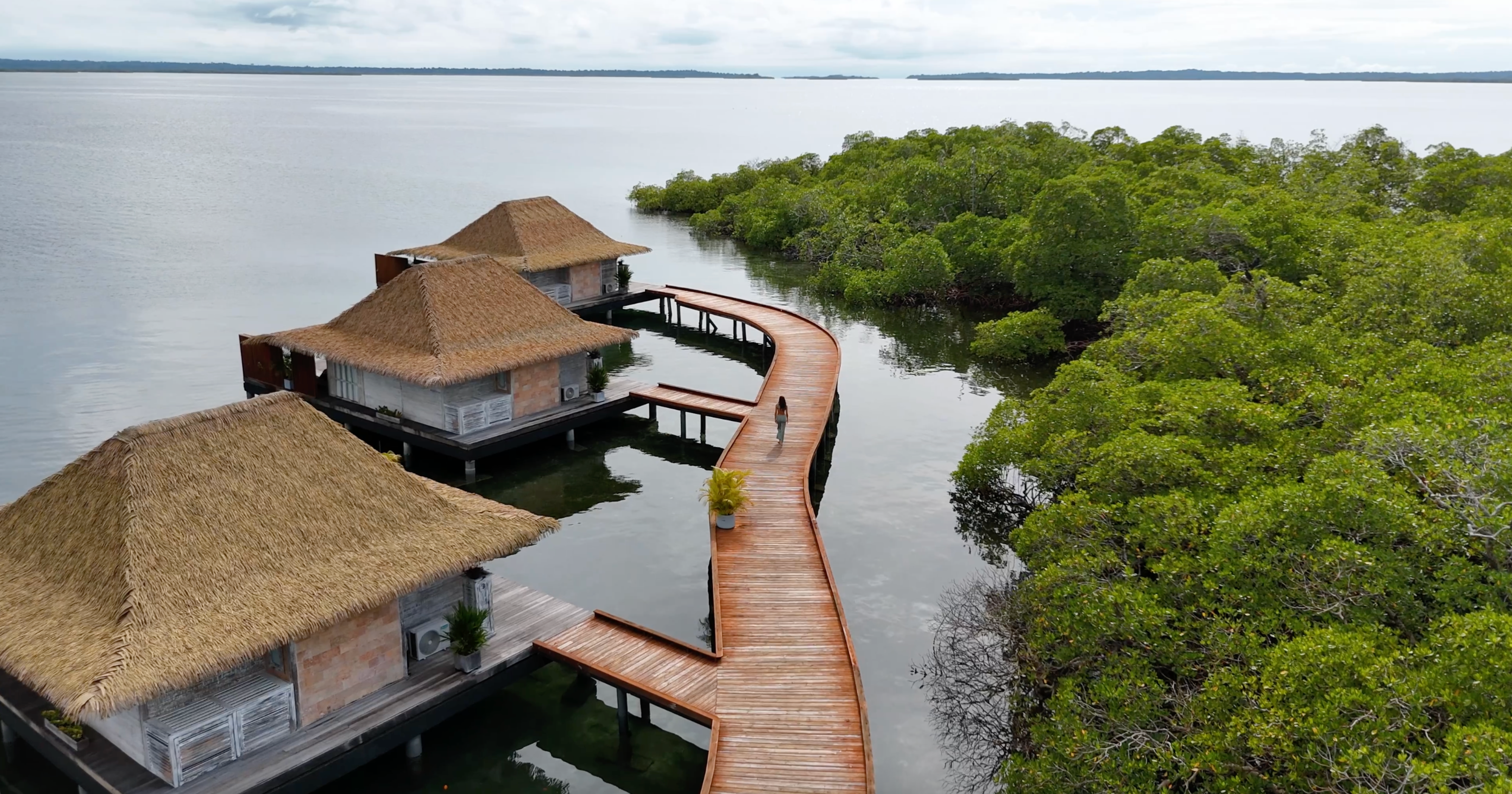
The first restoration phase began directly beneath Nayara's overwater villas.
The team installed custom habitat structures beneath the existing resort infrastructure. Over time, those structures developed into increasingly complex reef communities rather than remaining inert objects on the seafloor.
The project has documented the return of marine life, including yellowtail snapper, great barracuda, nurse sharks, and other species associated with more mature reef systems.
This first phase is as much conceptual as ecological: existing hospitality infrastructure can become the starting point for habitat rather than something merely sitting above it.
Expanding Beyond the Property Boundary
The second phase moves beyond the resort's immediate footprint.
CCRC is developing a larger reef outside the property boundary as part of an expanding network of 16 restoration zones across Bocas del Toro.
The current target is completion in August 2026. Early monitoring has already recorded encouraging changes, including increases in breeding-size angelfish and spiny lobster populations.
This is where the program moves from property-level restoration toward an archipelago-scale model.
Can Floating Villas Become Marine Habitat?
The third phase asks the most ambitious question in the program: can new hospitality infrastructure be designed around habitat restoration from the beginning?
The resort is incorporating habitat structures around six planned floating villas in the back bay. The target is 2027.
The long-term goal is for coral growth and marine habitat created around the villas to offset the carbon footprint associated with the structures, creating what the project describes as a path toward net-zero and ultimately net-positive floating villas.
That outcome remains a goal rather than a completed claim. Its importance lies in the design principle: instead of asking how development can reduce damage after construction, ask whether restoration can be engineered into development itself.
From Recovering Reef to Apex-Rich Ecosystem
Surveyed zones now classified by the project as pristine ecosystems.
Active habitat-restoration zones across the archipelago.
Square meters of ocean floor positively influenced by the restoration network.
Predators, including nurse sharks, are returning to restored habitat.
Turn a Visit Into Lasting Impact
The restoration program is designed to be visible to guests, not hidden as a back-of-house sustainability project.
Guided restoration experiences allow guests to join marine biologists in the field, learn how resilience-based restoration works, help deploy habitat structures, and participate in coral-seeding activities.
The Adopt-a-Coral program extends that connection beyond the stay. Participants can follow the reef structures they support through later updates, including photographs and monitoring data.
The larger objective is not to turn restoration into entertainment. The goal is to make the science legible so travelers understand what recovery looks like over time.
Luxury That Restores the Ocean
Stay above the Caribbean and see how marine restoration is reshaping the ecosystem beneath it.
Albert Ghitis
Digital Marketing · Nayara Resorts
Albert Ghitis leads digital marketing at Nayara Resorts, overseeing editorial, email strategy, organic social, paid social, search, and AI discovery. He also hosts Nayara Horizons. Explore the latest episodes below.
Explore the Podcast
Conversations about the people, places, cultures, and ideas behind Nayara's destinations.
.jpg)