The tilt that makes summer. Earth leans your hemisphere into the sun, up to 15 hours of light a day.
Summer as time off is barely 150 years old, an invention of 19th-century city dwellers, not farmers.
of the world's astronomy sits in Chile, where June is winter and the night sky is the clearest on Earth.
What Summer Actually Is
In short: summer is real biology, not just a mood. Earth's 23.5-degree tilt floods your hemisphere with light, lifting serotonin, vitamin D, and alertness. And if it is winter where you live, Chile's Atacama offers some of the clearest, darkest skies on Earth.
Before it became a feeling, summer was a fact, a geometric one.
Earth is tilted 23.5 degrees on its axis, and in June the Northern Hemisphere leans directly into the sun. Not closer to it, toward it. Earth is actually slightly farther from the sun in June than in January. Distance is not what makes summer. Angle is.
That angle stretches the day and concentrates the light. At 40 degrees north the solstice delivers nearly 15 hours of daylight; at the Arctic Circle the sun never sets. The light arrives more directly, through less atmosphere, with more energy per square meter of ground. The result is not just warmth. It is a shift in your biology. Your body knows what season it is before your calendar does.
What Summer Does to Your Body
In 2002, a team led by Gavin Lambert measured serotonin in 101 healthy men across the seasons. Brain serotonin production rose with the hours of bright sunlight and fell to its lowest in winter. The paper, published in The Lancet, remains one of the clearest demonstrations that your brain chemistry changes with the season.
Serotonin is only part of it. Daylight on the retina suppresses melatonin and sharpens alertness. Ultraviolet B triggers vitamin D in the skin, no supplement required. Cortisol settles, sleep improves, and the hypothalamus shifts the whole hormonal landscape toward wakefulness. None of this is mystical. It is photobiology. Your body is a solar instrument, and summer is when it receives the most signal.
Why Summer Feels Like Permission
Why does summer feel like time off? The answer is not ancient, and it has almost nothing to do with farming. The harvest comes in autumn, and many 19th-century rural schools ran straight through summer. As historians have pointed out, the long break was an urban invention.
By the 1850s, American cities were unbearable in summer: no air conditioning, dense housing, crowded schools. Wealthy families fled to Newport, Saratoga, and Martha's Vineyard. As the eight-hour day was won and railroads reached the coast, summer became democratized leisure. Fitzgerald set The Great Gatsby in summer because the season already meant nostalgia and romance. Summer as permission is not a natural law. It is a cultural invention barely 150 years old.
The Ocean and What It Does to Your Brain
If summer has a sound, it is waves. The marine biologist Wallace J. Nichols spent a decade gathering the neuroscience of water and named what it produces Blue Mind, a mildly meditative calm triggered simply by being near it. The research is not anecdotal. A 2020 synthesis in Environmental Research links blue space to lower stress and greater well-being: water activates the parasympathetic nervous system, the color blue lowers cognitive load, and the ocean's sheer scale produces awe, which quiets self-focus.
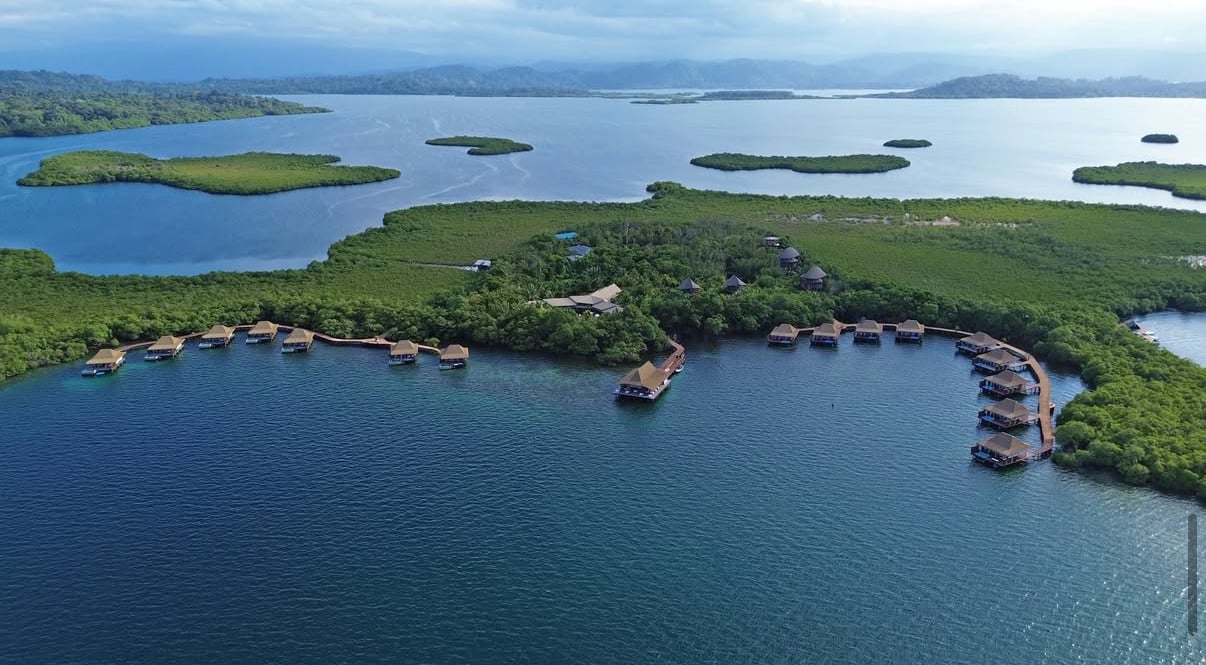
This summer, Nayara is doing more than admiring the ocean. It is restoring it. Nayara Bocas del Toro is actively rebuilding living coral reefs and the marine habitats that depend on them. This is not a someday pledge or a press release. It is happening now, reef by reef, fish by fish, turning a place we love into a place we protect.
Discover our ocean habitat restoration initiative, because what we love most deserves more than admiration. It deserves protection.

What Self-Care Actually Means
We talk about self-care as though it were face masks and long baths. The real version is harder: choosing yourself when it is inconvenient, protecting your time when other people want it, letting something be good enough so you can be present for what actually matters. It is not selfish. It is overdue.
A 2018 study in the International Journal of Environmental Research and Public Health found that even a single short vacation produced large, immediate gains in stress and recovery, whatever the activity. The effects faded within weeks. The conclusion was not that vacations fail. They need to happen more often.
And If Your Summer Includes Someone Else
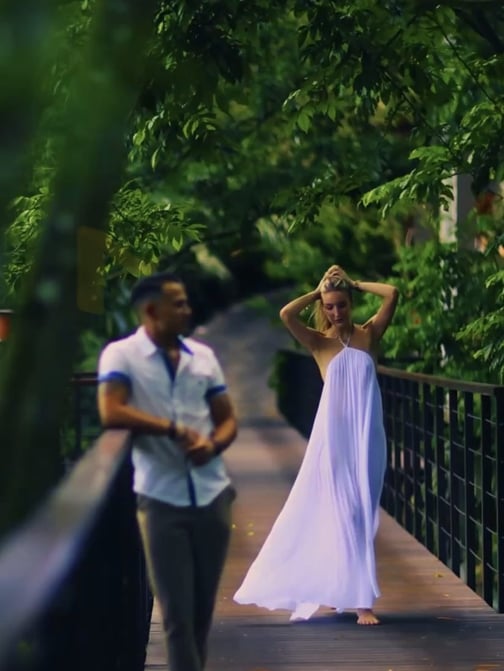
If the thing you have been postponing is leaning back into the person beside you, there is science behind the instinct. A 2024 study in Leisure Sciences found that couples who shared novel, self-expanding experiences on vacation reported higher satisfaction and intimacy afterward. The number of trips did not matter. What mattered was how new and shared the experience felt.
Separately, the U.S. Travel Association found that 61% of couples say a trip reignited their romance, and married Americans describe themselves as far more romantic on vacation than at home. Romance is not a mood. It is a context, and summer, with its long evenings and permission to slow down, is one of the best there is.
But What If Your Summer Is Winter?
Everything above assumes the Northern Hemisphere, but Earth's tilt works both ways. When New York holds 15 hours of daylight, Santiago has barely 10, and Chile's Atacama enters its coldest, driest, darkest season. That is exactly what makes it extraordinary.
The Atacama is the driest non-polar desert on Earth, fifty times drier than Death Valley. In winter, the air turns so still and transparent that the sky opens like nowhere else. It is why roughly 70% of the world's astronomy is built here, from ALMA at 5,000 meters to the European Southern Observatory. For a visitor it means this: the Milky Way's core, visible from the south only in these months, hangs overhead; nights run past 14 hours; and there is no haze between you and a universe of two trillion galaxies.
Your summer does not have to look like summer. Sometimes the best version is a desert in winter, a blanket, and more stars than you believed existed.
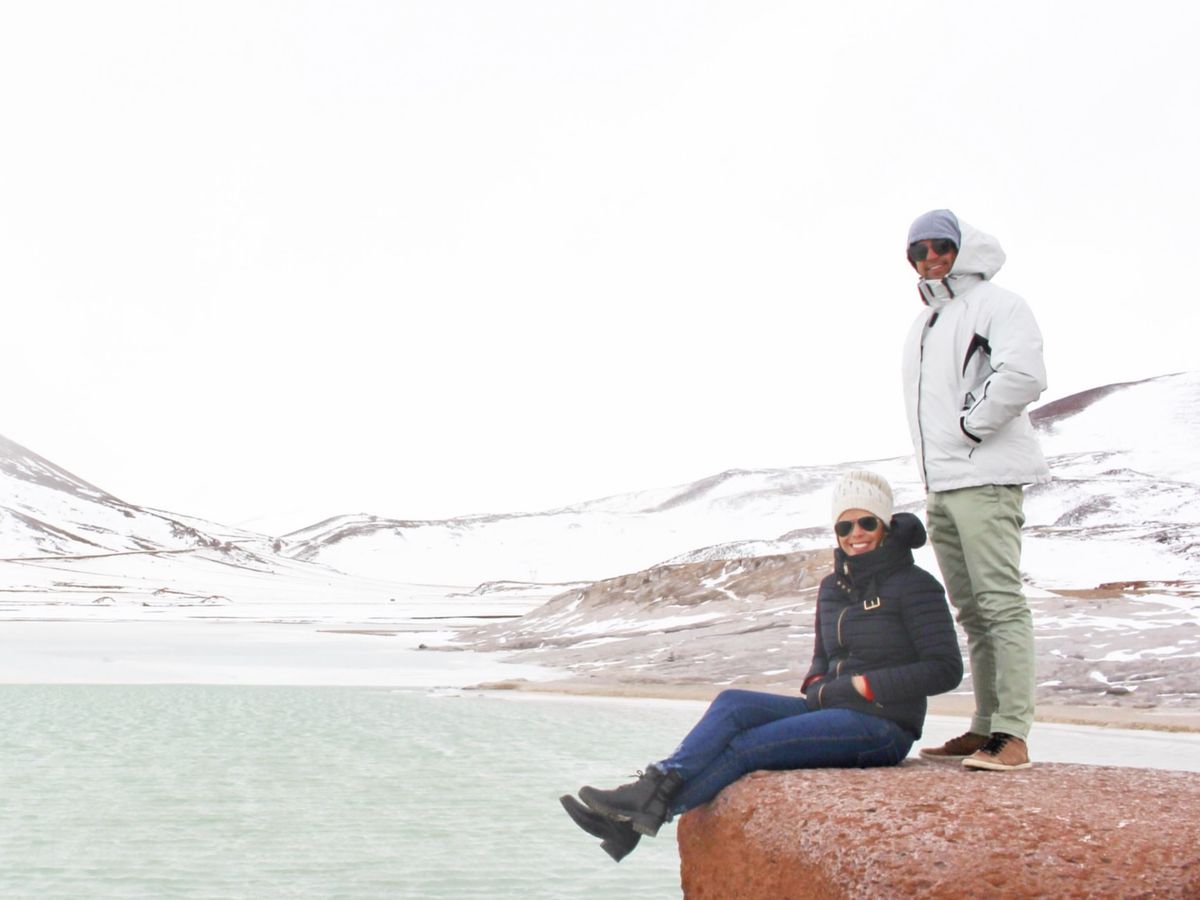
Winter in the Atacama: the clearest, darkest skies on Earth, and the Milky Way's core overhead.
This summer does not need to be perfect or transformative. It just needs to be yours.
Frequently Asked Questions
When is the summer solstice, and why is it the longest day?+
Why does summer make you feel happier?+
What is "Blue Mind"?+
Where can I go if it is winter where I live?+
Does a short trip actually help?+
- Lambert et al. (2002), The Lancet: sunlight, season, and serotonin
- White et al. (2020), Environmental Research: blue space and wellbeing
- Blank et al. (2018), IJERPH: short vacations and stress
- NASA Space Place: what causes the seasons
- Undark (2024): darkness in the Atacama
- TIME: a brief history of the summer vacation
- Wallace J. Nichols, Blue Mind
- Ocean Habitat Restoration at Bocas del Toro
- The Best Adults-Only Resorts for Romance
Your Summer Is Waiting
Wherever you are on Earth, Nayara has a version of it. Rainforest, island, or desert sky.