

The Rise of Quiet Travel: How Silence Is Becoming the Trend of 2027
After years of packed itineraries, constant connectivity, and increasingly elaborate wellness programs, luxury travel may be moving toward something simpler. Quiet travel puts privacy, lower stimulation, nature, and control over attention at the center of the journey. The science does not say silence is medicine. It does suggest that chronic environmental noise can affect sleep, stress, cardiovascular health, and cognition, while natural soundscapes may offer a very different experience.
Of surveyed U.S. travelers expressed interest in a quiet or silent retreat, according to Go RVing.
People in the European Union face unhealthy exposure to road-traffic noise, according to the WHO.
A 2024 meta-analysis found natural sound outperformed quiet conditions on several physiological measures.
If 2026 Named the Trend, 2027 May Define It
In short: Quiet travel replaces the pressure to maximize every hour with privacy, slower itineraries, nature, lower stimulation, and the ability to decide when the outside world gets your attention.
For decades, luxury travel was built around addition.
A larger suite. Another restaurant. A longer treatment menu. More technology. More entertainment. More things to do.
Quiet travel moves in the opposite direction.
Less noise. Fewer crowds. Fewer scheduled obligations. Fewer screens. More privacy. More time in one place.
The language is already entering travel culture. Travel + Leisure identified peace and quiet as an emerging luxury-wellness theme. Industry reporting increasingly uses terms such as quietcation and hushpitality. Research published by Go RVing found that 57% of surveyed U.S. travelers were interested in a quiet or silent retreat, and 53% were interested in a reading retreat.
The trend is not really about doing nothing. It is about deciding what deserves your attention.
What Noise Does When We Stop Noticing It
Noise does not have to damage hearing to affect the body.
The WHO links chronic environmental noise with sleep disturbance, cardiovascular disease, hypertension, cognitive effects, and annoyance.
The mechanism is particularly interesting at night. Hearing does not switch off during sleep. Traffic or aircraft noise can trigger brief physiological arousals even when someone does not remember waking. In laboratory research published in Sleep, individual transportation-noise events produced measurable heart-rate responses in sleeping participants.
Over time, the concern isn't one horn or passing airplane. It is repeated activation. A major review in Nature Reviews Cardiology describes a pathway connecting chronic transportation noise with sleep fragmentation, stress hormones, inflammation, oxidative stress, vascular dysfunction, and cardiovascular disease.
Noise also competes for attention. A siren might matter. A nearby conversation could contain your name. A phone notification usually implies a task. The brain continually decides which signals to ignore.

The Opposite of Noise Is Not Necessarily Silence
This is where the science becomes more interesting than the trend.
A rainforest can be loud. So can waves breaking on shore. Wind through a canyon may be louder than the mechanical hum inside an office.
Yet people often experience those environments very differently.
A 2024 meta-analysis comparing natural sound with quiet environments found advantages for natural sound in heart rate, blood pressure, and respiratory rate, though not for every outcome.
A controlled experiment also found better directed-attention performance after exposure to natural soundscapes than after urban sounds.
But the science is not uniformly positive. A 2025 study in Scientific Reports found that forest sounds improved mood, perceived restoration, and cognition compared with industrial noise, while several physiological measures did not change significantly.
The lesson is not that birdsong is medicine. Acoustic experience depends on more than volume. What a sound means, whether it demands action, and the environment around it all matter.
Four Different Forms of Quiet
Quiet at Nayara does not mean imposing silence on nature. Each destination changes the acoustic environment differently.
Room Between Sounds
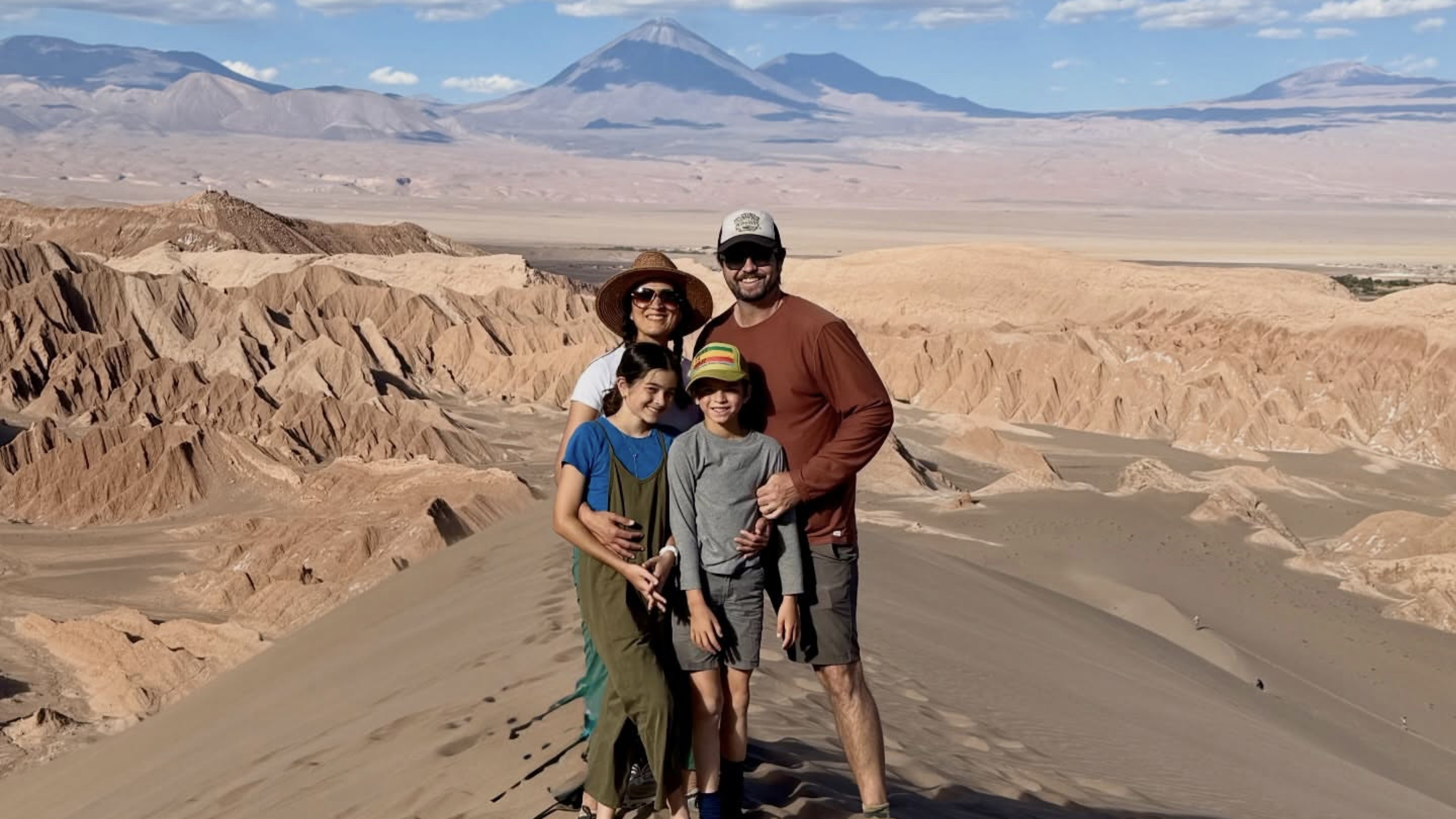
The Atacama comes closest to traditional silence. Sparse vegetation, vast distances, and limited traffic mean individual sounds become unusually distinct.
At Alto Atacama, a footstep on gravel or wind passing a rock face can dominate the foreground.
The Rainforest Is Not Quiet
Birds, frogs, insects, rain, and moving water make Arenal acoustically rich. That's why it belongs in this story.
The forest replaces much of the mechanical sounds of ordinary life with a living soundscape that doesn't necessarily demand action.
What Happens When the Road Disappears
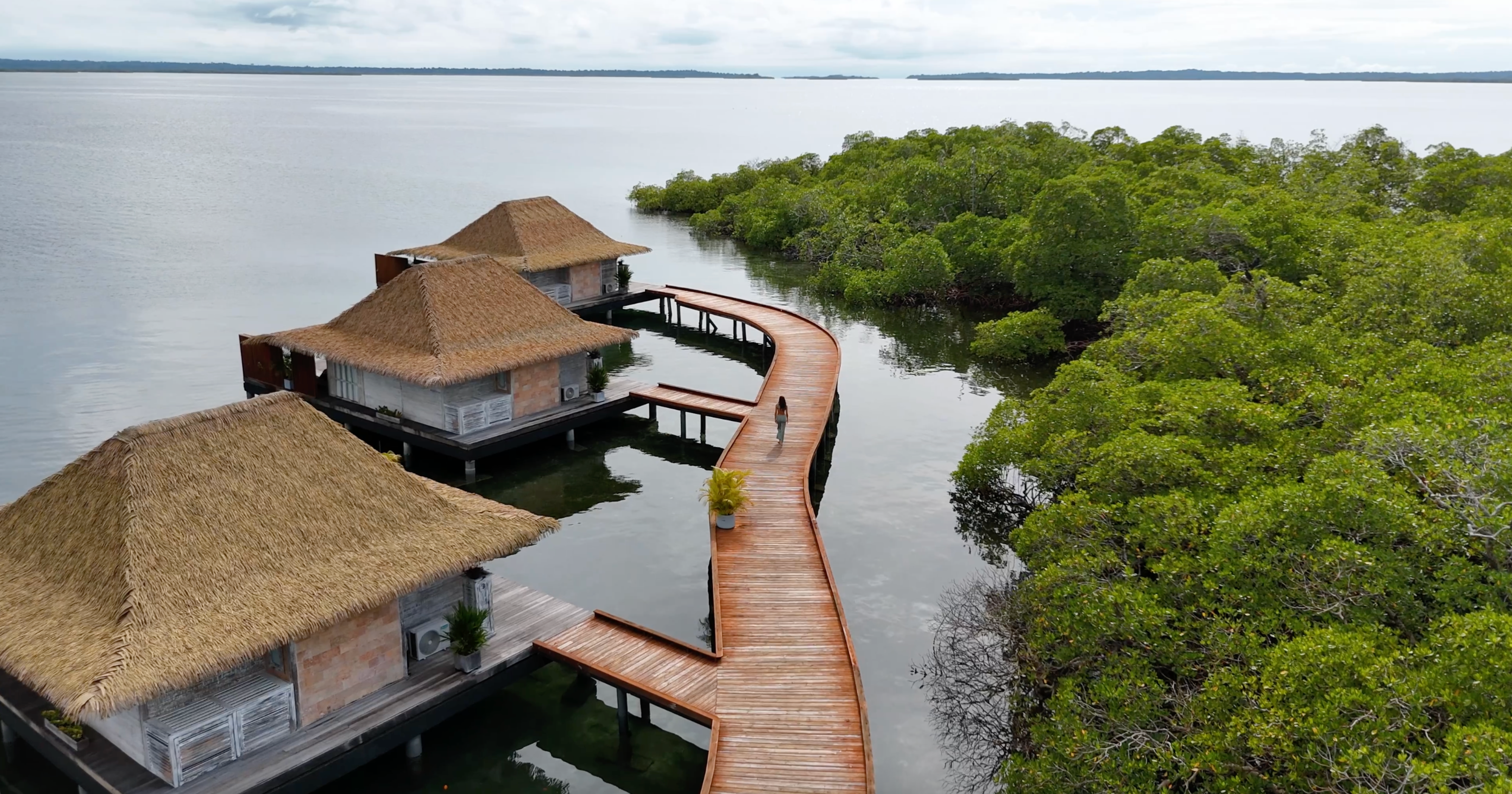
No highways cross Isla Frangipani. Water replaces roads as the dominant transportation corridor.
At Nayara Bocas, waves, tropical rain, mangroves, birds, and distant boats become the backdrop.
Remoteness Becomes Sensory
People usually describe Rapa Nui's isolation in kilometers. Away from town, it can also be experienced as sound.
Wind, grass, ocean, birds, and footsteps across volcanic ground can dominate the acoustic field around Hangaroa.
Luxury Used to Mean Access. Now It May Mean Control.
Luxury has always depended on scarcity.
Once, that meant imported ingredients, private transportation, larger rooms, or access to places other people could not reach.
Now other things are becoming scarce.
Privacy. Uninterrupted sleep. Time without notifications. Places without traffic. A horizon without crowds. The ability to decide when the outside world reaches you.
Quiet travel turns those absences into part of the experience.
.jpg?width=6000&height=4000&name=23-uyuni%20(138).jpg)
Perhaps the luxury of 2027 will not be hearing something extraordinary. It will be deciding what you do not have to hear at all.
Albert Ghitis leads digital marketing at Nayara Resorts, overseeing editorial, email strategy, organic social, paid social, search, and AI discovery. He also hosts Nayara Horizons. Explore the latest episodes below.
Explore the Podcast
Conversations about the people, places, cultures, and ideas behind Nayara's destinations.
Quiet Travel
What is quiet travel?+
Why is quiet travel becoming popular?+
Can environmental noise affect health?+
Is complete silence more restorative than natural sound?+
Which Nayara destination is best for quiet travel?+
Find the Space to Hear Less
From desert stillness and remote islands to the rainforest's living sound, discover landscapes that change what competes for your attention.
Travel Trends
Four shifts reshaping how people travel, from the year's biggest movements to the changing meaning of luxury itself.
- WHO · Environmental Noise Guidelines
- WHO · Noise and Public Health
- Nature Reviews Cardiology · Transportation Noise and Cardiovascular Disease
- Sleep · Traffic Noise and Autonomic Arousal
- Environment International · Noise and Cognition
- Natural Sounds vs. Quiet · Systematic Review and Meta-Analysis
- Psychonomic Bulletin & Review · Natural Sound and Attention
- Scientific Reports · Forest Soundscapes and Restoration
- ISO · Soundscape Framework
- Travel + Leisure · Quiet Luxury Wellness
- Go RVing · Quietcation Research
- Nayara Resorts · Our Resorts
.jpg)