Why We Need the Night: The Disappearance of the World’s Dark Skies
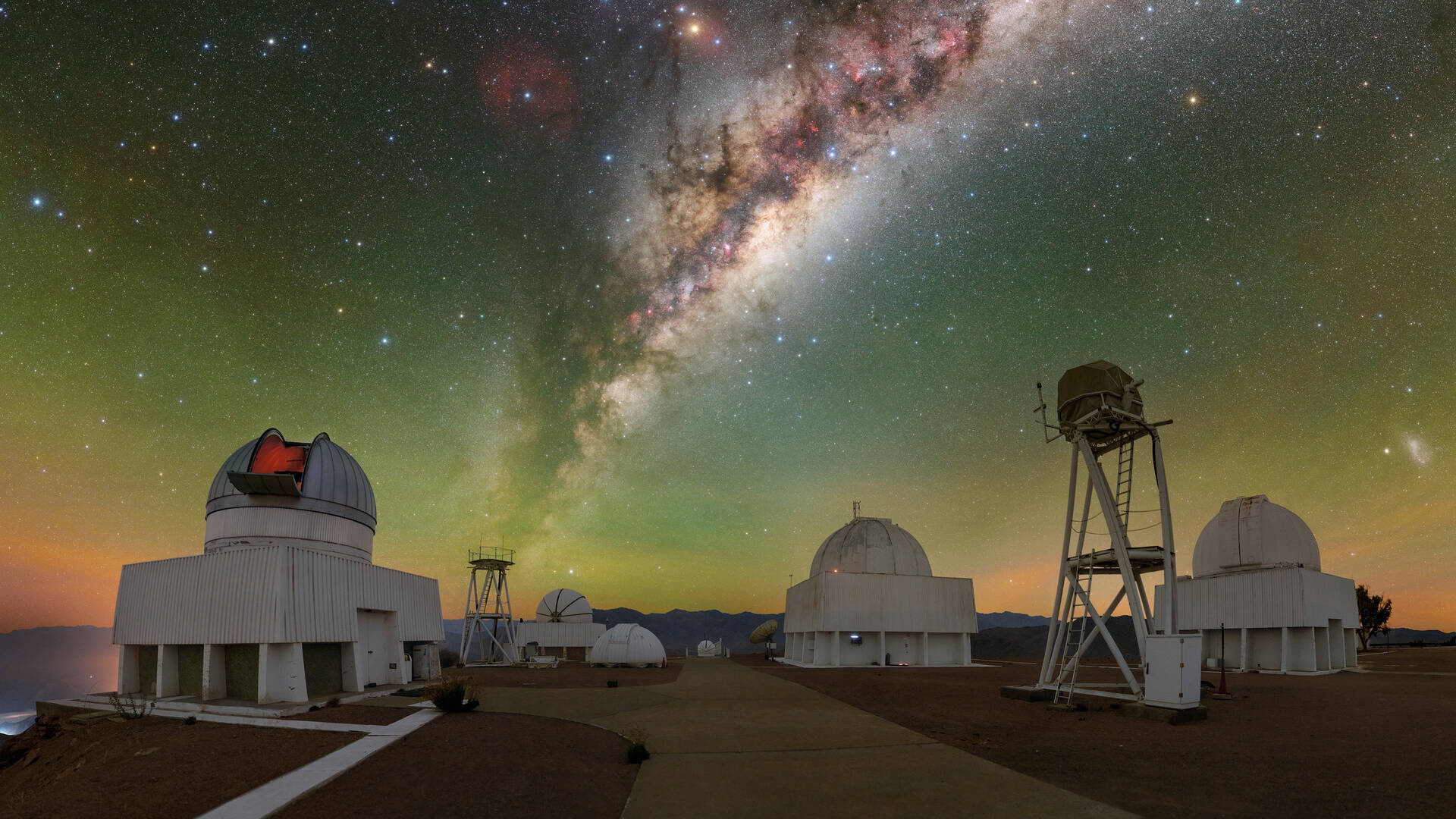
Clear nights per year in northern Chile, among the most reliable astronomical conditions on Earth.
More than 80 percent of the world's population lives under light-polluted skies.
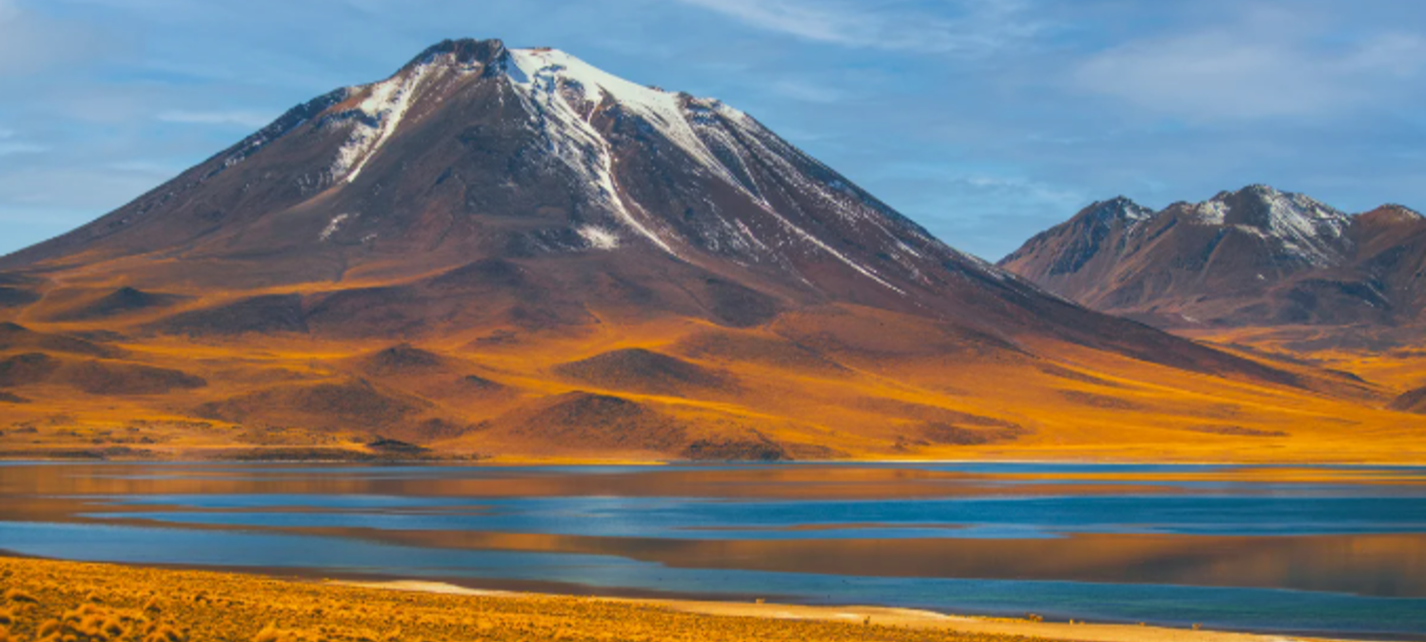
The altitude of the ALMA array on the Chajnantor Plateau, where exceptionally dry air opens a window into the universe.
Why We Need the Night
In short: Artificial light has erased naturally dark skies for much of humanity. In the Atacama, altitude, extreme dryness, atmospheric stability, and remoteness preserve something increasingly rare: a night sky that still behaves like night.
In most destinations, stargazing is an activity. It depends on weather, timing, and luck. In the Atacama, it is intrinsic.
Artificial light has erased naturally dark skies for much of the world's population. According to DarkSky International, more than 80 percent of people globally now live under light-polluted skies. The loss reaches beyond astronomy, affecting ecosystems, wildlife behavior, and human circadian rhythms.
Against that backdrop, the Atacama is no longer merely exceptional. It is increasingly irreplaceable.
At Nayara Alto Atacama, darkness is part of the landscape. Stars appear sharp and numerous. The Milky Way emerges as structure rather than haze, with dark dust lanes and dense star clouds visible across the sky. Stillness frames the experience rather than spectacle. The desert sets the pace. The sky rewards patience.
Why the Atacama Is Different
The Atacama's astronomical clarity comes from a rare set of geographic conditions converging in one place.
Much of the region sits above 2,400 meters, placing observers above a significant portion of Earth's atmosphere. The thinner column of air reduces distortion between the stars and the observer.
Dryness is the second pillar. The Andes create a rain shadow to the east, while the cold Humboldt Current along the Pacific coast stabilizes the atmosphere and suppresses cloud formation. Water vapor absorbs and scatters light, particularly at infrared and submillimeter wavelengths. In the high Atacama, atmospheric moisture can be extraordinarily low.
The final factor is remoteness. Northern Chile is sparsely populated compared with many parts of the world. Fewer artificial light sources preserve the contrast between darkness and stars.
Why Astronomers Came Here
Long before stargazing became a defining travel experience, scientists recognized the Atacama's value. Decades of site testing established northern Chile as one of the world's most important regions for astronomical research.
The ALMA Observatory, the Atacama Large Millimeter/submillimeter Array, sits at roughly 5,000 meters on the Chajnantor Plateau. Its 66 antennas work together to observe molecular gas, dust, star formation, and some of the universe's earliest structures.
The European Southern Observatory's Paranal Observatory is home to the Very Large Telescope, one of the world's leading optical observatories. Its instruments have contributed to research ranging from exoplanets to supermassive black holes.
The historic La Silla Observatory reinforces the same conclusion. The Atacama is not simply beautiful after dark. Its atmosphere makes it scientifically valuable.
For guests at Nayara Alto Atacama, those observatories quietly confirm that the sky overhead is unusual on a planetary scale.
What Darkness Reveals
On moonless nights, the Milky Way's dense core appears as a luminous band arching overhead, with dark dust lanes separating star-rich regions. The sky has depth. What often appears in cities as a handful of isolated stars becomes a layered structure.
Because the Atacama lies in the Southern Hemisphere, travelers from the north encounter a different celestial map. The Southern Cross, Centaurus, and Carina appear among dense star fields surrounding the galactic center.
Telescopes reveal another layer. At modest magnification, you can see Jupiter's moons and Saturn's rings, while globular clusters, nebulae, and other deep-sky objects become much easier to distinguish under a naturally dark sky.
How Andean Cultures Read the Sky
Long before observatories arrived, the sky already carried meaning here.
For Indigenous Andean societies, including the Atacameño people, the night sky was part of a living system connecting land, water, animals, and time. Unlike Western astronomy, which maps constellations primarily by connecting stars, Andean sky knowledge also paid attention to the dark spaces within the Milky Way.
These dark constellations form from dust lanes visible only under very dark skies. Institutions such as the American Museum of Natural History have documented the tradition, describing its role in seasonal and agricultural understanding.
The Milky Way itself was understood as a celestial river, symbolically connected to water on Earth. Smithsonian materials on Andean cosmology describe relationships between sky movement, rainfall, fertility, and seasonal change.
Figures such as a celestial llama, fox, and snake were identified in the Milky Way's dark regions. The darkness between the stars was not empty. It was part of the map.
When to Experience the Atacama Night Sky
You can stargaze at Nayara Alto Atacama year-round, but the sky changes with the seasons.
Austral winter, from June through August, brings long nights and exceptionally dry conditions. The Milky Way's galactic core is prominent during this time, while other seasons reveal different constellations and planetary alignments.
Moon phase matters. Around the new moon, darker skies reveal fainter stars, nebulae, and more of the Milky Way's structure. A bright moon changes the experience rather than ruining it, illuminating the desert while leaving planets and brighter celestial objects visible.
Night temperatures can fall sharply at altitude. Warm layers, closed shoes, and time to acclimate make longer observation more comfortable. The experience is meant to be unhurried. In the Atacama, night becomes a place rather than simply the interval between two days.
Where the Night Still Belongs to the Sky
In much of the world, the night sky has become an abstraction, filtered by artificial light, speed, and distraction. In the Atacama, it remains unusually intact.
The same conditions that draw astronomers from around the world allow travelers to encounter the universe directly. Stargazing here is not simply a novelty. It is a return to scale.
The desert's silence, the sky's clarity, and the slow passage of time combine to make perspective physical. The value lies not only in what a telescope can reveal, but in what becomes visible once unnecessary light disappears.
Standing beneath these skies helps explain why darkness matters now. As naturally dark nights become rarer elsewhere, the Atacama preserves what most people once took for granted.
At Nayara Alto Atacama, the night sky is not an amenity. It is the landscape itself.
Stand Beneath the Atacama Sky
Experience the desert by day and one of the world's great night skies after sunset.
Albert Ghitis leads digital marketing at Nayara Resorts, overseeing editorial, email strategy, organic social, paid social, search, and AI discovery. He also hosts Nayara Horizons: Beyond Travel. Explore the latest episodes below.
Explore the Podcast
Conversations about the people, places, cultures, and ideas behind Nayara's destinations.
Frequently Asked Questions
Can I see the Milky Way without a telescope? +
Are stargazing experiences guided or self-led? +
Does altitude affect the stargazing experience? +
What should I wear for nighttime stargazing? +
Is stargazing available year-round? +
What is the best moon phase for stargazing? +
Astronomy & Dark Skies
- European Southern Observatory · Astronomy in Chile
- ALMA Observatory
- European Southern Observatory · Paranal Observatory
- European Southern Observatory · La Silla Observatory
- DarkSky International
Indigenous Sky Knowledge