The Atacama is the driest non-polar desert on Earth, a low-stimulus landscape that sharpens attention.
Austral winter: cooler days, longer nights, fewer visitors, and the darkest skies. The honeymoon season almost nobody thinks to book.
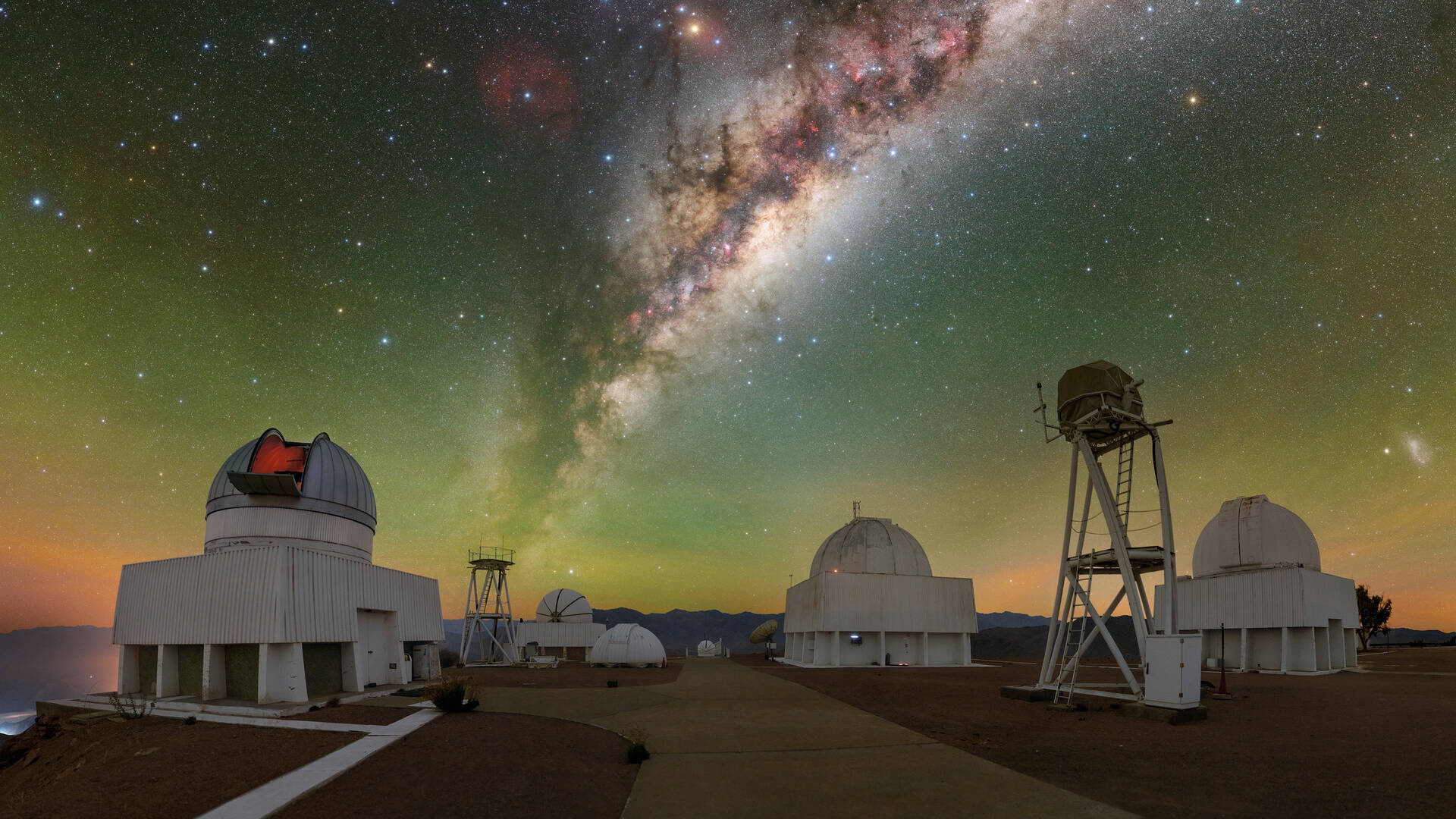
of humanity lives under light-polluted skies. In the Catarpe Valley, the Milky Way stays intact.
The Unconventional Honeymoon
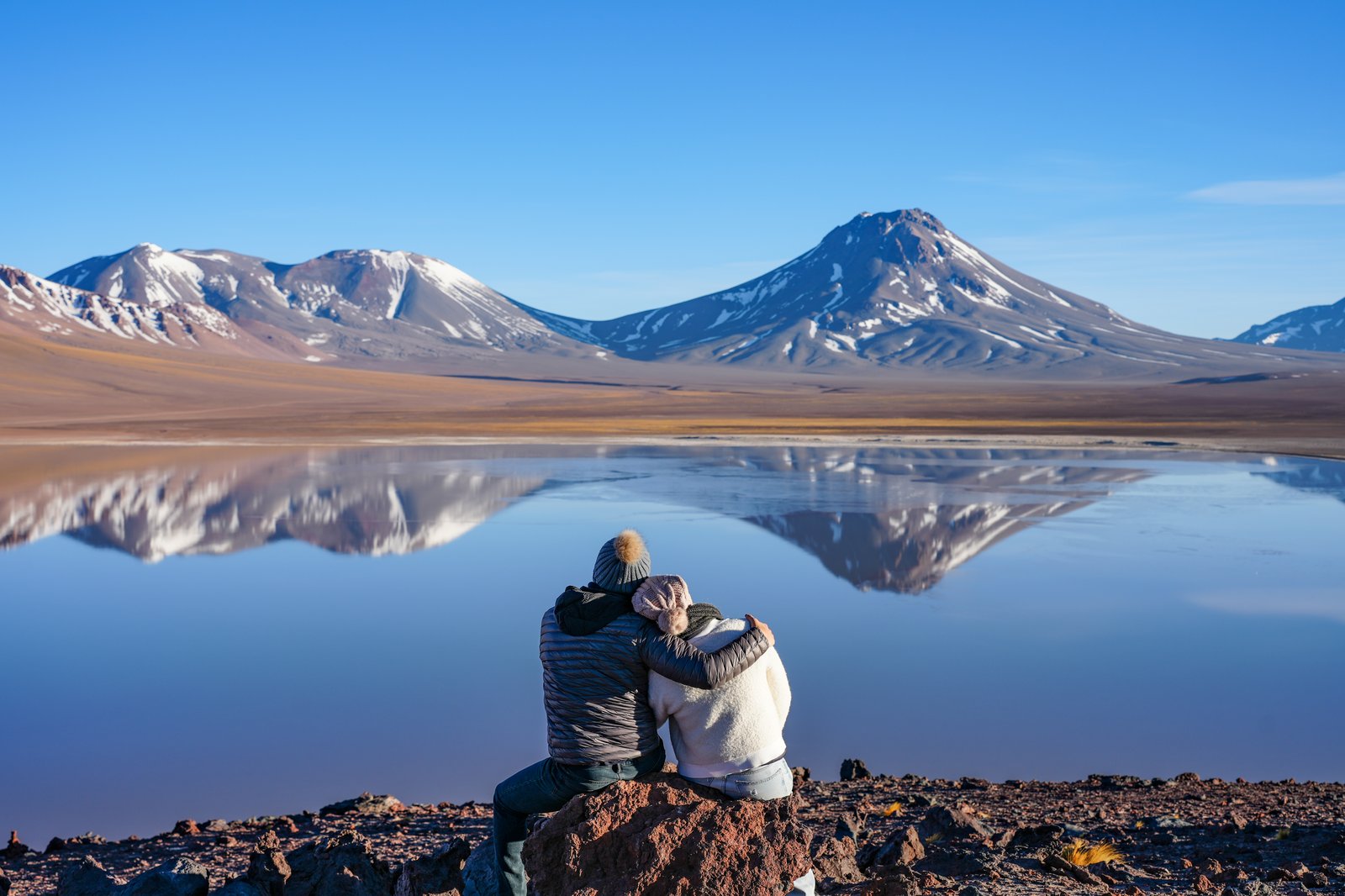
Most honeymoons are built on abundance: a beach, a swim-up bar, a schedule of experiences stacked like a tasting menu. The Atacama proposes the opposite, and the couples who choose it tend to say the same thing afterward: it was the first time since the engagement that the two of them were the whole event. A honeymoon here is not a resort with a desert view. It is the desert, with a lodge built low enough to disappear into it.
The shape of the days makes the case better than any brochure. A morning walk through the Catarpe Valley before the light hardens. An afternoon soak in the warm pools of Puritama, a geothermal river canyon now included in every Full Experience Program, where the water holds the low thirties while the desert air stays crisp. An evening drive to nowhere in particular, because the emptiness is the destination. And then the night sky, which in the Catarpe Valley is not an activity but a nightly condition.
Travel + Leisure readers just ranked this lodge eleventh in all of South America, and it holds two MICHELIN Keys, so the comfort question answers itself. What follows is the deeper argument: why deserts have carried love stories for centuries, what the landscape does to attention by day and by night, and why winter, of all seasons, is the one honeymooners should be booking.
Why Deserts Have Always Been Places of Love
In short: The Atacama is the unconventional honeymoon that works by subtraction. Nayara Alto Atacama gives couples dry silence, vast dark skies, and a Catarpe Valley oasis where you are alone together without being isolated. Austral winter, May through August, is the most romantic season, and the honeymoon window almost nobody thinks to book.
Romance has always belonged to places that remove certainty.
Across civilizations, deserts appear again and again as landscapes where intimacy deepens not through abundance, but through subtraction. In One Thousand and One Nights, love unfolds night after night beneath a sky so vast it becomes a clock, a shelter, and a witness. In The Little Prince, the desert is where love becomes legible precisely because nothing distracts from it. These stories are not anomalies. They reflect a deeper truth about how humans respond to scale, silence, and time.
The Atacama Desert expresses this relationship with unusual precision. One of the driest and oldest landscapes on Earth, it strips perception down to essentials. And at Nayara Alto Atacama, the desert is not softened, staged, or over-explained. It is allowed to work exactly as intended.
Deserts narrow the world. Environmental psychology consistently shows that environments with low sensory clutter heighten emotional attunement. When visual noise, mechanical sound, and constant stimulus fall away, attention reallocates inward and toward nearby social cues. Research published in the Journal of Environmental Psychology links low-stimulus landscapes to reduced cognitive fatigue and increased reflective capacity.
Scale deepens this effect. Studies on awe demonstrate that exposure to vast environments reduces self-focus and increases relational awareness, a phenomenon documented extensively by the Greater Good Science Center at UC Berkeley. When people feel small in a shared way, bonds strengthen. Deserts combine both forces at once: they minimize stimulus while exaggerating scale. Romance, in this context, is not something added. It is something revealed.
The Desert as a Truth Chamber
In pop culture, the desert is never a neutral backdrop for romance. It is a testing ground. Unlike cities or tropical settings, deserts remove social cover. There is no crowd to hide in, no abundance to soften emotion, no rhythm except daylight and night.
That exposure is why love stories set in deserts feel sharper and more consequential. In The English Patient, intimacy unfolds against geological time, making every gesture feel temporary and therefore urgent. Love is not amplified by comfort but by the knowledge that it may not last. In Breaking Bad, pivotal relationship moments occur in the open desert because deception cannot survive there. The environment itself demands honesty.
This is why desert romance resonates. It is not decorative. It is exposed, deliberate, and chosen with full awareness of consequence. What survives is what is real.
Brown by Day
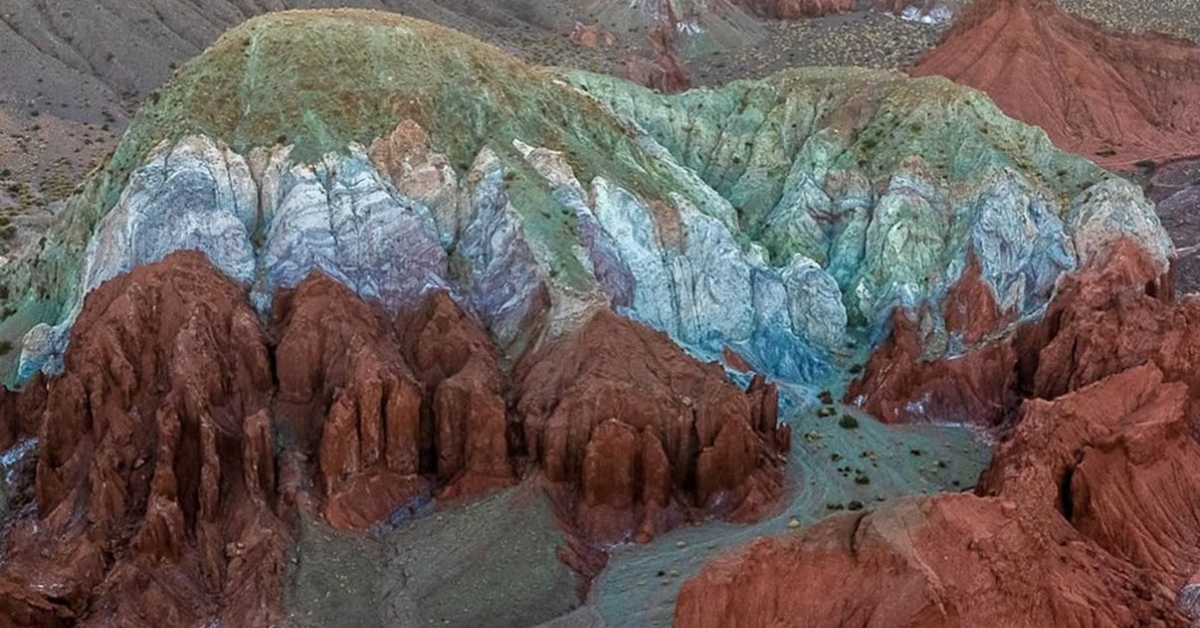
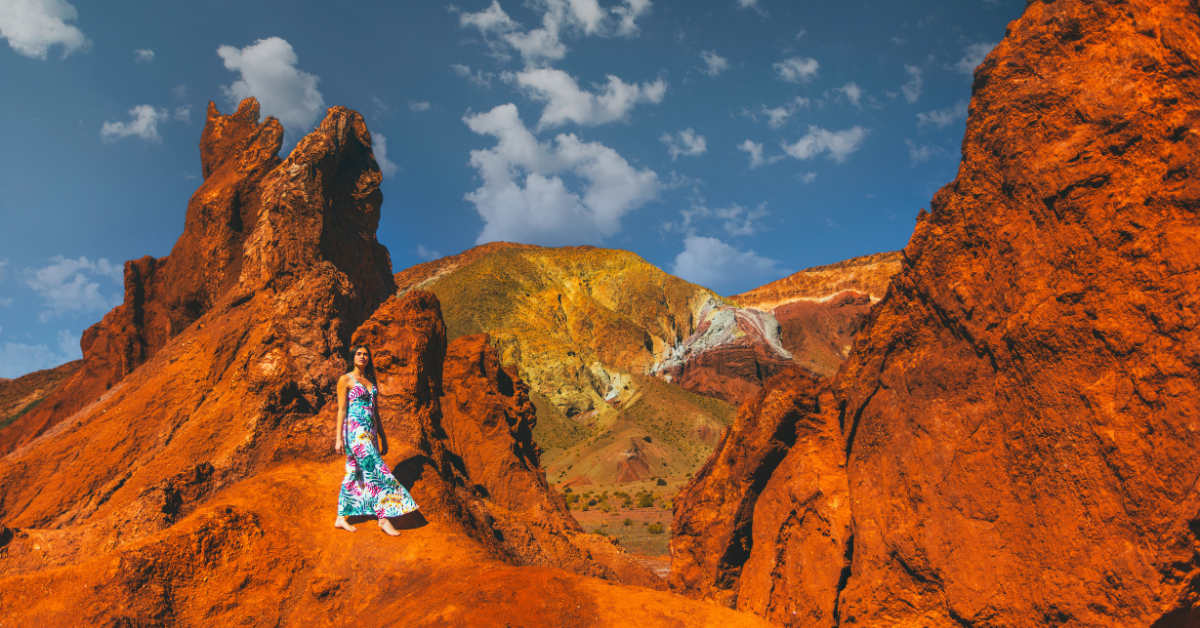
By day, the Atacama reduces perception to essentials. Brown and rust-red stone. Dry air. Clean horizon lines unbroken by haze, foliage, or movement. Vegetation exists, but it is restrained, clustered near water rather than dominating the field of view. The landscape does not compete for attention. It holds it.
Cognitive research associates coherent, low-stimulus environments with reduced attentional demand and increased comfort with silence. Couples often describe the effect as relief. Conversation becomes easier. Pauses feel natural. Time loosens.
Winter sharpens this clarity further. Cooler temperatures remove urgency. Movement becomes unforced. Days unfold without compression or retreat. This simplicity is not aesthetic minimalism. It is perceptual relief.
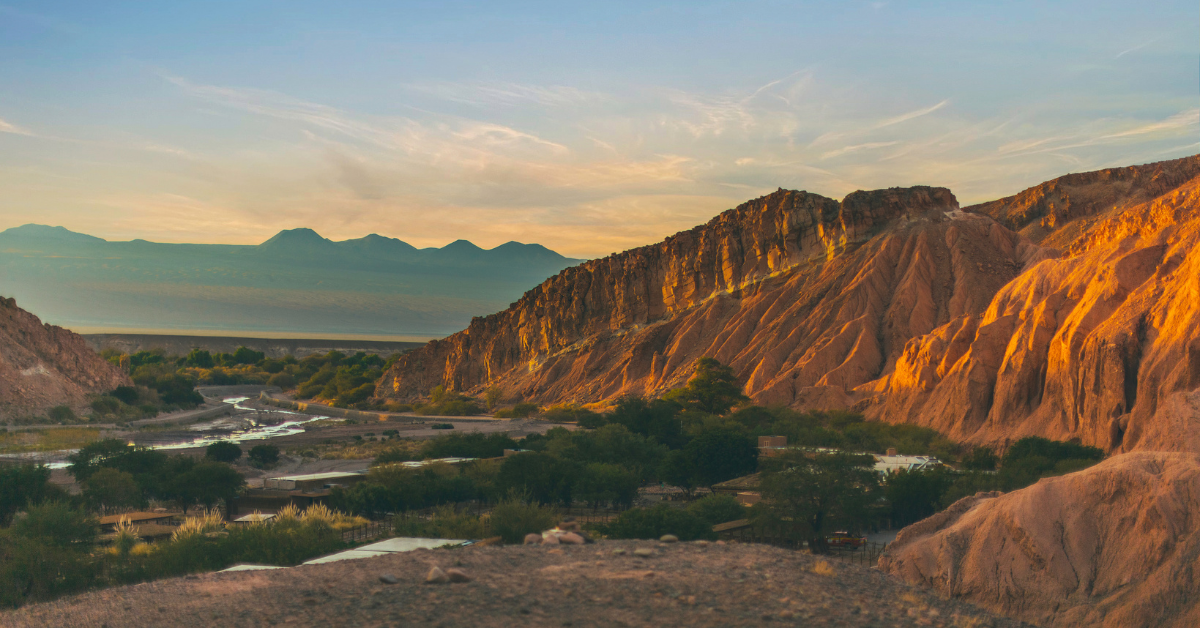
By day the desert reduces perception to essentials: stone, dry air, and an unbroken horizon.
Black by Night
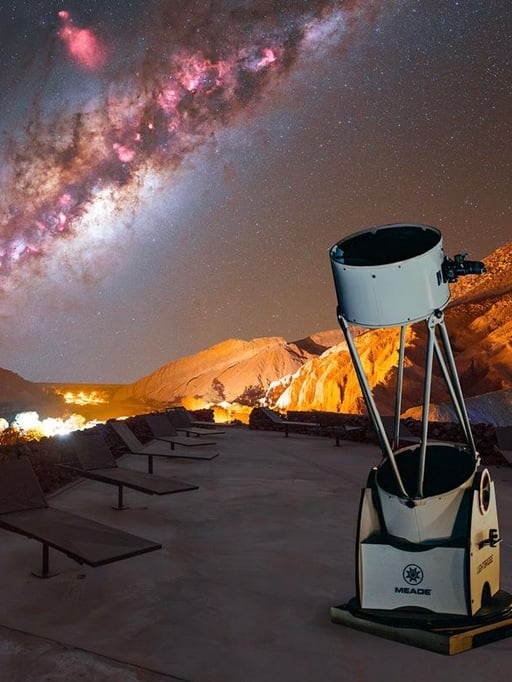
When the sun drops behind the ridge, the Atacama trades brown for black. Artificial light at Nayara Alto Atacama remains intentionally minimal. Pathways glow softly for safety. Rooms rely on warm, directional lighting rather than broad illumination. As eyes adapt, the sky becomes the primary presence.
Northern Chile's skies are among the clearest on Earth due to altitude, aridity, and atmospheric stability, conditions documented by the European Southern Observatory. In winter, long nights and exceptionally dry air allow darkness to settle fully. Globally, more than 80% of humanity now lives under light-polluted skies, according to DarkSky International. In the Atacama, the Milky Way remains intact, structured, and slow-moving.
Darkness changes behavior. Without visual distraction, attention narrows. Presence intensifies. Under a sky this large, couples orient less toward spectacle and more toward each other. Continue reading: stargazing in the Atacama.
The Oasis and the Game of Tones
Romance in the desert requires a paradox: exposure without exhaustion. Nayara Alto Atacama sits within the Catarpe Valley, a functioning desert oasis shaped by water flow, vegetation, and natural wind protection. Unlike properties near roads or within the town grid of San Pedro de Atacama, the valley removes guests from traffic, skyglow, and visual interruption while remaining minutes from town. Rock walls absorb sound. Distance filters movement. Couples feel alone without being isolated, protected without being confined.
Romantic travel is usually framed through sight: views, light, color. Sound is rarely considered, yet it shapes intimacy just as powerfully. Most environments are layered with overlapping frequencies, music, voices, traffic, mechanical hum. The Atacama collapses the soundscape. Acoustic ecologists describe environments like this as low-density sound fields. With fewer competing frequencies, the nervous system stops filtering and starts registering. Subtle sounds gain meaning. Silence gains texture.
In the Catarpe Valley, valley walls absorb sound, distance from roads removes low-frequency noise, and minimal lighting quiets mechanical systems at night. Voices drop. Movements synchronize. Pauses lengthen without discomfort. Intimacy becomes resonance rather than expression. This is the Game of Tones: not something you play, but something the desert plays for you.
Why Honeymoons Thrive on Absence
Deserts do something subtle to time. Without dense stimuli or artificial pacing, days lose their sharp edges. Morning and night become the primary anchors. Couples stop tracking time and start inhabiting it. Winter intensifies this: cooler temperatures allow continuity between movement and rest, longer nights stretch evenings naturally, and fewer visitors reduce interruption. Time feels expansive rather than segmented.
Honeymoons often arrive over-structured: schedules, expectations, documentation. Romance becomes something to execute rather than inhabit. The Atacama dismantles that structure by removing cues. There is no soundtrack, no highlight moment, no urgency. For newly married couples, this absence is generative. Connection becomes unforced because nothing competes with it.
Brown days simplify attention. Black nights restore scale. The oasis sustains presence. Winter returns time. Sound narrows awareness. Romance here is not promised. It is permitted.
Explore the Full Atacama Series
The desert Travel + Leisure readers just ranked among the best on the continent, from the ground up.
01 Understanding the Atacama Desert → 02 Puritama and Piedras Rojas: The Engine Under the Desert → 03 The Oasis Advantage → 04 Stargazing in the Atacama →Frequently Asked Questions
When is the best time to visit the Atacama as a couple?+
Is the Atacama a good honeymoon destination?+
Why are deserts associated with romance and transformation?+
Does stargazing play a role in the experience?+
Is Nayara Alto Atacama adults-only?+
How close is the resort to San Pedro de Atacama?+
- Journal of Environmental Psychology: low-stimulus landscapes and reflection
- Greater Good Science Center, UC Berkeley: awe and connection
- European Southern Observatory: why Chile has the world's clearest skies
- DarkSky International: light pollution research
- One Thousand and One Nights
- The Little Prince
Let the Desert Do the Rest
Brown days, black nights, and the silence of the Catarpe Valley at Nayara Alto Atacama.