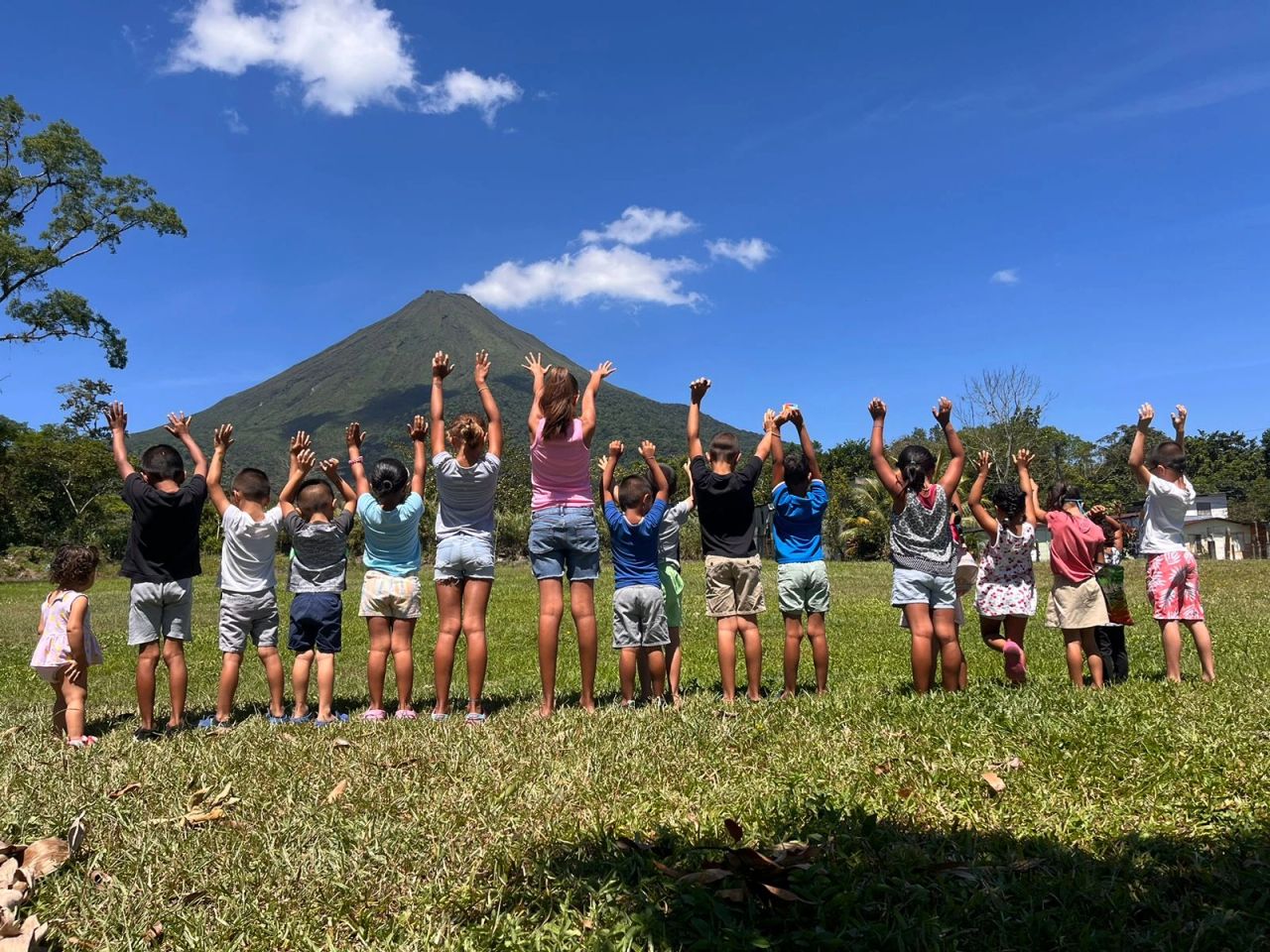
A permanent neighborhood of privately titled homes in La Fortuna — ownership independent of employment.
Local residents, many of them single mothers, who gain a permanent place inside the economy tourism creates.
The year Costa Rica abolished its army and redirected funds to education and community. This project belongs to that lineage.
A Morning Without Fear
In short: Nayara is developing 40 privately titled homes in La Fortuna for local families — about 150 residents, many of them single mothers. Ownership is permanent and independent of employment. It is a structural fix for a tourism economy that has outpaced local housing.
Imagine a mother waking before sunrise to pack her child's school bag. Breakfast on the table. Uniform folded. The same ritual she has performed for years — but now without the quiet calculation in the background. No landlord deciding the future. No rent increase arriving without warning.
The address is permanent. The walls are hers. Her child grows up in a home that cannot be taken away by market forces. That stability is invisible to visitors, but it is the foundation of everything that follows: education, health, ambition, confidence.
Every year on March 8, the world pauses for International Women's Day: a moment to celebrate women's achievements and confront the structural barriers that still limit opportunity. Born from the labor and suffrage movements of the early twentieth century, the day remains both a celebration and a challenge — not merely to acknowledge progress, but to build the architecture that makes equality durable rather than symbolic.
For us at Nayara, this year's reflection is not abstract. It is a neighborhood.
Hear It From Our Founder
In La Fortuna, we are developing a 40-unit residential community: not employee housing, not a company benefit, but a permanent neighborhood of privately titled homes for local families — approximately 150 residents. The first home is scheduled for completion in early 2027. Each parcel is legally owned by the individual resident, with ownership that is permanent and completely independent of employment at Nayara or anywhere else. If a resident works with us today and moves on tomorrow, the home remains theirs.
That is not a caveat. It is the entire point.
Many of the future residents are single mothers working across the region's tourism economy, navigating a housing market that no longer reflects the wages it runs on. A stable home changes everything downstream: it replaces constant negotiation with certainty, converts monthly rent into inherited equity, and gives children predictability that schooling alone cannot provide. And predictability is power.
Our founder and CEO, Leo Ghitis, has spoken candidly about why housing became a priority in La Fortuna. He frames the project not as charity but as a structural correction inside a tourism economy that risks outpacing the people who sustain it. Listen to Leo explain the initiative on the Afar podcast.
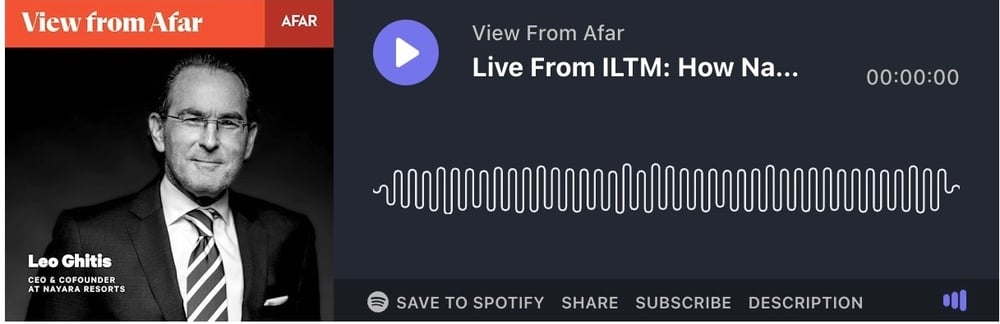
Leo Ghitis on the Afar podcast — on solving tourism's hidden housing crisis.
What Stability Actually Looks Like
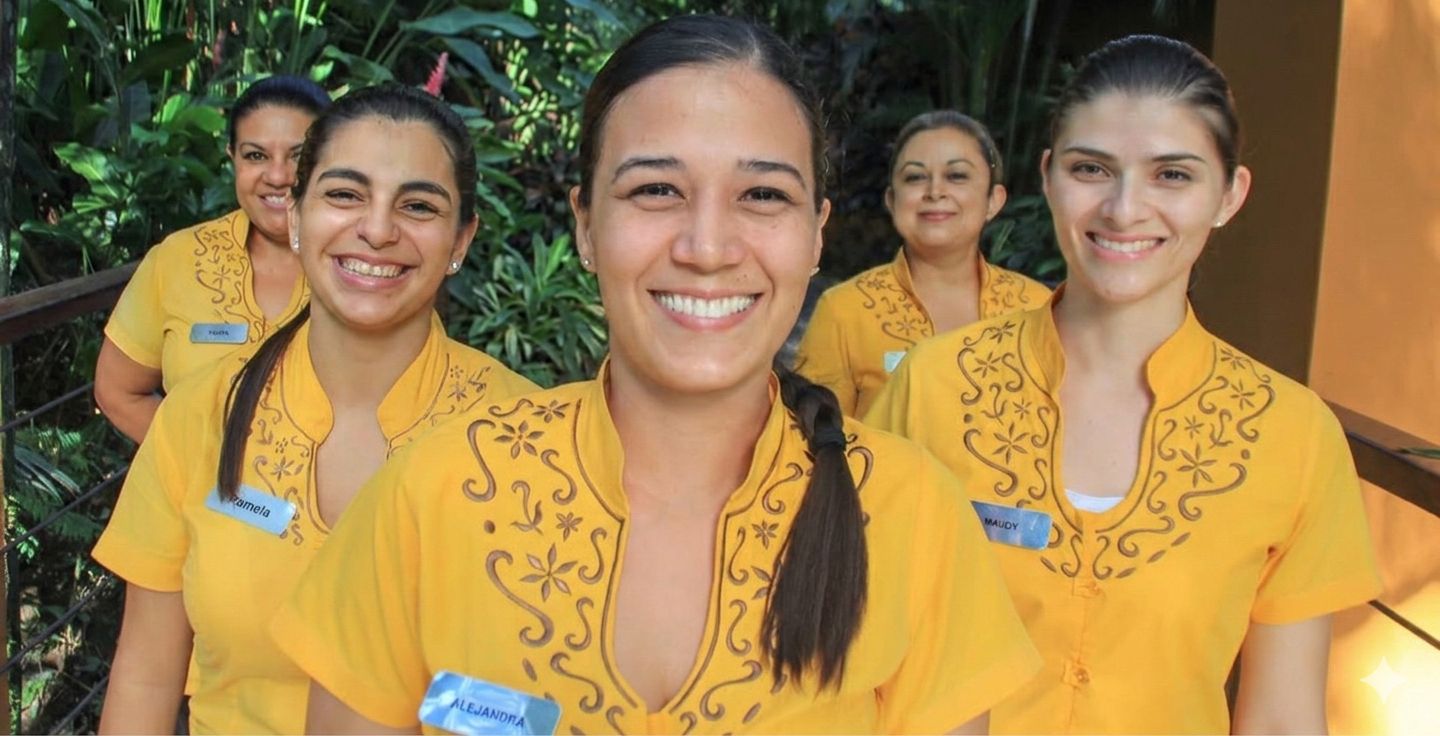
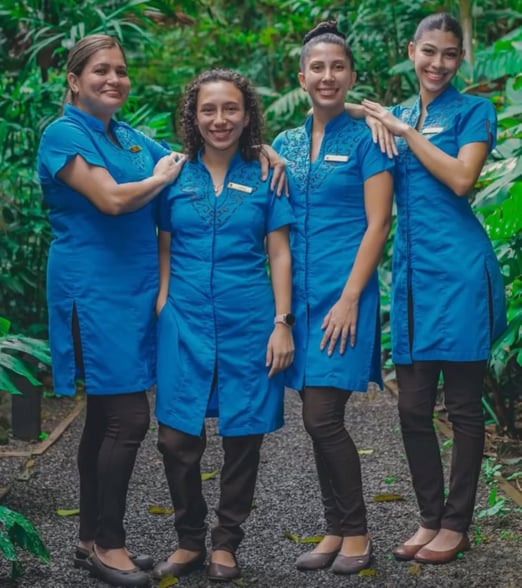
More than 90 percent of our Costa Rica team comes from the Arenal region. Many have worked alongside us for years. We know them, and through them, we know what housing insecurity costs — not in abstract economic terms, but in the energy spent managing uncertainty on top of everything else a working parent already carries.
We have seen people commute impossible distances because rents near town crept beyond their reach. We have watched families make decisions about their children's schools based on where they could afford to sleep. We have heard the version of the housing conversation that happens quietly, between trusted colleagues — the one that does not make it into any report.
In our earlier Journal entry, Rooted in Community, we explored hospitality as a living ecosystem. International Women's Day sharpens that lens: who benefits from the ecosystem, and who gets to own a piece of it.
The Pressure Behind the Postcard
Costa Rica welcomed approximately 2.69 million tourists in 2025, and the tourism market is projected to keep growing through 2031. Tourism remains a cornerstone of the national economy, and the Arenal region sits at the center of that story.
Success generates opportunity. It also generates pressure.
The proliferation of unregulated vacation rentals is now a measurable driver of a broader housing crisis affecting working families across the country. When housing becomes unstable, the people who absorb the shock first are women. Mothers negotiate leases, relocate children, and carry the invisible labor of never quite knowing what next month looks like.
A tourism economy that does not stabilize housing is not stable.
A Country That Chose Schools Over Soldiers
Our housing initiative does not exist in isolation. It belongs to a longer story about what Costa Rica chose to be. In 1948, following a brief civil war, the country abolished its standing army. Funds that would have sustained military infrastructure were redirected into public education, healthcare, and civic development. It remains one of the few nations in the world without a permanent military — a decision recognized by UNESCO as part of the country's documentary heritage.
That was not a symbolic act. It permanently reordered national priorities. When a country invests in education and community infrastructure over militarization, women benefit disproportionately. Stability compounds through households. Children grow up inside systems designed to support them.
The housing initiative in La Fortuna belongs to that lineage. It is a continuation of a national pattern: redirect resources toward the structures that protect everyday life, and trust that the returns arrive in ways that balance sheets cannot capture.
Why Ownership Matters for Women
International Women's Day asks a question that sounds simple and is not: what does empowerment actually look like when it is translated into structure?
For us, after years in this community, the answer is concrete. It looks like a land title in a mother's name. It looks like a construction plan drawn up for a family that has always rented. It looks like keys handed over without conditions.
We are not offering a benefit or a program. We are participating in a community that has given us everything, and trying to give something back that lasts. A house is not just shelter. It is predictability. It is leverage. It is the difference between surviving an economy and having a permanent place inside it. Hospitality — real hospitality — does not end at the guest room door. It extends into the town, into the school, into the home of the person who made that guest feel welcome.
Frequently Asked Questions
What is Nayara's housing project in La Fortuna?+
Why is this project focused on women?+
Is housing tied to employment at Nayara?+
How does housing connect to sustainable tourism?+
How has tourism affected housing costs in La Fortuna?+
Explore the Full Sustainability Series
Regeneration, community, and accountability across four countries.
01 Beyond Sustainability: What Regenerative Tourism Means → 02 Rooted in Community: The Human Side of Hospitality → 03 Amigos de Hogarcito: A Different Kind of Excursion →- International Women's Day, United Nations
- Costa Rica Tourism Market Outlook, Mordor Intelligence
- Short-Term Rentals and Community Impact, CentralAmerica.com
- Costa Rica Housing Crisis, CentralAmerica.com
- Costa Rica's Constitutional Abolition of the Army, Future Policy
- Afar Podcast: Solving Tourism's Hidden Housing Crisis
Stay Where Hospitality Runs Deep
Nayara's resorts in Costa Rica's Arenal region are built by the community that calls La Fortuna home.